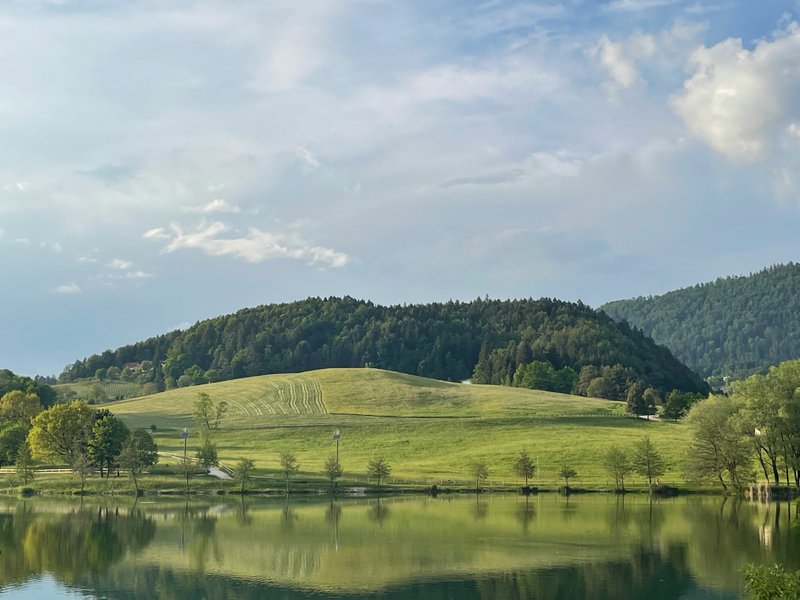
Seven rooms occupy this owner-run estate in Brda, Slovenia's answer to Tuscany, where 200-year-old vineyards cascade toward distant Adriatic views. French-inspired interiors display original artwork throughout, while outside, cherry orchards lead to a fire pit perfect for evening glasses of the house Rebula. Private vineyard picnics, cycling tours through neighboring wine country, and a pool amid the terraces complete an adults-only retreat.
Where to Stay
Where to Eat
Tomaž Kavčič, one of Slovenia's most celebrated chefs, commands the kitchen of this one-Michelin-starred restaurant housed within a seventeenth-century Renaissance manor overlooking Vipava. The menu shifts with the seasons, balancing regional tradition with inventive techniques—culminating in the theatrical gin and tonic pudding that has become the chef's signature. A sommelier-guided exploration of Vipava Valley wines, particularly those from Burja estate, completes the experience.
A few kilometres from Nova Gorica's centre, Dam earns its Michelin star through Chef Uroš Fakuč's understated mastery of traditional cuisine. The urban-chic dining room maintains a relaxed atmosphere where Fakuč himself presents each course, including the signature seafood rice — its oyster fragrance so vivid it conjures coastal air. No theatrics here, just precise, soulful cooking that rewards the curious palate.
A 16th-century castle crowning the Brda wine hills provides the dramatic setting for this Bib Gourmand table, where vineyard panoramas shift golden through autumn afternoons. The kitchen channels regional terroir into flexible tasting formats—three to nine courses—with standouts like porcini ravioli dressed in sweet-sour chanterelles and mushroom cream. A ground-floor wine shop lets diners extend the Slovenian exploration homeward.
Within the Perla Resort on the Slovenian side of Gorizia, Restavracija Calypso has built a formidable reputation for Adriatic seafood. The kitchen takes a classical approach to modern cuisine, with dishes—from pristine raw preparations to carefully baked whole fish—presented tableside with practiced ceremony. A Michelin Plate holder, the restaurant draws serious seafood devotees from across the region.
Frequently Asked Questions
What is the best time to visit the Vipava Valley for wine tourism?
+
Late spring through early autumn offers ideal conditions, with harvest season in September and October providing opportunities to witness winemaking firsthand. The burja wind keeps summers cooler than the Adriatic coast, while autumn brings the traditional osmice season when local farmers open their cellars to visitors.
How do Nova Gorica and Italian Gorizia connect as twin cities?
+
Since Slovenia joined the Schengen Area in 2007, the border between Nova Gorica and Gorizia has effectively disappeared. Piazza Transalpina, once divided by a wall, now functions as a shared public square where visitors can stand in both countries simultaneously. The two cities were jointly named European Capital of Culture for 2025.
Which indigenous grape varieties should visitors try in Vipava Valley?
+
Zelen and pinela are white varieties found almost nowhere else, producing aromatic wines with distinctive mineral character. Rebula, the local ribolla gialla, ranges from fresh and crisp to amber-hued skin-contact versions. For reds, look for modra frankinja and barbera adapted to the valley's limestone soils.
Nova Gorica emerged from the post-war division that split the historic town of Gorizia along the Italian-Slovenian border. Today, this planned modernist city serves as gateway to the Vipava Valley, a wind-sculpted corridor between the Karst plateau and the Julian Alps where the burja sweeps down from Mount Nanos. The valley's microclimate has produced wine since Roman times, and contemporary winemakers work indigenous varieties like zelen and pinela alongside rebula, the local clone of ribolla gialla.
The food culture here draws from both Slavic and Friulian traditions. Village osmice — seasonal pop-up cellars where farmers sell their own wine and cured meats — still operate on handwritten schedules posted in church squares. Restaurants in Vipavski Križ and Ajdovščina serve štruklji, jota, and air-dried pršut from the Karst edge. The valley remains largely undiscovered by international visitors, its stone villages and terraced vineyards offering an unhurried pace that has vanished from more famous wine regions.