On Maribor's outskirts, chef-owner David Vračko orchestrates an extended tasting menu with theatrical flair—no à la carte, only surrender to his vision. The cooking plays with texture and contrast: salmon tartare brightened by exotic fruit, prawns paired with cauliflower, duck prepared to melt. Two eclectically furnished dining rooms provide the stage; service arrives with performative warmth and genuine smiles throughout.
Three generations of the Denk family have shaped this one-starred address near Maribor into a showcase for Styrian terroir. Chef Gregor Vračko builds surprise tasting menus—guests select only the course count—around hyper-local ingredients reimagined with sharp contemporary technique. Floor-to-ceiling glass bathes the minimalist dining room in daylight, creating an unexpectedly modern setting for cuisine rooted in regional tradition.
Within the ancient walls of Grad Tabor, a 13th-century castle, self-taught chef Marko Pavčnik has earned a Michelin star through his deeply regional approach to Slovenian cuisine. His tasting menus showcase ingredients from a nearby eco-farm and foraged finds, with nose-to-tail cooking yielding dishes of real identity—the smoked trout with elderflower sauce among them. Summer dining unfolds in a courtyard with sweeping valley views.
Perched above Maribor with sweeping views of the Drava river and distant Pohorje peaks, City Terasa delivers Adriatic-focused cuisine in a setting that rewards lingering. The kitchen prioritizes fish and shellfish—grilled simply or prepared with contemporary finesse—alongside grass-fed Slovenian beef for those seeking land-based alternatives. A Michelin Plate holder, the restaurant's sky lounge offers an equally refined space for unhurried afternoons.
A drive through the rolling Slovenian hills leads to this 16th-century former Benedictine monastery, where winemaking traditions stretch back centuries. Beneath antique brick-vaulted cellars, the kitchen applies a contemporary lens to regional ingredients, composing dishes that echo the terroir. Wine tasting itineraries complement the meal, making this an essential detour for gastronomes exploring the Maribor wine country.
An 18th-century Baroque palace, the former castle of Novo Celje, provides the theatrical backdrop for this sustainability-focused restaurant. The kitchen works exclusively with local ingredients, presenting them through either a concise à la carte or a seven-course tasting menu that showcases technical precision and creative flair. A cellar housing over 600 labels—among Slovenia's most impressive—completes the experience.
Husband-and-wife team Jure and Mia Brložnik traded city life for the Slovenian countryside, where they now orchestrate intimate dinners across three rooms—each seating just one table. Their vegetable-forward tasting menus of five to nine courses, ordered in advance, showcase regional roots through dishes like beetroot with horseradish and trout with wild mushrooms. Local wine pairings complete this deeply personal dining experience.
Five generations of family tradition inform the cooking at this Bib Gourmand address near Murska Sobota, where young chef Leon Pintarič channels Prekmurje's larder into refined contemporary plates. His marinated trout arrives with smoked buckwheat, while dödoli—regional potato-wheat gnocchi—come enriched with wild mushrooms. The meal culminates properly with prekmurska gibanica, the area's celebrated layered pastry.
Behind an unassuming village façade lies a meat-lover's sanctuary: a ground-floor delicatessen stocked with extraordinary hams gives way to an upstairs dining room with an open kitchen. The Bib Gourmand menu celebrates Slovenian heritage breeds—Mangalica and Krškopolje pork alongside carefully selected beef cuts. For carnivores exploring the region, this address delivers exceptional quality at honest prices.
A Bib Gourmand address in Celje's old town, LALÚ Bistro strips away pretense to concentrate entirely on the plate. The à la carte menu roams freely from Slovenian classics and house-made charcuterie to bao burgers, ramen, and poke bowls—a globe-spanning eclecticism rarely found at such accessible prices. The no-frills setting suits diners seeking substance over spectacle.
Frequently Asked Questions
What wine varieties should I try when dining in Maribor?
+
The Štajerska wine region surrounding Maribor specializes in white varieties: Šipon (the local name for Furmint), Laški Rizling, Chardonnay, and Sauvignon Blanc. Many restaurants maintain direct relationships with family wineries in the nearby Maribor wine road, and the historic Old Vine House on Vojašniška Street offers tastings from the 400-year-old Žametovka vine.
Which neighborhoods have the best restaurant concentration?
+
The Lent waterfront district along the Drava offers riverside dining with views of the old city walls, while Glavni trg (Main Square) and the surrounding pedestrian streets—particularly Gosposka and Vetrinjska—concentrate the historic center's dining options. The Tabor quarter north of the river has emerged as a creative district with contemporary kitchens.
When is the best season to visit Maribor for food and wine?
+
Autumn brings the grape harvest and the Old Vine Festival in October, when the city celebrates with wine tastings and traditional Styrian dishes. The Lent Festival in late June and early July transforms the waterfront into a cultural event with extended restaurant service. Winter features hearty alpine cuisine and proximity to the Pohorje ski slopes above the city.
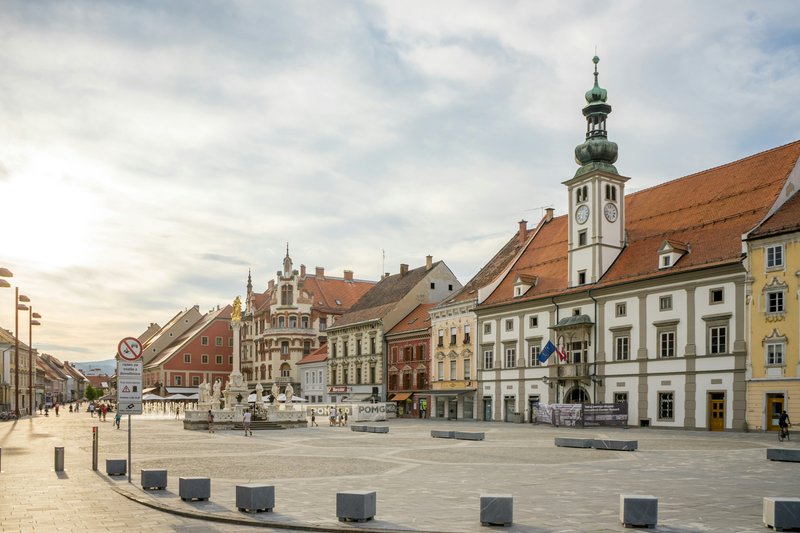
Slovenia's second city sits where the Drava River carves through the Pohorje foothills, a university town with Habsburg-era architecture and the world's oldest living grapevine still producing fruit on Vojašniška Street. The Lent waterfront district—once a medieval trading hub—now draws evening crowds to its wine cellars and riverside terraces. Across the Drava, the Main Square anchors a compact old town of Baroque townhouses, independent galleries, and the Cathedral of Saint John the Baptist with its Gothic bell tower.
Maribor's food culture reflects its position at the crossroads of alpine Styria and the Pannonian plains. Chefs here work with Pohorje mushrooms, pumpkin seed oil from nearby farms, and wines from the surrounding hills—Šipon, Riesling, and the local Ranina. The restaurant scene clusters around Glavni trg and spreads into the pedestrianized streets behind the old town, with a newer wave of contemporary Slovenian kitchens opening along the river. Summer brings the Lent Festival, transforming the waterfront into an open-air stage that fills every table in the district.