Skip to content

Evora

Where to Stay

1. Dá Licença (Alentejo, Portugal)

A whitewashed farmhouse restored with rigorous minimalism, Dá Licença occupies 300 acres of olive groves punctuated by dramatic marble outcrops in the Alentejo. The property limits itself to five rooms and suites—two with private pools—their interiors distinguished by the region's distinctive pink marble. An adults-only retreat suited to couples seeking rural Portuguese isolation without sacrificing design sophistication.

2. São Lourenço do Barrocal

1 Michelin Key

A 2,000-acre working estate in the Alentejo countryside, São Lourenço do Barrocal has converted its 200-year-old agricultural buildings—barns, outhouses, even an olive press—into forty contemporary rooms and suites. Vineyards and cork groves surround the property; horses wait in the stables. The restaurant draws ingredients from the organic farm itself, while a striking 20-meter pool and full spa serve guests after long rides through the hills below Monsaraz.

3. Villa Extramuros

1 Michelin Key

A sculptural white villa rising from Alentejo's olive groves and oak forests, Villa Extramuros operates with just five rooms—each featuring private patios and marble showers beneath skylights. The infinity pool anchors art-filled public spaces that feel more private residence than hotel. Staff arrange horseback riding and tours of local wineries, though guests often prefer simply lingering over long breakfasts before dozing poolside.

4. Craveiral Farmhouse (Alentejo)

Scattered across the Alentejo plains where storks circle above whitewashed villages, Craveiral Farmhouse comprises 38 self-contained cottages on a working estate. Pygmy goats and donkeys roam the grounds, an organic garden supplies the kitchen, and three swimming pools punctuate the landscape alongside a wellbeing centre. Families find particular appeal here, with farm life offering children immersive rural education.

5. Montimerso Skyscape Country House (Monsaraz)

Perched above Alqueva lake with sightlines stretching to Spain, this eco-retreat occupies the world's first UNESCO-certified Dark Sky Reserve—a landscape of ancient cork oaks where night skies rival the accommodation for drama. Interiors favor luminous white volumes, stripped of visual noise, while the kitchen draws on Alentejo's seasonal larder. Suited to travelers seeking isolation, stargazing, and elemental quiet.

6. Octant Evora

A 25-acre working agricultural estate in the Alentejo countryside, this low-slung property channels rural Portuguese living through 56 rooms with private terraces and five villas with individual pools. À Terra restaurant draws directly from on-site gardens for its seasonal menus, while cooking classes and farm activities give families genuine engagement with the land. Indoor and outdoor pools complement the spa.

7. The Lince Ecorkhotel Évora

Cube-shaped contemporary villas clad in cork rise from the Alentejo plains at this sustainable retreat outside Évora. The 56 suites—starting at 70 square meters—feature private terraces surveying the countryside, while family configurations add kitchenettes for longer stays. A spa with Turkish bath and indoor pool anchors the wellness offering; the Cardo Restaurant delivers regional cuisine against panoramic views of the surrounding dehesa landscape.

Where to Eat

1. Herdade do Esporão

★ Michelin· Green Star ●

Surrounded by vineyards and olive groves on a sprawling Alentejo wine estate, chef Carlos Teixeira's one-starred table draws entirely from its own organic gardens. The Carta Branca tasting menu—five or seven courses, most guests opting for wine pairings from the adjacent cellars—features modern Portuguese cooking: corn in various textures, the estate's lamb paired with rice and garden vegetables. A Michelin Green Star confirms the commitment to sustainability.

2. MAPA

Michelin Selected

Chef David Jesus, who refined his craft at Lisbon's two-Michelin-starred Belcanto, leads this dining room within L'AND Vineyards Relais & Châteaux. His tasting menus—Expedição and Caminhos—trace Portugal's culinary heritage through the lens of colonial influences and personal memory. The signature duck with rice, snails, and watercress pays tender homage to his Sintra grandmother, grounding creative ambition in deep regional tradition.

3. PODA

Bib Gourmand

A former agricultural warehouse in the quiet streets of Montemor-o-Novo now houses this Bib Gourmand address, where chef João Narigueta and sommelier Miguel Dominguinhos revive Alentejo's culinary heritage. The kitchen delivers regional rarities—Sopa Fatia Azeda with cured sausages and poached egg, the honey-walnut Enxovalhada dessert—alongside a wine list championing local producers. Rustic bones, pronounced flavours, serious regional intent.

4. Dom Joaquim

Michelin Selected

Beside the ancient Porta de Serpa Pinto gateway, chef Joaquim Almeida anchors his cooking in Alentejo tradition while applying contemporary technique. The dining room pairs bare stone walls with sculptural installations, creating an atmosphere both historic and refined. Daily specials showcase regional ingredients, but the convent-style desserts deserve attention—particularly the água de prata pudding, its recipe borrowed from the nearby Convento de Santa Clara.

5. Origens

Michelin Selected

Down a narrow lane in Évora's historic quarter, chef Gonçalo Queiroz and sommelier Eugénia Queiroz run this intimate bistro devoted to Alentejo's culinary roots. The seasonally shifting menu—available à la carte or as three- and five-course tastings—applies modern technique to regional tradition, yielding dishes like slow-cooked pork loin brightened with apricots and sprouting greens. Eugénia's mystery wine pairings add welcome spontaneity.

What to Do

1. L'AND SPA

Relais & Châteaux

Architect Marcio Kogan designed this 800-square-meter vinothérapie sanctuary where anti-ageing treatments draw on grape seeds, skins, and pulp through vegan Vinoble Cosmetics formulations. An adults-only heated indoor pool, sauna, and steam room complement the therapy rooms, while outside, an infinity pool appears to merge with the surrounding lake and vineyards. The castle of Montemor o Novo rises in the distance, UNESCO-listed Évora twenty minutes away.

Frequently Asked Questions

What is the best area to stay in Évora?

+

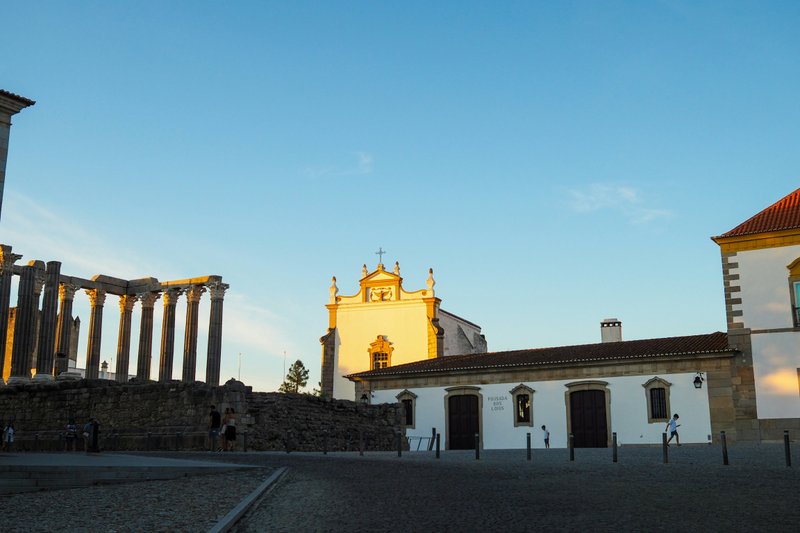
The centro histórico within the medieval walls offers the most atmospheric experience, with converted palaces and traditional townhouses steps from the cathedral, Roman temple, and Praça do Giraldo. For countryside tranquility, wine estates and rural quintas in the surrounding Alentejo plains provide pool-equipped retreats amid cork oak forests, typically fifteen to thirty minutes from the city center.

When is the best time to visit Évora?

+

Spring (April-May) and autumn (September-October) offer ideal conditions — warm days perfect for exploring on foot, wildflowers or harvest activity in the countryside, and comfortable evenings for outdoor dining. Summer brings intense Alentejano heat exceeding 35°C, making early mornings and late evenings the best times for sightseeing. Winter remains mild but quieter, with occasional rainfall.

How do I get to Évora from Lisbon?

+

The drive takes roughly ninety minutes via the A6 motorway, passing through the Alentejo's characteristic rolling plains. Direct trains from Lisbon's Oriente station reach Évora in approximately ninety minutes, though the station sits outside the walls, requiring a short taxi ride or twenty-minute walk to the historic center. Several operators run coach services from Lisbon's Sete Rios terminal.