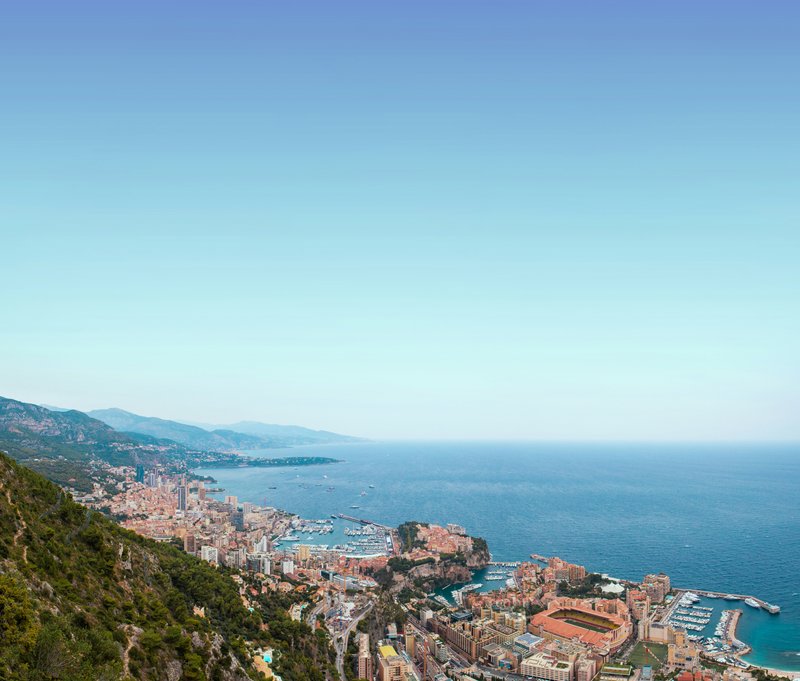
Monaco compresses an entire nation into two square kilometres of steep terrain between the Maritime Alps and the Mediterranean. Monte-Carlo, the quarter synonymous with the Belle Époque casino, concentrates the principality's grandest addresses along the Place du Casino and Avenue des Beaux-Arts. La Condamine wraps around Port Hercule where superyachts dock during the Grand Prix, while Fontvieille — built on reclaimed land in the 1980s — offers a quieter counterpoint to the north's density. The Rock, crowned by the Prince's Palace, remains the historic core, its narrow lanes unchanged since the Grimaldis took the fortress in 1297.
Dining here reflects Monaco's position as a crossroads for Mediterranean and French Alpine cooking, with notable kitchens drawing chefs from Nice, Turin, and further afield. The café terraces along the port fill with espresso drinkers watching yacht crews at work, while the side streets near the Marché de la Condamine hide small trattorias serving barbagiuan and socca — Monegasque staples with Ligurian roots. The bar scene clusters around the casino district after dark, though the newer Larvotto waterfront development has begun drawing a younger crowd eastward.