The bishop fled Civita di Bagnoregio after the 1685 earthquake, leaving behind his residence and seminary—now a five-room guesthouse where frescoed ceilings, antique furnishings, and a theatrical 19th-century headboard set the tone. Mornings unfold beneath a towering fig tree; evenings bring local wine and cheese by candlelight in the old winery, or piano music drifting from the cellar. Ideal for romantics seeking atmospheric seclusion near Rome.
Where to Stay
Safari-style tents with clean Italian design replace colonial clichés at this Maremma glamping retreat, where four natural thermal pools—each a different color and temperature—feed into curative bathing rituals. The spring-fed spa draws on Vulca products from Lake Bolsena, while two-bedroom tents include private spa baths. A restaurant showcases hyper-local seasonal cooking paired with an extensive cellar, suited to travelers seeking thermal wellness without sacrificing comfort.
Where to Eat
Perched above the bucolic valleys near Acquapendente, this one-Michelin-starred table from Cesare and Romano channels Tuscia's terroir through refined technique. Iced chickpea hummus arrives with startling texture, lentil caviar opens the meal, and when available, the pigeon—tender, served alongside liver ragout bruschetta and a delicate dumpling in broth—becomes the defining course. Terraces frame the landscape; aged bottles reward exploration.
Chef Lezzerini brings contemporary precision to ancestral Tuscia recipes at this intimate dining room within Antico Borgo di Sutri. Large windows frame the verdant landscape while tasting menus of four to eight courses unfold—saffron raviolini with marinated young rabbit, Carnaroli Riserva San Massimo risotto enriched with smoked robiola and wild nettles. A refined destination for travelers seeking regional authenticity through a modern lens.
Chef Tiziana Favi earns Bib Gourmand recognition at this Tarquinia address through her commitment to Viterbo's seasonal larder and a clearly articulated green philosophy. Her signature paccheri—tomato, stracciatella, bread crumble—demands thorough attention. The enthusiastic owner guides diners through thoughtful pairings, while a small terrace with views rewards those who book ahead.
On Lake Bolsena's western shore, this intimate seafood address pairs modern maritime décor with a terrace planted directly on the beach. The kitchen delivers confident classics—cavatelli dressed in mussel sauce brightened by burnt lemon, impossibly fresh fried squid arriving in a playful cardboard cone. A compact regional wine list and polished service complete an experience calibrated for unhurried lakeside afternoons.
Within a medieval structure dating to 1370—the oldest in Caprarola—the Calistri family has served traditional Lazio cooking since 1940. The amatriciana here carries particular renown, alongside house-cured hams and meats from the grill. A serious cheese selection and well-chosen regional wines round out meals suited to travelers seeking authenticity on the road to Palazzo Farnese.
Frequently Asked Questions
What is the San Pellegrino district in Viterbo?
+
San Pellegrino is Viterbo's medieval quarter, considered one of the most intact in Europe. Its characteristic profferli — external stone staircases — covered walkways, and peperino stone buildings date primarily from the twelfth and thirteenth centuries. The district surrounds the Palazzo dei Papi, where papal conclaves were held during the Middle Ages.
How far is Lake Bolsena from Viterbo?
+
Lake Bolsena lies approximately thirty kilometers north of Viterbo, about a forty-minute drive through the Tuscia countryside. The volcanic lake is one of the largest in Italy and popular for summer swimming, sailing, and lakeside dining in the towns of Bolsena and Marta.
What local dishes should visitors try in Tuscia?
+
Regional specialties include acquacotta, a bread soup with vegetables and egg traditional to the Maremma shepherds, and lombrichelli, thick hand-rolled pasta typically served with wild boar or mushroom sauces. The area also produces excellent olive oil and Orvieto-adjacent wines from the Lazio side of the border.
Nearby Destinations
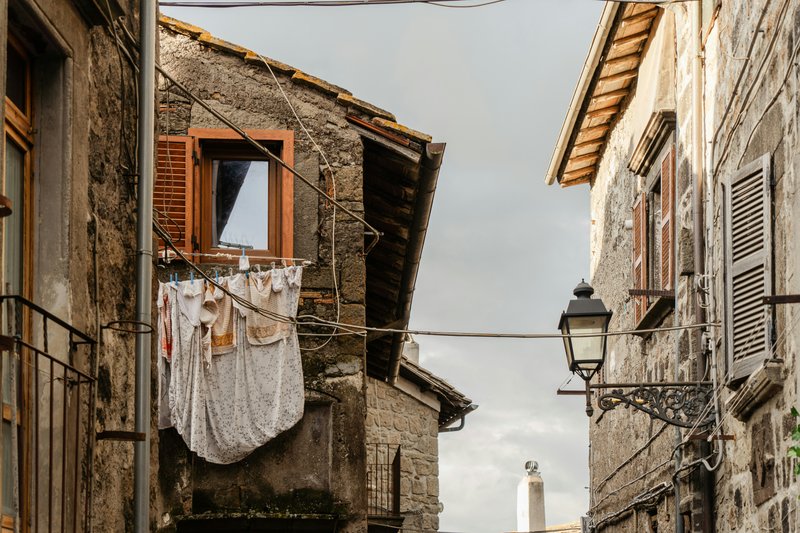
Explore ItalyViterbo's centro storico remains one of Italy's best-preserved medieval quarters, its grey peperino stone facades and external staircases largely unchanged since the thirteenth century when popes fled Rome for the relative calm of this hilltop stronghold. The Palazzo dei Papi, where cardinals invented the conclave in 1271, anchors the San Pellegrino district — a labyrinth of covered walkways, artisan workshops, and quiet piazzas where evening passeggiata unfolds without tourist crowds. Beyond the city walls, the Tuscia region spreads across volcanic plateaus: Lake Bolsena for summer swimming, Civita di Bagnoregio perched on its eroding tufa ridge, the Monster Park at Bomarzo with its Renaissance grotesques.
The local table draws from both Umbrian and Roman traditions. Acquacotta, the Maremma shepherds' soup, appears alongside hand-rolled lombrichelli pasta dressed in wild boar ragù. Family-run trattorias cluster around Piazza delle Erbe, while the thermal district of Terme dei Papi maintains its ancient reputation — Michelangelo soaked here. Hotels occupy converted convents and rural estates, their numbers modest but their settings exceptional.