Behind an unassuming 19th-century façade near the Arena, Vista Verona conceals 16 opulent rooms and suites crafted by Milanese design firm Maurizio Maggi Studio Arte. The property delivers full-scale luxury in intimate proportions: an indoor pool, spa with sauna and jacuzzi, private library, and a rooftop terrace crowning the penthouse restaurant. A polished choice for travelers seeking grand-hotel amenities without grand-hotel anonymity.
Where to Stay
A fifteenth-century Venetian villa in Valpolicella's wine country doubles as a living gallery, its Baroque bones reimagined by Alessandro Mendini with works by Damien Hirst, Anish Kapoor, and Marc Quinn—each room catalogued with gallery-style placards. Chef Mattia Bianchi's Michelin-starred Amistà restaurant draws from the estate's own gardens, while the ESPACE BYBLOS spa offers Turkish baths and outdoor Jacuzzis amid five acres of manicured grounds.
Ancient Roman ruins peek through the foundations of this 14th-century palazzo, where two millennia of Veronese history frame sleek contemporary interiors. Some rooms preserve original frescoes; others offer rooftop views across the old city toward the Arena, convenient for summer opera evenings. Pet-friendly and with bicycles on hand, the hotel suits culture-seekers who want historic immersion without sacrificing modern comfort.
Occupying a medieval house within the courtyard of Juliet's House, this family-owned sixteen-room property places guests at the epicenter of Veronese romance. Seventeenth-century frescoes and exposed beams anchor rooms furnished in contemporary style, several featuring jacuzzis, chromotherapy showers, or balconies overlooking the famous balcony itself. By evening, after day visitors depart, the courtyard turns quiet and atmospheric—ideal for couples seeking literary resonance with modern comfort.
This converted farmhouse belongs to the family behind Prà, one of Soave's most respected wineries, and the connection to the land is immediate: vineyard footpaths begin at the doorstep, views stretch across the valley to the medieval town. With just two bedrooms and no televisions, the property rewards those seeking stillness. Book both rooms for exclusive run of the house and its gardens.
A Roman-era water cistern reimagined as a boutique retreat, Delser occupies a hilltop estate where vineyards and olive groves frame every view. The property's 17th-century architectural layers reveal themselves through vaulted chambers and terraced gardens, while practical touches—cots, high-chairs, children's tableware—make it surprisingly suited to families. Verona's historic center lies just fifteen minutes away by car.
Via Scala places Hotel Accademia within easy reach of the Arena, Juliet's House, and Piazza delle Erbe — a location that earns top marks from travel critics. The four-star property delivers professional service and well-appointed rooms without pretense, making it a dependable base for opera-goers and culture seekers. Families should note limited children's diversions; couples and solo travelers will feel most at home.
Directly facing Castelvecchio, Il Relais occupies a prime position for exploring Verona on foot. This family-run boutique hotel channels authentic Veronese character through spacious, individually designed rooms that favor personality over uniformity. Downstairs, the house restaurant serves accomplished local cuisine, making it an appealing base for travelers who value intimate scale and genuine regional cooking over corporate polish.
An 18th-century palazzo on Corso Porta Borsari houses this intimate guesthouse, its immaculate interiors reflecting the building's aristocratic heritage. Spacious suites accommodate families comfortably, with sofabeds, cribs, and highchairs available alongside babysitting services. The central location places guests steps from Verona's Roman amphitheater and medieval piazzas, making it equally suited to couples seeking refinement and families exploring the city together.
Named for the prince in Shakespeare's Veronese tragedy, this intimate ten-suite property occupies a historic palazzo mere steps from the Arena di Verona. The apartment-style accommodations pair contemporary art and modern furnishings with light wood floors and airy proportions. Breakfast arrives at the suite door each morning—a civilized touch that suits couples and families exploring the compact old town on foot.
Where to Eat
Giancarlo Perbellini earned three Michelin stars cooking in his hometown, where Roman ruins beneath the dining room hint at layers of history. His three tasting menus reflect distinct philosophies: inventive creations like shellfish with soya and peppers, heritage-driven classics, and a fully vegetarian exploration. The chef's table offers couples front-row seats to kitchen choreography, while an impressive French-leaning cellar rewards oenophiles.
Chef Francesco Sodano orchestrates three distinct tasting menus at this two-Michelin-starred table within the Feniletto Nature Oasis: one rooted in his native Campania, another pushing creative boundaries with dishes like paccheri in chicory extraction crowned with raw oyster and house-made seafood bottarga, and a third celebrating the estate's organic gardens. The warm, wood-paneled dining room harbors an unexpected curiosity—a genuine Tyrannosaurus rex tooth.
Within the Byblos Art Hotel, executive chef Mattia Bianchi orchestrates a one-starred seafood menu that reinterprets Italian tradition through a contemporary lens. Two tasting menus chart the kitchen's creative range, though à la carte ordering suits those with particular cravings. The 1,500-label wine cellar, stocked with rare vintages, rewards exploration—an artful setting for collectors and gastronomes drawn to the Verona countryside.
Within a Renaissance palace near Piazza delle Erbe, the Rizzo family has presided over Verona's most refined table for four decades. Father Elia established the classical foundation; son Matteo now interprets those recipes with a lighter, contemporary touch. The ritual begins with their legendary butter and mascarpone mantecato, while the Chapter 43 tasting menu traces the kitchen's evolution through its most iconic dishes. One Michelin star.
Palazzo Soave's Roman-era fishbone stonework and vaulted ceilings frame a one-starred dining experience where the meal begins unconventionally — appetizers arrive in a fourteenth-century wine cellar before guests ascend to contemporary surroundings. The kitchen channels Veneto traditions through a vegetable-forward lens, punctuated by Adriatic catch, while sommeliers navigate a cellar exceeding 800 references with notable depth in French and local bottles.
Just beyond Verona's ancient walls, Al Capitan della Cittadella has built a fifteen-year reputation as the city's premier fish address. The owner-chef reinterprets Italian classics with modern precision, sourcing impeccable seafood and presenting it with restrained creativity. A wine list tilted toward champagne suits the celebratory mood of this polished dining room, where serious gastronomy meets Veronese hospitality.
A dual-chef kitchen drives Ca' Del Moro, perched within the La Collina dei Ciliegi wine estate in the Valpantena hills outside Verona. He brings Calabrian fire, she Puglian finesse—together crafting modern Mediterranean plates like their signature spaghetti with 'nduja, smoked ricotta, and tomato ristretto. The estate raises its own Brogna mutton, served barbecued with caper sauce. Wines lean Veneto, with French accents.
Chef Michael Silhavi's contemporary Italian table occupies a minimalist grey-toned dining room enlivened by canvas works, trailing greenery, and whimsical fake ice-cream cones — playful counterpoints to the kitchen's serious intent. The cooking lands with precision and bold, decisive flavours, each plate reflecting a confident creative vision. A tight, intelligently assembled wine list completes an intimate evening suited to unhurried conversation.
Tucked along a narrow lane near Piazza delle Erbe, L'Oste Scuro operates as a proper family trattoria with a focused mission: impeccably fresh fish prepared in the Italian tradition. The kitchen's devotion to seafood draws a loyal local crowd alongside visitors seeking honest cooking over theatrical presentation. Michelin recognition confirms the quality, though the atmosphere remains refreshingly unpretentious—white tablecloths, warm service, and plates that speak for themselves.
Tucked away from Verona's tourist circuits yet central enough for easy discovery, La Loggia Bistrò occupies an intimate dining room where a handful of square tables sit beneath soft lighting and walls adorned with vintage wine bottles. The kitchen takes a creative approach, presenting seasonal ingredients with visual flair and unexpected combinations—a welcome departure from the city's more conventional trattorias. Summer opens the courtyard for al fresco meals.
Frequently Asked Questions
Which neighborhoods in Verona offer the most interesting dining experiences?
+
Veronetta, the university quarter across Ponte Pietra, hosts authentic bacari and trattorias favored by locals. Piazza delle Erbe and its surrounding streets offer both refined restaurants and traditional wine bars, while the area near San Zeno Maggiore provides a quieter atmosphere with neighborhood osterias serving regional specialties.
What local wines should visitors try in Verona?
+
Amarone della Valpolicella, made from dried Corvina grapes in the hills north of the city, represents the region's most celebrated wine. Valpolicella Ripasso offers similar character at gentler prices, while Soave from the eastern hills provides an elegant white alternative. Most enotecas offer tastings paired with local Monte Veronese cheese.
When is the best time to visit Verona for opera at the Arena?
+
The Arena di Verona opera festival runs from mid-June through early September, with performances beginning at dusk in the ancient Roman amphitheater. Attending requires advance booking, particularly for Aida and Carmen. Outside opera season, the Arena hosts concerts while the Teatro Filarmonico presents year-round classical programming.
Nearby Destinations
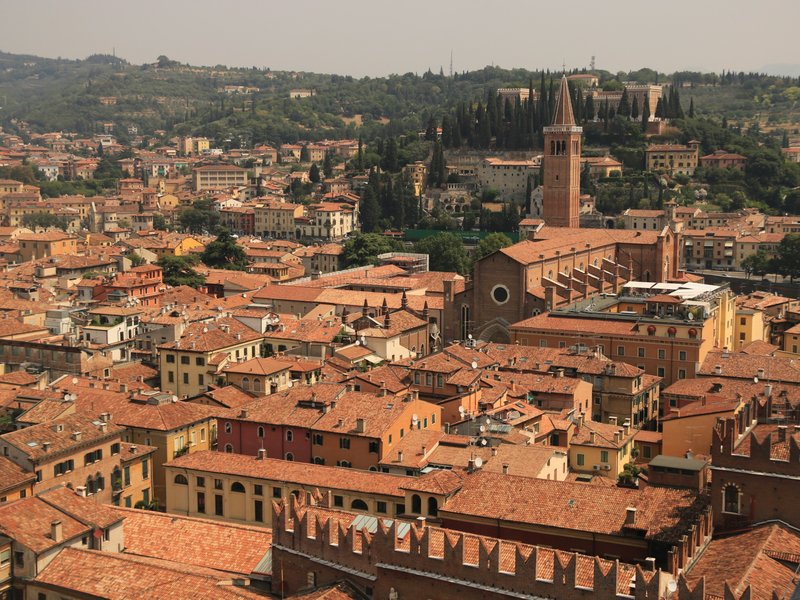
Explore ItalyThe Adige River curves through Verona like a natural moat, its waters reflecting terracotta rooftops and medieval towers that have witnessed centuries of Venetian rule. Beyond the Arena's Roman arches, Piazza delle Erbe maintains its morning market rhythm while Via Mazzini draws evening crowds past frescoed facades. The Veronetta district across the Ponte Pietra holds university students and authentic bacari serving cicchetti with local Valpolicella.
Hotels here occupy restored palazzi with original ceiling frescoes, converted monasteries with cloistered gardens, and contemporary properties overlooking Castelvecchio's crenellated walls. The dining scene moves between refined restaurants serving risotto all'Amarone and family-run trattorias where bollito misto arrives on silver trolleys. After dark, enotecas along Corso Porta Borsari pour wines from hillside vineyards visible from the city's Roman theater.



