Spanning 2,700 acres of working vineyards and olive groves, this restored medieval borgo with its ancient castle houses 146 rooms ranging from contemporary suites to private villas with pools. The RAKxa Wellness Spa—the Thai brand's first European location—offers hydrotherapy circuits and open-air massages overlooking the hills. Tuscany's largest golf course unfolds across 27 championship holes, while families explore truffle hunts, falconry, and Ferrari tours among forty-plus activities.
Where to Stay
A 1587 monastery turned twenty-one-room retreat, La Collegiata wraps guests in rustic antique interiors where monks once resided. Cypress-shaded parkland frames distant views of San Gimignano's fourteen medieval towers, while a hedged pool drifts with garden scents. Bikes await those eager to explore Tuscan lanes; dogs travel welcome. Open April through October, with poolside lunches and evening drinks at the bar.
An 18th-century Tuscan farmhouse with just seven rooms, Locanda dell'Artista spreads across 40 acres of vineyards and olive groves outside San Gimignano. The adults-only policy guarantees absolute quiet, while chef Adriano Antonelli's restaurant draws produce from the kitchen garden and olive oil cold-pressed on site. A seasonal swimming pool overlooks the rolling hills; the wine cellar showcases exceptional Italian bottles.
Where to Eat
Within San Gimignano's medieval walls, chef Giovanni Cerroni presents refined Tuscan country cooking through two distinct tasting menus—Mimesis revisits regional classics, while A mano libera adapts freely to each guest's preferences. Contemporary artwork lines the intimate dining room, and sommelier Cesario Delle Donne guides the wine selections with quiet expertise. Books double as centrepieces, adding an intellectual charm to this one-Michelin-starred address.
Beneath the vaulted ceilings of a historic palazzo's wine cellars, San Martino 26 operates as an intimate dining room with only a handful of tables. The kitchen delivers contemporary interpretations of Tuscan and broader Italian classics, plating creative dishes that honor regional tradition while embracing modern technique. The fashionable atmosphere and limited seating make reservations essential for this refined address.
A converted farmhouse on the outskirts of San Gimignano, Da Pode preserves the rustic bones of its agricultural past—stone walls, wooden beams, the unhurried rhythm of the countryside. Signora Lucia commands the kitchen, turning out generous plates of Tuscan country cooking that earned a Bib Gourmand for remarkable value. Portions here reward appetite over restraint, each dish rooted firmly in regional tradition.
Frequently Asked Questions
Which neighborhood in San Gimignano offers the best tower views?
+
Properties near Piazza della Cisterna and Piazza del Duomo provide direct sightlines to the clustered medieval towers. The triangular Piazza della Cisterna, the historic market square, offers particularly dramatic perspectives of Torre Grossa and the Salvucci twin towers.
What is the local wine to try in San Gimignano?
+
Vernaccia di San Gimignano holds the distinction of being Italy's first white wine to receive DOC status in 1966. This crisp, straw-colored wine has been produced in the surrounding hills since at least the thirteenth century, and local enotecas offer tastings alongside the town's prized saffron-infused dishes.
When is the best time to experience San Gimignano without crowds?
+
Early morning and evening hours transform the atmosphere entirely, as coach tours typically arrive mid-morning and depart by late afternoon. The winter months between November and March see significantly fewer visitors, allowing unhurried exploration of the Collegiate Church frescoes and the civic museum in Palazzo Comunale.
Nearby Destinations
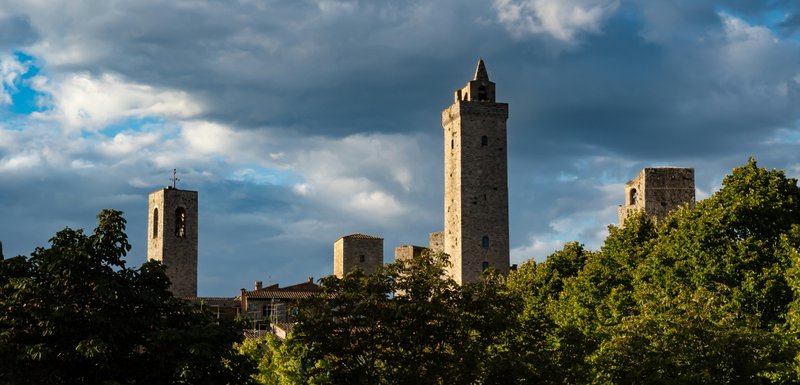
Explore ItalyThe fourteen surviving towers that punctuate the skyline have earned this walled commune its nickname as Tuscany's medieval Manhattan. Piazza della Cisterna, with its herringbone brick paving and thirteenth-century well, forms the social heart of a town where saffron has been cultivated since the Middle Ages and Vernaccia grapes have produced white wine since Dante mentioned it in the Divine Comedy. The Via Francigena pilgrimage route brought prosperity here long before modern travelers discovered its cobbled alleys.
Accommodation options range from converted noble residences within the walls to countryside estates among olive groves and vineyards in the surrounding Val d'Elsa. The dining scene draws heavily on Tuscan tradition — wild boar ragù, ribollita, and the local saffron that once rivaled the town's wool trade in economic importance. Evening aperitivo unfolds along Via San Giovanni as day-trippers depart and the towers catch the golden light that has drawn painters here for centuries.



