Chef Donato De Leonardis helms this one-Michelin-star table at the sustainability-focused San Barbato Resort, channeling the Iaccarino family's storied Mediterranean legacy from Sant'Agata sui Due Golfi. The kitchen balances Lucanian tradition with subtle exotic accents—acquerello rice paired with saltwort, razor clams, and green apple demonstrates the restrained creativity, while the signature spaghetto Don Alfonso honors the family's original repertoire.
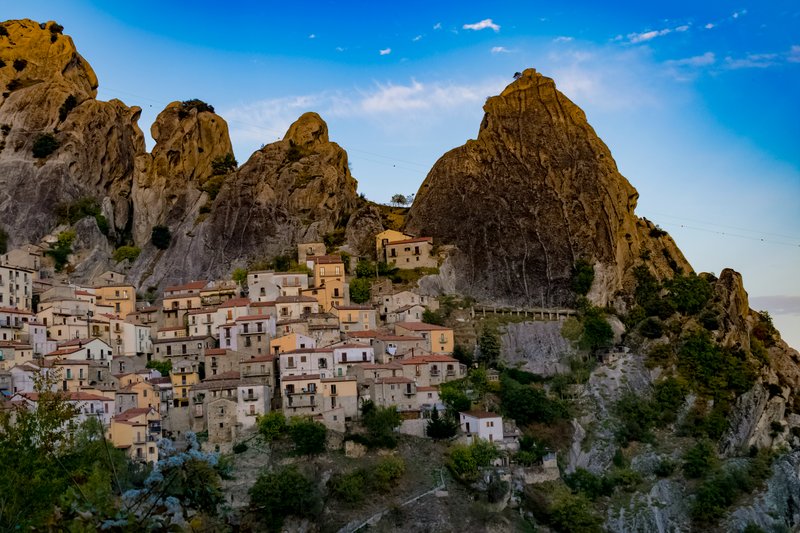
Three generations of women have shaped this Bib Gourmand kitchen in Castelmezzano's pedestrian quarter, where Antonietta upholds recipes rooted in the Lucanian Dolomites. Peperoni cruschi and cavatelli with pezzente sausage anchor a menu celebrating prized Podolica beef, local lamb, wild herbs, and artisan cheeses. Large windows frame the dramatic peaks, softening the intimate dining room with natural light and mountain theatre.
A Bib Gourmand address carved into Lavello's historic center, Forentum seats diners within a natural cave whose stone walls lend an almost primordial atmosphere to plates of rustic Basilicata cooking. The kitchen honors regional traditions while weaving in seafood, and evenings bring three pizza variations—classic Neapolitan, the paper-thin 'Papà Luigi', and a striking vegetable charcoal crust. A shaded terrace offers relief on warmer nights.
Along the road to Rocchetta Sant'Antonio, this family-run country restaurant earns its Bib Gourmand through honest Lucanian cooking at accessible prices. The kitchen works closely with regional ingredients, translating traditional recipes into generous plates that reflect Basilicata's pastoral heritage. A warm, unhurried atmosphere makes it ideal for travelers seeking authentic local flavors without pretense.
Two young friends built Bramea around a shared vision: one commands the kitchen, the other orchestrates the intimate dining room's few tables. Their extensive tasting menus showcase the Lucanian hinterland through creative, ingredient-driven compositions that feel both rooted and inventive. The Michelin Plate recognition confirms what the stripped-back setting suggests—serious cooking without pretense, ideal for travelers seeking substance over spectacle.
Fifteenth-century vaulted ceilings arch over this Venosa dining room, where a young owner-chef anchors his cooking in Basilicata's larder while steering it toward contemporary expression. Regional ingredients—supplemented by occasional fish preparations—arrive through precise, unhurried service. The setting suits travelers exploring the Lucanian Dolomites who seek a refined meal without metropolitan formality, rooted in place yet modern in execution.
Frequently Asked Questions
What are the signature dishes of Lucanian cuisine?
+
The region's defining flavors include cruschi peppers (dried and fried Senise peppers with an addictive crunch), lucanica sausage (the ancestor of all Italian salsiccia), strascinati pasta with cime di rapa or meat ragù, and acquasale — a peasant bread soup revived by contemporary chefs. Lamb and kid goat remain central to the mountain diet, often roasted with wild herbs from the Dolomiti Lucane.
Where should visitors eat in Potenza's historic center?
+
The Via Pretoria pedestrian spine and the streets descending from Piazza Mario Pagano concentrate the city's serious kitchens. Look for establishments displaying the Basilicata regional quality mark. The neighborhood around the Duomo offers traditional trattorias, while the lower town near the train station has seen newer openings focused on regional ingredients with contemporary presentation.
Is it worth visiting the Dolomiti Lucane villages specifically for food?
+
Absolutely. Castelmezzano and Pietrapertosa operate on a different rhythm — meals here are longer, ingredients hyper-local, and the setting (vertical rock faces, medieval stone houses) transforms dining into something theatrical. Several family-run establishments combine rooms with their restaurants, making an overnight stay the most practical way to experience multiple meals without navigating the winding mountain roads after dark.
Nearby Destinations
Explore ItalyThe kitchens of Basilicata draw from a landscape of extremes — from the jagged Lucanian Dolomites to the fertile valleys around the Basento river. In Potenza's centro storico, trattorias serve cruschi peppers fried until they shatter like glass, paired with hand-rolled strascinati pasta dressed in breadcrumbs and anchovy. The cooking here follows the shepherds' calendar: lamb in spring, pork preserves through winter, wild herbs foraged from Monte Vulture's slopes year-round.
Beyond the regional capital, the mountain villages of Pietrapertosa and Castelmezzano — clinging to the Dolomiti Lucane's sandstone towers — offer dining rooms where the main ingredient is altitude itself. Agriturismi in the surrounding valleys serve their own olive oil, house-cured soppressata, and canestrato cheese aged in tufa caves. This is a table shaped by terrain, where recipes have changed little since the Normans built the watchtowers that still punctuate the ridgelines.