Architect Ernesto Basile created this Art Nouveau landmark for the Florio dynasty, and its Belle Époque salons still display original frescoes alongside period antiques. Terraced gardens cascade toward the Mediterranean, while Olga Polizzi's restoration has filled the 100 rooms with handcrafted Sicilian furniture. Mornings bring cassate, cannoli, and granita at Ristorante Florio—an authentic introduction to the island's pastry traditions.
Where to Stay
Across 1,200 acres of working Sicilian farmland, this 19th-century baglio — a traditional fortified farmhouse — offers an adults-only retreat shaped by agricultural rhythms and absolute stillness. The rural isolation is deliberate: no distractions beyond the estate's excellent restaurant and the rolling countryside. Travelers seeking genuine disconnection from modern life will find few places as committed to tranquility.
Sir Rocco Forte and design luminary Olga Polizzi have lavished this Belle Époque landmark with a restoration worthy of its heritage. The hotel commands views over Acquasanta port from terraced gardens, its interiors achieving rare perfection in both style and comfort. Families with infants or older teenagers find the adaptable suites particularly appealing, though the atmosphere favors tranquility over exuberance.
Five generations of the Saeli-Rizzuto family have shaped this 200-year-old Sicilian farmhouse into a refined country retreat. Original ceiling beams and antique tiles anchor seventeen rooms in quiet austerity, while Il Granaio restaurant—set in the former granary with terra-cotta floors and a commanding fireplace—serves dishes prepared with estate-grown organic olive oil. A rooftop terrace surveys herb-scented hills; the wine bar occupies the historic winery.
A Dominican convent since 1373, this clifftop landmark above Taormina gained global recognition as The White Lotus filming location. Beyond the celebrity allure, the property rewards exploration: Latin-inscribed fireplaces, restored ceiling frescoes, and an ancient well punctuate the grand cloister. Chef Massimo Mantarro's Principe Cerami delivers refined Sicilian tasting menus, while the infinity pool surveys Mount Etna and the Ionian Sea.
On Ortigia's ancient streets, this boutique hotel channels the spirit of an English townhouse reimagined through Sicilian sensibility. A vine-draped terrace crowned by a reclining Buddha frames Mediterranean sunsets over the bay. The two-storey family suite—double bed below, twins above—welcomes children five and older, making it a rare find for cultured families exploring Syracuse's island quarter.
Richard Wagner once composed here; decades later, Lucky Luciano held court in its salons. A sweeping restoration has returned this Art Nouveau landmark on Via Roma to its original grandeur, its ornate interiors now paired with contemporary guest rooms that balance period flourishes against modern restraint. Connecting rooms and apartment-style suites accommodate families, making it central Palermo's most characterful address for multigenerational stays.
Five miles from Ortygia's baroque splendor, this rural boutique retreat occupies a quiet corner near Fonte Ciane, offering families an appealing counterpoint to Sicily's coastal bustle. The property earns high marks for service and facilities, making it particularly well-suited to summer travelers with children. A seasonal operation running late March through early November, it delivers countryside tranquility within easy reach of Syracuse's ancient treasures.
A restored agricultural estate in the Carboj valley, this western Sicilian retreat commands sweeping views toward the distant sea across untouched countryside. The restaurant earns particular acclaim for its refined regional cooking, while a swimming pool anchors the grounds. Larger rooms accommodate extra beds, making it a compelling option for families seeking rural tranquility with polished four-star comforts.
A restored family villa on Mount Etna's northern slopes, Palazzo Previtera anchors itself in Linguaglossa's unhurried Sicilian rhythms. The intimate property pairs a fine-dining restaurant with an on-site art gallery, while a swimming pool and bar offer languid afternoon respites. Families gravitate toward the three-bedroom garden cottage; couples and art collectors find quieter corners within the main house.
Where to Eat
Chef Tony Lo Coco's one-starred table occupies the ground floor of Villa Palagonia, the baroque palazzo Goethe once chronicled. The kitchen treats Sicilian tradition as a point of departure rather than doctrine, reworking regional ingredients—land and sea—across four tasting menus or à la carte. A chef's table seats four within arm's reach of the pass, while upstairs, some 1,300 wines await in vaulted cellars.
Beneath frescoed ceilings of a sixteenth-century palazzo facing Palermo's Cathedral, chef Carmelo Trentacosti crafts a personal vision of Sicilian cuisine—his signature caponata arrives as a velvety sauce enriched with Modica chocolate shavings. Three intimate dining rooms share space with Steve Jobs memorabilia, an unlikely pairing that somehow works. A fine cheese trolley precedes dessert, and afterwards, guests step onto the balcony for cathedral views.
Chef Giuseppe Costa works from a converted fish-salting warehouse in Terrasini, turning Sicilian tradition into precise, personal cooking that earned a Michelin star. Three tasting menus—including a vegetarian option—showcase his dual mastery of seafood and meat, with local purple prawns served raw alongside caviar and a lemon-ginger coulis emerging as the signature statement. A worthy detour from Palermo for serious gastronomes.
A sixteenth-century tower on the edge of Bagheria's historic centre houses this one-Michelin-starred table, named for the lemons blanketing the surrounding groves. Chef Nino Ferreri's dinner unfolds from a terrace lounge, where a succession of inventive appetisers previews the Sicilian creativity to come across two elegantly contemporary floors. Giandomenico Gambino orchestrates the service with polished ease.
A' Cuncuma occupies a modest dining room in Palermo's historic quarter, where chef Gianfilippo Gatto applies contemporary technique to Sicilian tradition. His signature arancina—stuffed with young caciocavallo, baked until golden, then crowned with orange prawn tartare over bisque—exemplifies this approach. The wine programme focuses exclusively on Sicilian producers, with particular depth in Etna bottlings from emerging vineyards worth exploring.
Antonello Gagini's sixteenth-century sculptor's workshop, positioned between the Vucciria market and Cala harbor, now houses a dining room where ancient stone meets bold contemporary design. A Piedmontese chef orchestrates an unexpected dialogue between Northern Italian traditions and Sicilian abundance—Nebrodi black pork prepared three ways, local bluefin tuna dressed with clam salmoriglio. The kitchen honors both terroirs with equal conviction.
Chef-patron Vladimiro Farina brings his Spanish heritage to Kalsa's dining scene, crafting dishes that bridge Iberian and Sicilian traditions with confident creativity. His signature salmorejo—a chilled Spanish soup reimagined with date tomatoes, watermelon, peaches, and aged cheese—exemplifies this cross-Mediterranean dialogue. The dining room strikes an appealing balance: elegant enough for a special evening, yet relaxed in its welcome. Michelin Plate.
The palazzo that hosted Visconti's legendary ball scene in The Leopard now shelters this contemporary Sicilian table, where long-time owners greet regulars and newcomers with equal warmth. The kitchen works local ingredients into modern compositions that honor tradition without nostalgia. For lighter appetites, the adjacent Occhiovivo! Bistrot serves cocktails and tapas with the same careful sourcing in a relaxed setting.
A late 16th-century patrician residence now housing an archaeological museum provides the theatrical backdrop for this contemporary dining room. Tables occupy a secluded inner courtyard where a retractable roof reveals the night sky on clear evenings, allowing guests to dine beneath the stars. The kitchen holds a Michelin Plate distinction, delivering refined contemporary cuisine in surroundings where Sicilian history permeates every stone.
Inside a former bottega on Via Vittorio Emanuele, Buatta channels the spirit of Sicilian home cooking through a Bib Gourmand lens. The kitchen rotates its offerings with the seasons—sarde a scottadito one week, offal preparations the next—drawing a loyal crowd of Palermitani alongside visitors. Reservations prove essential at this convivial address where traditional recipes meet contemporary sensibility.
Frequently Asked Questions
Which neighborhoods in Palermo are best for walking and sightseeing?
+
Kalsa offers the densest concentration of museums, churches, and restored palazzi, all within a compact area easily covered on foot. Via Vittorio Emanuele connects the major monuments from the Norman Palace to the sea. The Vucciria and Capo quarters reward aimless wandering through market stalls and baroque facades.
What is the local dining custom in Palermo?
+
Palermitans typically eat late — lunch around 13:30, dinner rarely before 21:00. Street food from market stalls serves as the traditional midday meal. Restaurants often offer a degustazione menu featuring multiple small courses. Reservations are essential at established restaurants, particularly on weekends.
When is the best season to visit Palermo?
+
April through June and September through October offer mild temperatures and manageable crowds. The Festino di Santa Rosalia in mid-July brings processions and fireworks but also peak summer heat. Winter remains mild by European standards, with cultural life continuing and markets operating year-round.
Nearby Destinations
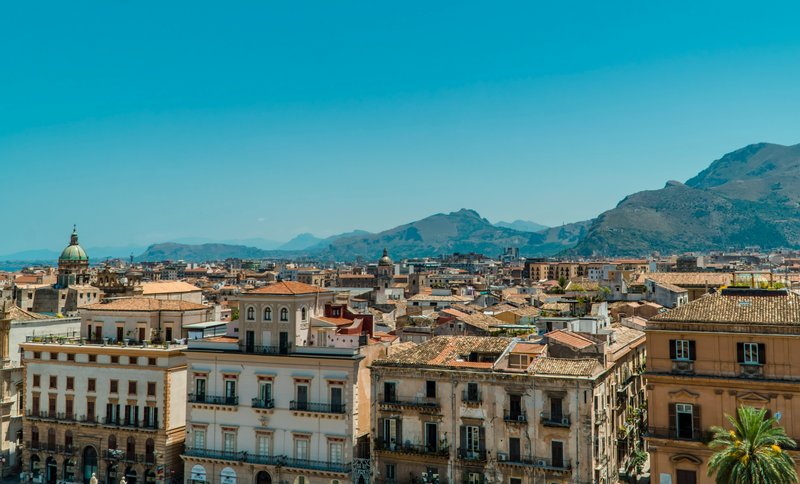
Explore ItalySicily's capital sprawls along the Conca d'Oro, a crescent of coastline backed by Monte Pellegrino. The historic center divides into four quarters — Kalsa, Albergheria, Capo, and Vucciria — each with its own rhythm. Kalsa, once the Arab emirs' fortified citadel, now hosts restored aristocratic palazzi and contemporary galleries. Albergheria surrounds the Ballarò market, where vendors have traded since the ninth century.
The dining scene draws from centuries of occupation: Arab-Norman, Spanish, French. Street food remains serious business — panelle, arancine, sfincione — sold from carts in Piazza Caracciolo and Via Maqueda. The caffè culture centers on Via Principe di Belmonte, a pedestrian stretch where espresso arrives with a glass of water and perhaps a brioche col tuppo. Evening aperitivo migrates to the waterfront at La Cala, the old harbor, where fishing boats still dock beside cocktail terraces.



