Once the residence of Renaissance notary Petrvs Facienus, this nine-room palazzo on Via del Duomo reveals frescoes discovered beneath layers of centuries-old plaster and coffered ceilings painstakingly restored by artisan hands. The restaurant occupies a deconsecrated church, lending dinner a quietly theatrical gravity. Striped textiles and carved stone doorways reinforce an aesthetic of disciplined opulence—suited to travelers who prefer history worn lightly rather than loudly proclaimed.
Where to Stay
Conceived by a former fashion designer as a luxurious hermitage, this adults-only retreat occupies a rustic stone structure deep within a 7,000-acre Umbrian nature reserve. The 18 rooms forgo televisions, phones, and wi-fi in favor of candlelit evenings and solar-powered days. A rock-hewn steam bath and whirlpool accompanied by Gregorian chant offer contemplative restoration, while the kitchen serves vegetarian dishes drawn from ancient monastic recipes using the hotel's organic garden produce.
Seven centuries ago, pilgrims bound for Rome's First Jubilee rested at this Umbrian hilltop estate; today's travelers make the journey here as the destination itself. The 13th-century stone facade gives way to contemporary suites with mullioned windows and vineyard views stretching to Orvieto's clifftop silhouette. With just seven rooms, an extensive wine cellar, seasonal pool, and gardens, this intimate property suits families and oenophiles seeking pastoral seclusion.
A Renaissance palazzo dating to the 16th century, Palazzo Piccolomini occupies a prime position on Piazza Ranieri, steps from Orvieto's cathedral and medieval landmarks. The restoration preserves original architectural bones while delivering four-star comforts. Service leans practical rather than lavish, and the atmosphere suits business travelers or couples seeking a historic base without fuss.
Umbria answers Tuscany's pastoral romance with this 26-room retreat near Orvieto, where purpose-built farmhouse architecture frames sweeping countryside views. Timbered ceilings and generous suites give way to SPA Livinna's extensive facilities—indoor and outdoor pools, steam room, hydromassage, multi-sensory showers. Restaurant Radici grounds the experience in regional terroir, its menu a showcase of impeccably sourced local produce and Umbrian wines.
Where to Eat
Overlooking Lake Corbara, Casa Vissani orchestrates an Umbrian dining ritual across distinct spaces—guests begin in a rock-hewn room for aperitifs before proceeding to the main hall where open kitchens appear framed like gallery pieces. The menu offers two tasting formats: a focused four-course exploration or an expansive seven-course progression through regional traditions, each dish rooted in territorial Italian craft.
Amid the rolling green valleys surrounding Castel Giorgio, Radici draws its identity from an uncompromising local philosophy: the Origini 20 tasting menu sources every ingredient within a twenty-kilometer radius. The kitchen channels regional Umbrian traditions through a creative lens, presenting dishes in an elegant dining room or on an outdoor terrace overlooking the grounds of Borgo La Chiaracia.
Perched above Lake Corbara with sweeping views across the water, this intimate family table has served Umbrian cooking since 1964. The kitchen honors regional traditions—think generous Sunday dishes and home-style recipes—while adding contemporary intensity to each plate. With only a handful of seats, the atmosphere remains personal, unhurried, and deeply rooted in local gastronomy.
Chef Anna Rita's Umbrian kitchen occupies a prime position on Piazza Sant'Angelo, where the summer garden frames direct views of Orvieto's Gothic cathedral. Her cooking favors regional precision—soft egg layered with pan-fried courgettes, spring onions, and pecorino crumble; veal rump paired with Jerusalem artichoke and house-pickled vegetables. The wine list leans local, with late-harvest Orvieto Classico a fitting dessert companion.
Three generations of the Cinti family have shaped La Palomba into Orvieto's quintessential trattoria, its worn wooden tables and convivial atmosphere unchanged since 1965. The kitchen channels Umbrian tradition through hand-rolled umbrichelli pasta, the thick strands dressed in robust local sauces that vary with the season. A modern sensibility lightens the approach without diminishing authenticity—ideal for travelers seeking regional cooking with genuine lineage.
Frequently Asked Questions
Which neighborhood in Orvieto offers the most authentic medieval atmosphere?
+
The Quartiere Medievale around San Giovenale church preserves the town's oldest character, with narrow vicoli, artisan workshops, and viewpoints over the western cliffs that see far fewer visitors than the Duomo piazza.
What is the best way to reach Orvieto's historic center from the train station?
+
The funicular railway connects Orvieto Scalo station directly to Piazza Cahen in under three minutes. From there, a shuttle bus or pleasant walk along Corso Cavour leads to the cathedral square and main accommodation zone.
When do local wine cellars and enotecas typically open for tastings?
+
Most enotecas along Corso Cavour and Via del Duomo open from late morning through evening, with the liveliest tastings between 17:00 and 20:00 during the traditional aperitivo hours. Several producers in the surrounding countryside receive visitors by appointment.
Nearby Destinations
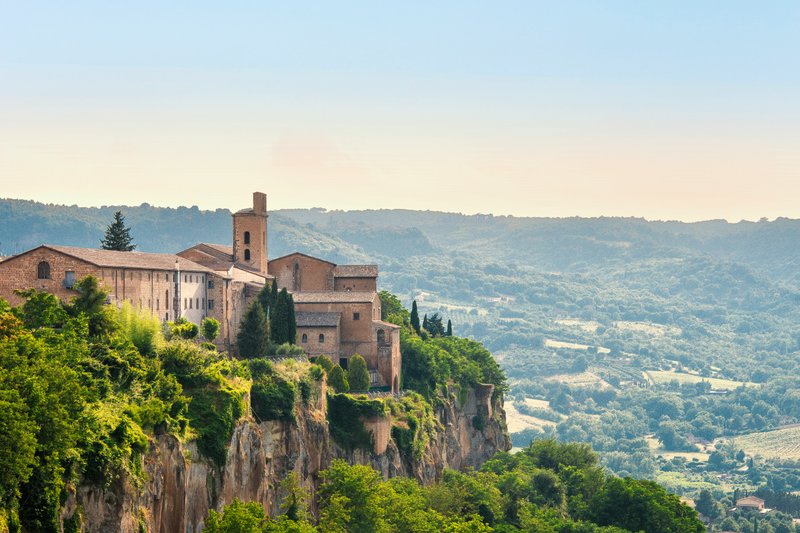
Explore ItalyRising dramatically from volcanic tufa cliffs above the Paglia valley, this Umbrian hill town rewards visitors who venture beyond the celebrated Duomo. The medieval quarters of San Giovenale and San Andrea retain their thirteenth-century street plan, where stone palazzi now house intimate guesthouses with views stretching to Monte Amiata. The funicular from the valley floor deposits travelers directly into a town where cars remain largely absent — a rare quiet in central Italy.
The local table reflects Umbria's reputation as Italy's green heart: wild boar ragù, hand-rolled umbrichelli pasta, and the prized chickpeas of nearby Colfiorito appear on menus throughout the centro storico. Winemakers in the surrounding DOC zone produce Orvieto Classico from ancient Etruscan cave cellars carved into the same tufa that supports the town. Evening aperitivo unfolds along Corso Cavour, where enotecas pour local vintages alongside plates of aged pecorino and truffle-studded salumi.



