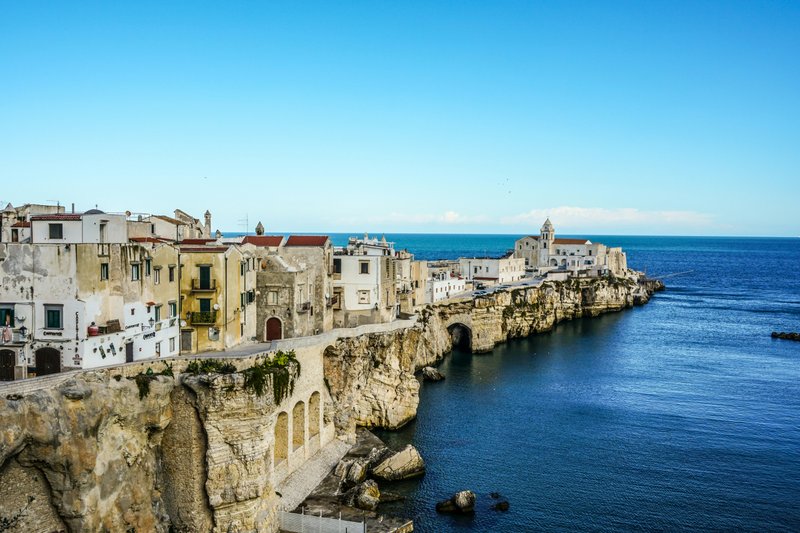
Perched on a cliff above the Adriatic, Porta di Basso offers one of Gargano's most dramatic dining settings—tables on the terrace seem to float above the waves. Chef Domenico Cilenti forgoes à la carte entirely, presenting two tasting menus that channel the peninsula's dual identity: one celebrating its seafood, another devoted to vegetarian interpretations of regional produce.
Stone vaults from a historic palazzo's former stables now shelter one of Lucera's most compelling tables, where black and gold décor frames a collection of over 400 wines. The kitchen takes a refreshingly direct approach to Mediterranean seafood—red tuna, swordfish, prawns, scampi—letting pristine ingredients speak through vibrant, vegetable-accented plates rather than elaborate technique. The signature seafood focaccia deserves particular attention.
On a quiet piazza in Monte Sant'Angelo, Li Jalantuùmene serves the rustic cooking of the Gargano with an adventurous undercurrent. The kitchen honors local traditions while introducing unexpected ingredients and preparations that reward curious palates. Summer transforms the experience entirely, with tables spilling onto the square beneath the evening light—an ideal setting for unhurried meals rooted in this corner of Puglia.
A young chef with formative years spent in his parents' kitchen now helms this contemporary dining room on a pedestrianized street in Lucera's historic quarter. The Bib Gourmand-recognized menu showcases seasonal seafood prepared with confident simplicity, each dish reflecting genuine value without compromise on quality. When summer arrives, tables spill outside beneath the old town's facades—an understated setting for cooking that lets ingredients speak clearly.
Overlooking Lesina's tranquil lake, this intimate address earned its Bib Gourmand through the owner-chef's exacting standards—sourcing fish and wild herbs from surrounding waters, even producing his own bottarga in-house. The kitchen channels Puglia's coastal traditions with restrained contemporary touches, delivering regional authenticity at fair value. A worthy detour for travelers exploring Gargano's quieter shores.
Perched above Vieste's marina, Acqua draws its strength from an unbroken supply chain: the kitchen's fish and seafood arrive directly from the family's own fishmongers. A young chef with an established reputation crafts contemporary Apulian plates, occasionally pushing into creative territory while keeping local ingredients at the fore. The setting suits travelers seeking refined coastal dining with genuine provenance.
Carved into a natural cave along Vieste's historic via Duomo, Al Dragone turns geological drama into an intimate dining room. The kitchen channels Puglia's coastal traditions through Mediterranean preparations marked by both precision and creative flourish—scampi wrapped in a delicate almond crust demonstrates this balance particularly well. The cave's cool stone walls and ambient lighting suit unhurried summer evenings exploring regional flavors.
A family-run address near Manfredonia's waterfront, Coppola Rossa channels Apulian coastal traditions through its fish and seafood specialties. The generous antipasto buffet sets the tone before plates of local catch arrive, prepared with regional simplicity. When winter descends on the Gargano, an open-view grill shifts focus to meat, adding warmth and theater to the intimate dining room.
Brick vaults arch overhead in the converted outbuildings of Palazzo Baronale, setting an atmospheric stage for Corte Federiciana's seafood-driven cuisine. The kitchen works fish raw, baked, and tossed with fresh pasta, threading traditional Puglian instincts through contemporary technique. Service strikes a warm, unhurried note—fitting for a restaurant that rewards those who venture into Apricena's historic quarter seeking the Gargano coast's marine bounty.
Twenty seats beneath undulating wood panels that curve overhead like a frozen wave—Gallery Bistrot Contemporaneo turns intimate dining into architectural theater. The kitchen channels Apulian tradition through a modern lens, yielding dishes like risotto with clams, cauliflower, and an unexpected touch of cocoa. A Michelin Plate holder, this Troia address rewards travelers willing to venture beyond the Gargano coast.
Frequently Asked Questions
When is the best season to visit Gargano?
+
Late May through June and September offer ideal conditions — warm seas for swimming, uncrowded beaches, and comfortable temperatures for exploring the Foresta Umbra trails. July and August bring Italian holiday crowds, particularly to Vieste and the coastal campgrounds, though the shoulder months reveal a quieter, more authentic character.
Which Gargano towns offer the best dining experiences?
+
Vieste has the greatest concentration of quality restaurants, from harbour-front seafood spots to refined contemporary Italian. Peschici offers more intimate, family-run trattorias with spectacular sunset views. For the trabucchi experience — dining on historic fishing platforms — head to the stretch between Vieste and Peschici along the coastal road.
How do I reach Gargano from major Italian cities?
+
The nearest airports are Bari (180km south) and Foggia's small regional airport. From Bari, the drive north takes approximately two hours via the A14 autostrada and SS89 coastal road. Summer ferry services connect the Tremiti Islands, and regional buses link the main towns, though a car remains essential for exploring the promontory's hidden coves and interior villages.
Nearby Destinations
Explore ItalyThe Gargano promontory rises from the Adriatic as a mountainous spur, its limestone cliffs dropping sharply into transparent waters while the interior conceals the ancient Foresta Umbra, one of Italy's last primeval beech forests. The coastal towns — Vieste perched on its rocky headland, Peschici tumbling down whitewashed terraces, Mattinata backed by olive groves — each maintain distinct characters shaped by centuries of fishing traditions and pilgrimage routes to Monte Sant'Angelo's grotto sanctuary.
Dining here follows the rhythms of the sea and the seasons. Morning catches appear on trattorias menus by noon: raw scampi, spaghetti alle vongole, brodetto di pesce simmered in earthenware. Inland, the cucina povera traditions persist — orecchiette with wild chicory, lamb slow-cooked with lampascioni bulbs, fava bean purée drizzled with the region's intensely green olive oil. The trabucchi, ancient wooden fishing platforms extending over the water on spindly legs, have been converted into atmospheric restaurants where you dine suspended above the waves.