


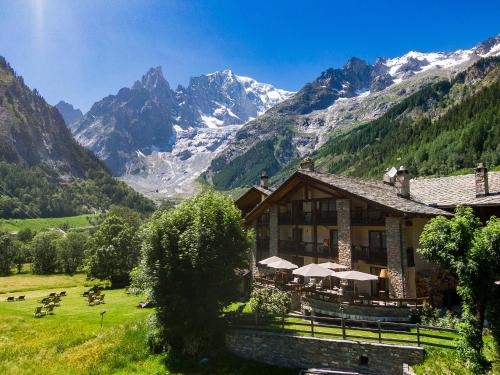
Warm wood paneling, crackling open fires, and 33 individually appointed rooms give Auberge de la Maison the intimacy of a private Alpine residence. The renovated spa complex features a hammam, sauna, and jacuzzi, while both indoor and outdoor pools offer year-round swimming. At the Aubergine restaurant, refined mountain cuisine arrives with front-row views of Mont Blanc's glaciated peaks.
Courmayeur Travel Guide: Best Hotels, Restaurants & Experiences 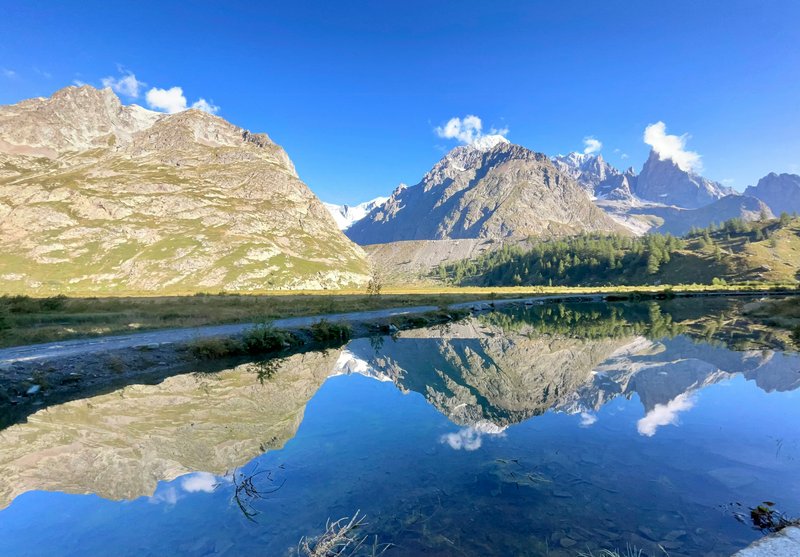
Explore Courmayeur
Hotels (3)
Restaurants (1)
Where to Stay

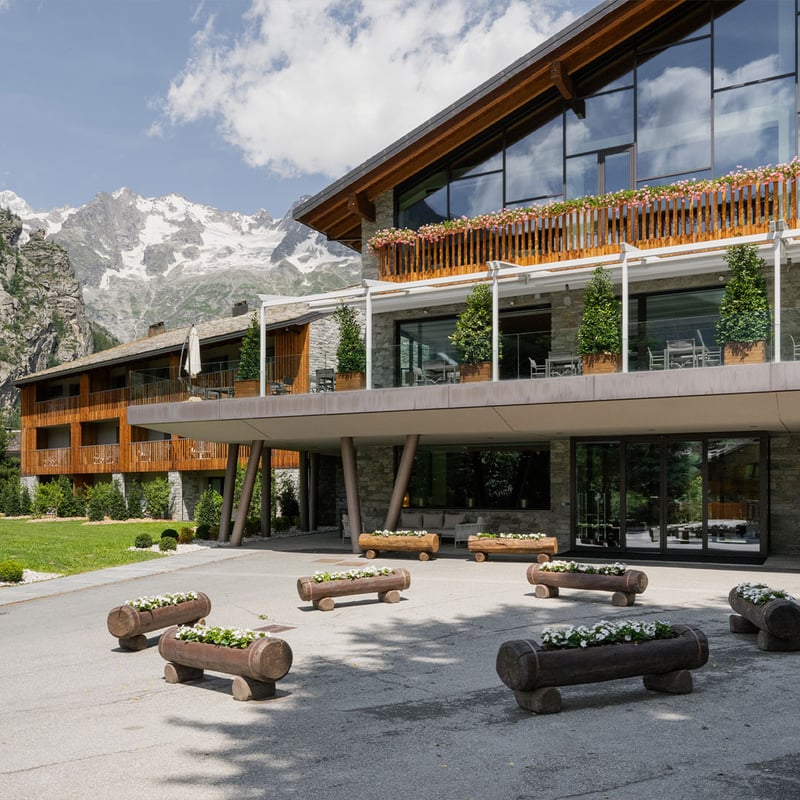
Despite its traditional mountain-chalet architecture, this 72-room property brings contemporary polish to Courmayeur's slopes. Bright rooms feature parquet floors, exposed beams, and leather accents beneath floor-to-ceiling windows; most open onto private balconies facing Mont Blanc. The wood-lined bar and heated terrace draw skiers for après-ski drinks, while an indoor pool, sauna, and spa offer recovery. Suites add Jacuzzis for extra indulgence.

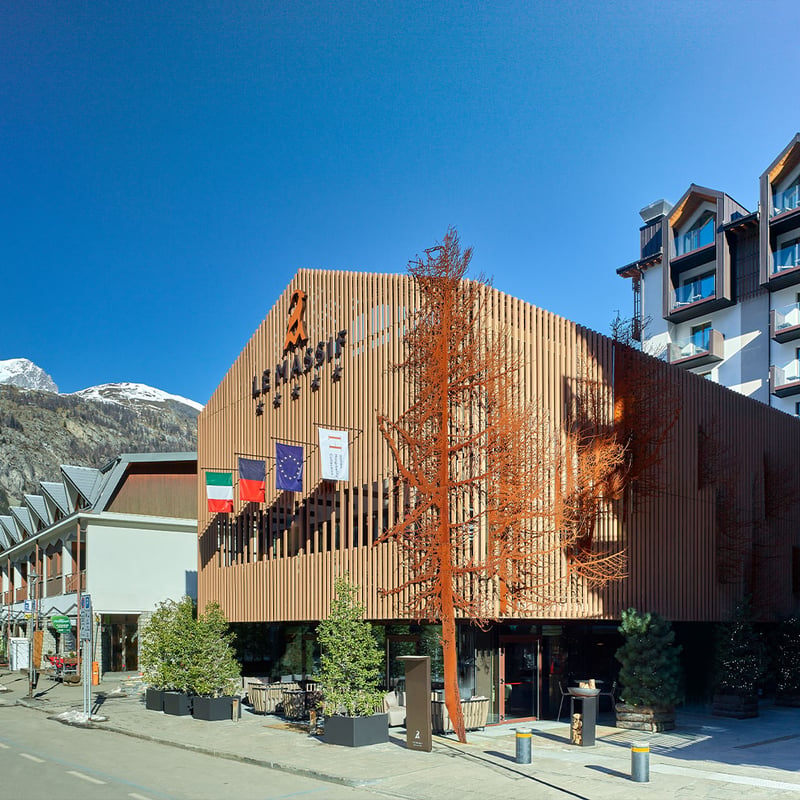
A bold contemporary silhouette against the Mont Blanc massif, Le Massif pairs modern-rustic interiors with panoramic Alpine views from all 80 rooms. Three restaurants include La Loge du Massif, set directly on the ski slopes for midday indulgence. The spa features sauna and jacuzzi facilities, while a dedicated kids' club makes this a compelling choice for families seeking refined mountain hospitality.

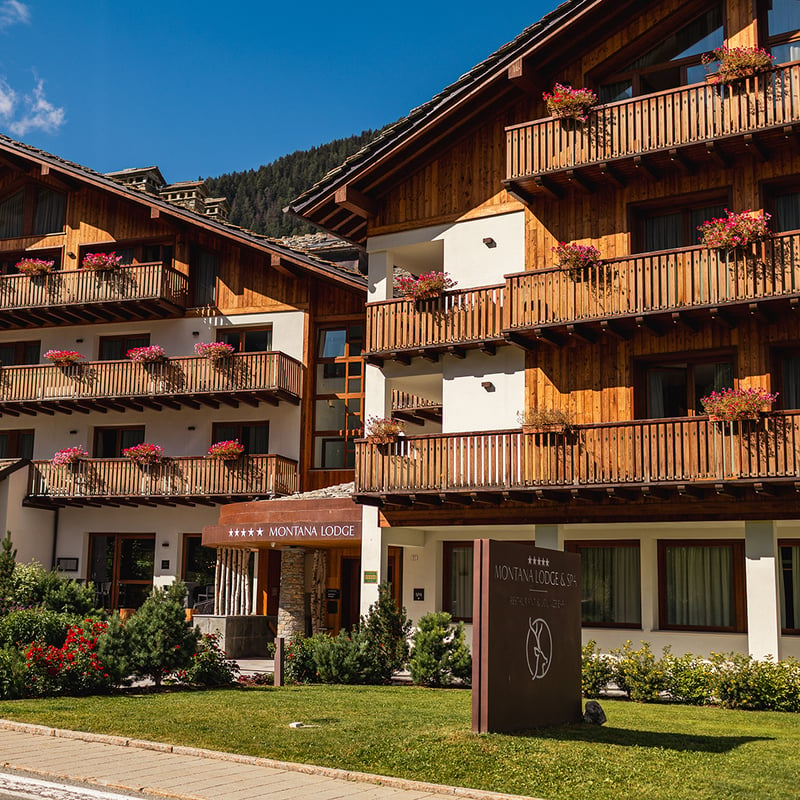
La Thuile's first luxury address, Montana Lodge & Spa brought boutique Alpine hospitality to this quieter corner of the Aosta Valley. Interiors layer rustic unfinished wood against sleek Italian furnishings, while spacious rooms come appointed with Hästens beds and Lavazza espresso machines. A full spa circuit—indoor pool, jacuzzi, hammam, sauna—restores skiers after runs accessed directly via on-site rental equipment. Families and pet owners welcome.
Where to Eat

Michelin Selected
At the foot of Mont Blanc in La Palud, this intimate wine bar pairs a Japanese chef's inventive touch with the Aosta Valley's finest ingredients. Guests select bottles directly from shelves lining the compact dining room, accompanying dishes that drift between tradition and fusion—capon salad brightened with yuzu, puntarelle, and black garlic among them. Reservations prove essential during peak season.

Michelin Selected
A century-old building in Courmayeur's historic quarter—once stables, then a carpenter's workshop—now houses this Alpine table where traditional recipes receive inventive treatment. Venison Rossini exemplifies the kitchen's approach: classic foundations lifted by foraged wild herbs and rigorously local sourcing. The wine list runs deep, with an extensive selection that rewards exploration. Warm, rustic, and confidently rooted in mountain tradition.
Frequently Asked Questions
What is the best area to stay for ski access in Courmayeur?
+
Properties near Plan Checrouit offer the most direct connection to the slopes, with the main cable car departing from the edge of the village. Dolonne, across the Dora Baltea river, provides a quieter alternative with its own lift access and traditional hamlet atmosphere.
When does the summer hiking season begin in Courmayeur?
+
Mountain refuges and high-altitude trails typically open in mid-June once snowmelt permits safe passage. The Tour du Mont Blanc section through Val Ferret sees peak traffic from July through early September, when weather conditions are most stable.
What local dishes should visitors try in Courmayeur?
+
Valdostan cuisine centers on mountain staples: polenta concia enriched with melted fontina and butter, seupa à la Vapelenentse (a cabbage and bread soup), and mocetta cured beef served with rye bread. Local honey and apple desserts reflect the valley's agricultural traditions.
Nearby Destinations
Explore Italy



Courmayeur
At the foot of Mont Blanc, this compact Valdostan town has catered to mountaineers and winter sports enthusiasts since the nineteenth century. The pedestrianized Via Roma forms the social spine, lined with traditional stone buildings housing equipment shops, wine bars, and restaurants serving fontina-laced cuisine. The Skyway Monte Bianco cable car, rising to Punta Helbronner at 3,466 meters, draws visitors year-round for glacier views into France and Switzerland.
The hotel landscape splits between historic establishments in the village center and newer properties toward Planpincieux and Entrèves, the latter offering direct access to the Val Ferret hiking trails. Local dining leans heavily on Valdostan traditions: polenta concia, carbonada, and cured lard from Arnad appear on most menus. After-ski culture thrives in the bars clustered around Piazzale Monte Bianco, where génépy digestifs and craft beers flow until late. Summer brings trail runners and climbers who use the town as a base for the Tour du Mont Blanc circuit.