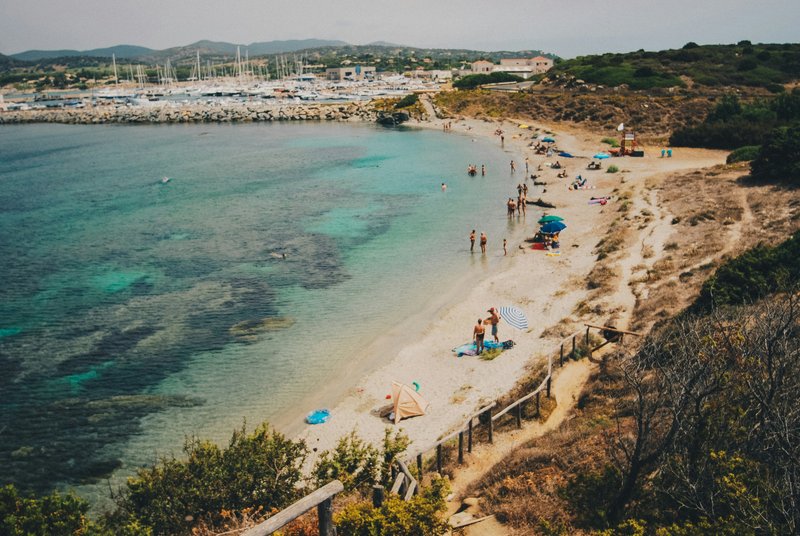
Anchored within the sprawling Forte Village resort on Sardinia's southwestern coast, Hotel Il Castello delivers a five-star experience designed for families in motion. Children disappear into Wonderland—a fantasy realm of circus performances, theatre, and a miniature train circling the grounds—while parents claim the spa, pools, and extensive sandy beach. Sports academies led by international coaches add genuine athletic credibility to the holiday formula.
Where to Stay
Nine suites occupy this restored Cagliari townhouse where antique brickwork meets poured concrete and weathered timbers frame new hardwood floors—each room a distinct collaboration with Sardinian artist STUDIO PILIA and local craftspeople. The owners run the Nieddittas mussel cooperative, supplying the restaurant's seafood-focused menu. A green courtyard garden, seasonal pool, rooftop bar, and on-site wine cellar complete the picture.
Studio Marco Piva's minimalist interiors let Sardinia's coastal drama speak for itself at this 107-room retreat on the island's southern shore. The lobby doubles as a gallery of local artisan work, while Conrad Spa's outdoor wet lounge offers three massage pools perfumed with wild juniper and myrtle. Families gravitate toward the Oasi suites with private pools; couples claim terraces facing the Mediterranean.
A thousand square meters of landscaped gardens deliver unexpected tranquility within walking distance of Cagliari's medieval quarter and marina. This 19-room villa pairs preserved period architecture with contemporary Italian design across accommodations ranging from intimate doubles to a dramatic two-level suite. A heated jacuzzi punctuates the grounds, while the bar and light lunch service reinforce the manor-house atmosphere that defines the property.
A century ago, D.H. Lawrence and his wife stayed with the Lunetta family in Màndas; today, their descendants—Barbara, Gian Luca, and Agostino—continue that tradition of warm Sardinian hospitality. This intimate B&B de charme occupies a secluded retreat within the town centre, its nine refined rooms complemented by excellent dining. Families find particular welcome here, with cots provided free and extra beds readily available.
An archaeologist's passion project, this 19th-century manor house in Gesturi has been restored using traditional Sardinian methods, its nine rooms retaining authentic character while welcoming families with young children. The location proves strategic for exploring the UNESCO-listed Nuragic complex of Su Nuraxi and venturing onto the Giara plateau, where wild horses roam volcanic terrain scattered with cork oaks.
An hour north of Cagliari, this family-run farmhouse in the village of Gergei offers an unhurried immersion into traditional Sardinian life. The affectionately restored property serves as a base for exploring nearby Nuragic archaeological sites and spotting the wild horses that still roam this remote interior. A relaxed atmosphere suits families well, with additional beds and cots readily available.
From every angle of this family-run property on Golfo Aranci, the Sardinian gulf dominates—a sweep of glittering Mediterranean that justifies the journey alone. Recently refreshed rooms maintain a refined quiet, while a lagoon-style pool and private beach stretch below. Two restaurants under a single gourmet chef deliver serious Sardinian cooking, making this four-star superior a compelling coastal base.
Perched above the dramatic Red Coast in Gallura, Hotel Marinedda commands sweeping views over rocky coves and sandy beaches mere steps from its grounds. The property houses one of Sardinia's most expansive spas, complemented by both seawater and freshwater pools. A refined, romantic sensibility pervades the five-star retreat, though comprehensive kids' clubs and family suites ensure younger guests find their place.
Perched along Sardinia's rugged northern coastline near Isola Rossa, this Delphina group property commands sweeping Mediterranean views from its sun-drenched terraces. The extensive Thalasso spa draws wellness seekers, while a lagoon-style pool and nearby beach satisfy those craving salt and sun. Families find space in the larger suites and self-catering villas, though the spa remains an adults-only sanctuary for guests fourteen and older.
Where to Eat
Reaching Fradis Minoris requires a walk along an isthmus into the Nora Lagoon Natural Park, a protected marine area the owners themselves manage. Chef Francesco Stara's single tasting menu draws from this ecosystem directly—lagoon-caught fish, foraged wild herbs, vegetables from nearby Campidano farms. The wine list champions small Sardinian producers exclusively. One Michelin star and a Green Star recognize this fully circular, deeply local approach.
Perched on the second floor of the 19th-century Palazzo Boyl, Gli Uffici commands views over Bastioni di Saint Remy from a terrace framed by statues of the four seasons. Puglian chef Tommaso Sanguedolce brings Mediterranean precision to both fish and meat, his signature warm sourdough maritozzo—paired with pistachio ice-cream and saffron ricotta—capturing the kitchen's inventive spirit.
Tuna reigns supreme at this celebrated Cagliari address, where the Pomata family's own catch anchors a menu of reimagined Sardinian classics. The kitchen treats Mediterranean traditions with respectful creativity, presenting dishes in sleek modern dining rooms or on the terrace overlooking Viale Regina Margherita. Devotees leave with tins of the house tuna—proof that some flavors deserve to travel home.
Chef Davide Atzeni brings years of professional experience to Coxinendi — the name itself Sardinian dialect for "cooking" — where traditional island cuisine takes center stage. The kitchen delivers authentic regional dishes with robust, time-honored flavors that earned a Bib Gourmand for quality and value. Located in Sanluri, this bistronomic address rewards travelers venturing beyond Cagliari's city limits.
Tucked away from Cagliari's bustling shopping district, Old Friend delivers contemporary cuisine that earned it a Bib Gourmand for exceptional value. The kitchen shifts fluidly between meat, fish, and vegetarian preparations as seasons turn, while three distinct tasting menus offer deeper exploration. A fresh, modern dining room with easy background music and attentive service creates an atmosphere suited to unhurried evenings.
Shelves lined with local bottles double as the wine list at this Bib Gourmand address on Piazza Galileo Galilei, where knowledgeable staff guide selections with ease. The kitchen channels Sardinian terroir through farm-to-table plates—regional classics alongside inventive combinations that push tradition forward. Guests choose between proper table service or the sociable energy of counter seating, a flexibility matched by simpler midday offerings.
The tilde hovering over Amanõ's name hints at the Mediterranean crossing between the chef's native Campania and Sardinia—a journey reflected in seafood preparations that reimagine the island's ingredients through an inventive lens. A handful of tables face an open kitchen where elaborate dishes take shape, while hand-crafted decorations line the intimate space, giving literal meaning to the restaurant's name.
Chef Marina's small neighbourhood restaurant on Corso Vittorio Emanuele channels the rugged interior of Sardinia rather than its coastline. The signature Su Filindeu—gossamer threads of pasta layered in threes and served in broth—demands rare technical mastery, a specialty from her native Nuoro region. While the focus remains firmly inland, two or three fish preparations offer coastal counterpoint. Michelin-recognized.
Near the Bastione di Saint Remy, where Cagliari's pedestrian quarter begins, Marino welcomes diners with infectious enthusiasm, recounting the restaurant's storied past while guiding them through the menu. His wife Silvana commands the kitchen, turning out Mediterranean plates inflected with Sardinian tradition—the fish and seafood preparations earning particular devotion. A Michelin Plate address for unhurried, convivial meals.
Chef Patron Luca Floris orchestrates a farm-to-table menu where contemporary technique meets Sardinian terroir. His raw tuna carpaccio—glazed with teriyaki and brightened by sweet camoni tomato chutney—exemplifies the kitchen's confident East-meets-Mediterranean instincts, while Saint-Pierre scallop arrives atop layered vegetable textures. The narrow dining room, bathed in subdued light against modern furnishings, suits intimate dinners where each plate rewards close attention.
Frequently Asked Questions
Which neighborhoods in Cagliari offer the best hotel locations?
+
Castello provides historic atmosphere within medieval walls, with properties in converted palazzos offering views across the city to the sea. Marina suits travelers who prefer walkable access to restaurants and nightlife. For beach proximity, the Poetto waterfront has modern hotels within steps of the sand, though you'll be a short drive from the historic center.
What local dishes should visitors try in Cagliari?
+
Fregola con arselle — toasted semolina pasta with clams — appears on nearly every menu and showcases local seafood traditions. Bottarga, the cured mullet roe from the nearby lagoons, is grated over pasta or served in thin slices with olive oil. From the interior, porceddu (spit-roasted suckling pig) and culurgiones (stuffed pasta from Ogliastra) represent the island's pastoral heritage.
When is the best time to visit Cagliari?
+
Late spring through early summer (May to June) brings warm weather without August's crowds and peak prices. September and October offer swimming temperatures and harvest season dining. The Sant'Efisio festival in early May fills the streets with traditional costumes and ox-drawn carts — the island's largest religious procession, drawing participants from villages across Sardinia.
Nearby Destinations
Explore ItalyCagliari rises from the Mediterranean on a series of limestone hills, its ancient Castello quarter crowning the skyline with thirteenth-century Pisan towers and Spanish-era ramparts. The city unfolds downward through distinct neighborhoods: Marina, where narrow streets open onto piazzas lined with aperitivo bars; Stampace, the artisan quarter where silversmiths once worked; and Villanova, still marked by its medieval gates. Hotels here range from converted noble residences within the old walls to contemporary seafront properties along the Poetto beach strip, an eight-kilometer stretch of white sand backed by the Molentargius wetlands where flamingos gather year-round.
The dining scene reflects Sardinia's dual identity — island isolation meeting centuries of maritime trade. Fregola with arselle clams, bottarga shaved over everything from eggs to artichokes, and suckling pig from the interior define menus in trattorias tucked beneath vaulted ceilings. Evening drinks follow the Italian rhythm: vermouth hour in Marina, then wine bars in the shadow of the Bastion Saint-Remy, the monumental staircase connecting the upper and lower towns. The covered Mercato di San Benedetto, one of Europe's largest food markets, anchors the city's culinary identity with stalls of tuna, ricotta, and mirto liqueur.