


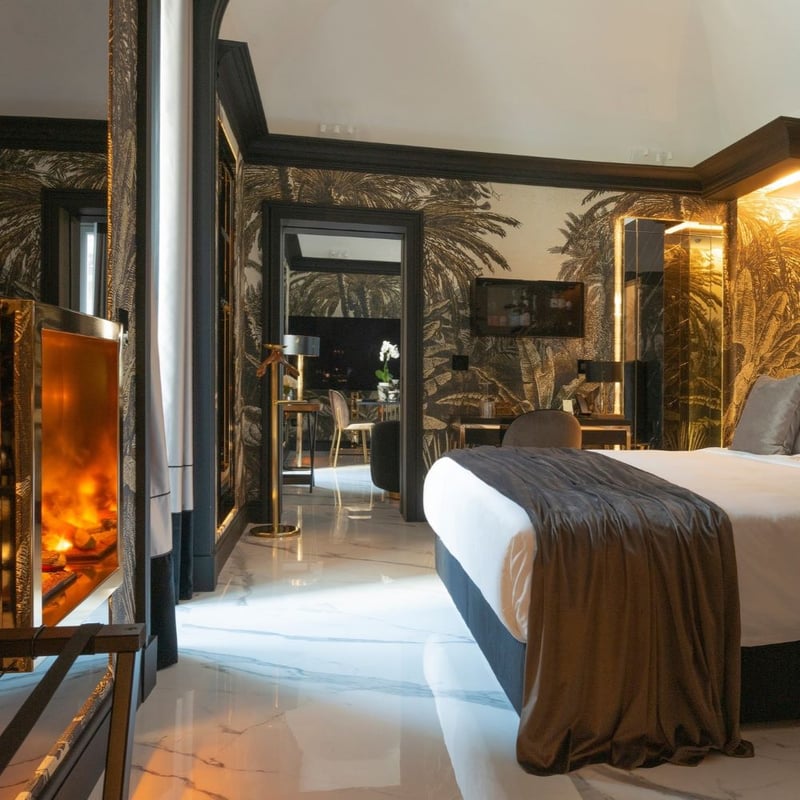
Ten rooms bring urban sophistication to Puglia's capital, each fitted with chromotherapy showers and Diptyque amenities, while the top suite adds a private hammam and whirlpool tub. Three venues anchor the experience: the upscale Celebra restaurant, a swanky lounge bar, and a white marble rooftop with seasonal pool overlooking Murat's shopping streets. A polished base for exploring Bari Vecchia and the waterfront, steps away.
Bari Travel Guide: Best Hotels, Restaurants & Experiences 
Explore Bari
Hotels (1)
Restaurants (2)
Where to Stay

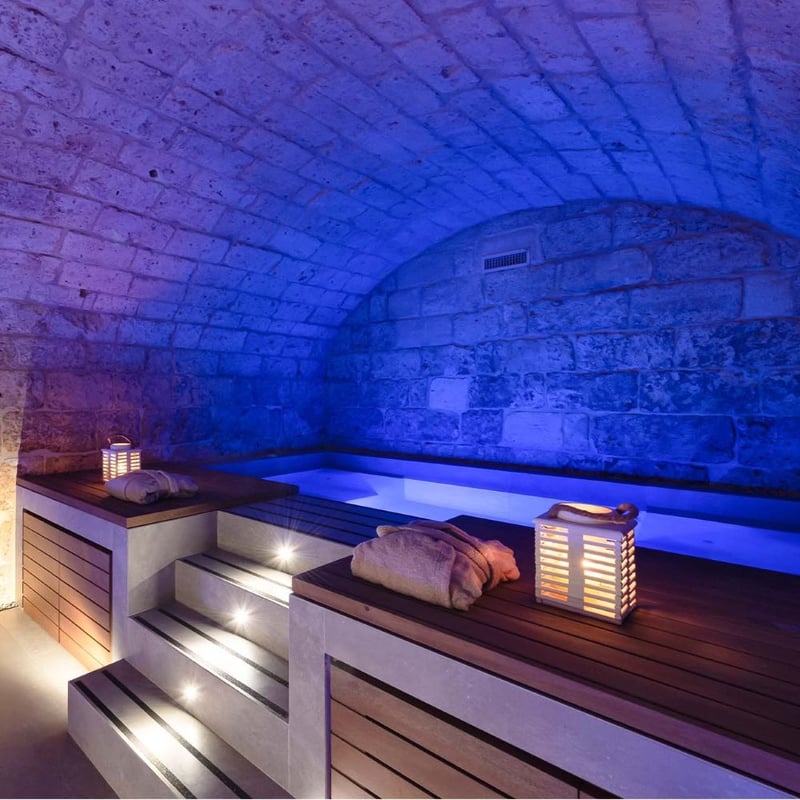
Beneath this twelve-room boutique property, ancient cellars have been carved into a subterranean spa where original stonework frames a pool, hammam, and sauna. Upstairs, accommodations range from compact Pretty Rooms with balconies to Surprising Suites with bold palettes and low-slung beds, while one Charming Room claims its own private pool. Two Amazing Suites crown the collection with oversized showers and soaking tubs. Bari's old town and harbor sit minutes away on foot.
Where to Eat

Michelin Selected
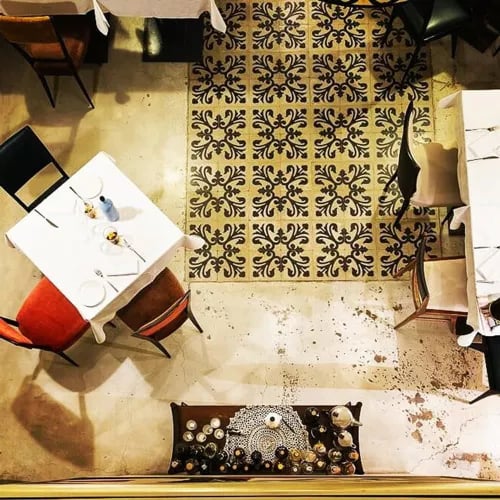
Chef Antonio Scalera has built one of Bari's most compelling dining addresses on a foundation of Puglian tradition, reimagined with creative precision. Each dish draws from regional recipes and local ingredients, yet arrives at the table with unexpected sophistication. The wine program deserves particular attention—bottles are chosen not merely for quality but for the stories they carry, adding narrative depth to an already distinguished meal.

Bib Gourmand
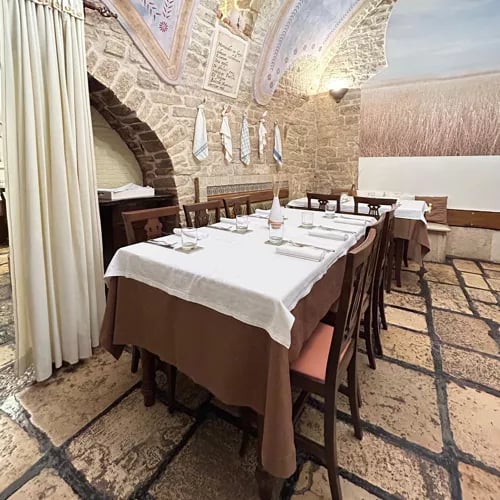
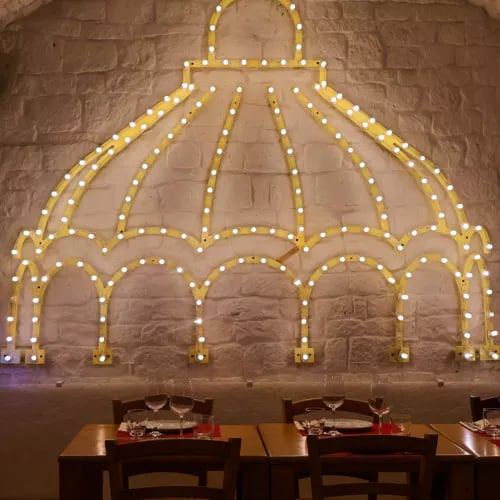
Dining rooms carved into ancient Aragonese rock walls set the stage for this Bib Gourmand address in Ruvo di Puglia. The kitchen draws deeply from Apulian traditions: burnt wheat orecchiette, cardoncelli mushrooms foraged from local terrain, and aged cheeses from the Murgia hills. A meat-centric menu accommodates vegetarians, while homemade desserts provide a sweet conclusion to meals rooted firmly in regional identity.

Michelin Selected
A glass-walled kitchen anchors this contemporary dining room in Altamura, where the brigade toggles between two distinct registers: rooted Puglian cooking and boundary-pushing creations. The latter yields a signature worth the detour—black rice tacos cradling roasted eel, green beans, soya sprouts, and a spicy hummus mayo, served with the explicit instruction to abandon cutlery. Michelin Plate.

Michelin Selected
Barrel-vaulted ceilings and weathered stone walls frame the traditional dining rooms of this Conversano address, steps from the town's medieval castle and cathedral. The kitchen delivers authentic Puglian cuisine—regional classics given occasional creative flourishes and plated with evident care. An alleyway terrace offers atmospheric outdoor seating, ideal for lingering over local wines as the evening settles over the historic centre.
Frequently Asked Questions
What neighborhoods should I explore in Bari?
+
Bari Vecchia, the medieval core, offers winding limestone alleys, Romanesque churches, and authentic street life. The Murattiano district provides elegant nineteenth-century architecture and the city's main shopping streets. The Lungomare seafront promenade connects both areas and offers evening passeggiata culture.
What is Bari known for gastronomically?
+
The city claims orecchiette pasta as its own—watch it being made by hand in Strada Arco Basso. Raw seafood preparations are a local specialty, particularly sea urchin and octopus. Focaccia barese, topped with tomatoes and olives, rivals any bread tradition in Italy.
Is Bari a good base for exploring Puglia?
+
The city functions as an excellent regional hub. Polignano a Mare and Monopoli lie thirty minutes south, the trulli of Alberobello under an hour, and Matera—technically in Basilicata—sits just across the regional border. Bari's airport and train connections make day trips straightforward.
Nearby Destinations
Explore Italy



Bari
Bari reveals itself slowly, through the labyrinthine alleys of Bari Vecchia where elderly women shape orecchiette on doorstep tables, through the grand sweep of the Lungomare Nazario Sauro stretching five kilometers along the Adriatic, through the imposing Norman-Swabian castle that has watched over this port city since the twelfth century. The historic quarter clusters around the Basilica di San Nicola, a Romanesque masterpiece holding the relics of Saint Nicholas, drawing Orthodox pilgrims from across Eastern Europe alongside Italian weekend visitors.
The Murattiano district offers a different rhythm—nineteenth-century grid streets lined with Liberty-style palazzi, independent boutiques along Via Sparano, and the morning bustle of the covered Mercato Coperto. Accommodation options range from converted historic residences within the old walls to contemporary seafront properties. The dining scene draws heavily on Puglia's agricultural wealth: burrata from nearby Andria, olive oil from groves that carpet the surrounding countryside, and seafood pulled daily from the harbor where fishing boats still dock at Molo San Nicola.