Spread across thirty acres of Cycladic hillside, Summer Senses arranges its hundred rooms into distinct neighborhoods—from the sociable main pools linked by bridges and waterfalls to secluded suites with private plunge pools and Parian marble bathrooms. Galazia Hytra, partnered with Athens' Michelin-starred Hytra, delivers inventive dishes like fig-leaf lamb and lobster ravioli, while Anassa Spa's signature detox rituals complete a polished retreat for couples and families alike.
Whitewashed minimalist buildings cascade toward Agii Anargyri bay, where a half-moon infinity pool appears to spill directly into the Aegean. The 40 suites feature custom Jaime Hayon furniture and Korres-stocked bathrooms, while the Elios spa offers signature yogurt and chocolate body treatments. Evenings bring intimate wood-fire dining at Vrosi, limited to ten guests amid the gardens—an insider's retreat steps from Naoussa's harbor.
Above a sheltered bay on Paros's quieter western coast, this 44-room boutique hotel reinterprets Cycladic geometry through a Mediterranean lens—Athens-based designers drawing on Italian, French, and Moroccan influences. Many suites include private plunge pools; all open onto terraces facing the Aegean. The Lounge Deck delivers candlelit cocktails at sunset, while Olvo restaurant showcases chef Anastasios Tsantilas's modern Mediterranean cooking. Golden sand lies just 200 metres below.
Perched above a sheltered cove on Paros's quieter shores, this 45-suite retreat channels contemporary Cycladic design with generous outdoor terraces and lavish bathrooms throughout. Five signature suites come with private pools; others gravitate toward the striking infinity pool or the beach club below for sunset drinks. RADA, the seaside restaurant, anchors evening dining with waterfront tables — ideal for couples seeking polished seclusion.
A short stroll from Naoussa's bustling harbour, Kanale's Rooms & Suites pairs Cycladic simplicity with practical comforts for families and couples alike. Days unfold between the poolside terrace and a rooftop restaurant where Aegean panoramas stretch to the horizon. Maisonette suites accommodate teenagers comfortably, while junior suites work well for those traveling with young children—an understated base on Paros's liveliest coast.
Hacienda-style stone walls frame Yria's main pool, where mature palms shade the clipped lawns of Parasporos Bay. The kitchen earns particular praise, delivering some of the island's most accomplished hotel dining. Families settle into spacious maisonettes and villas—children under five stay free—while couples claim quieter suites. Service can drift, and some soft furnishings show wear, but the setting compensates.
Perched on a hillside above Kolympithres Beach, Acron Villas commands sweeping views across the bay to Naousa's fishing harbor. The 24 residences—ranging from two to five bedrooms—pair rough-hewn stone and whitewashed Cycladic architecture with contemporary interiors, each featuring a private plunge pool, full kitchen, and terrace. A pet-friendly retreat with garden grounds, it suits independent travelers who prefer self-catering freedom with tavernas mere steps away.
Whitewashed stone and minimalist Cycladic architecture define Parilio, a 33-suite retreat on Paros's northeast coast where terraces open to Aegean panoramas—some with private pools or jacuzzis. Pine trees shade the central pool, while the Elios Spa draws on Greek brands KORRES and Ariadne Athens. At Mr. E, chef Alexandros Tsiotinis plates Mediterranean seafood against sweeping sea views, completing an address built for unhurried coastal escapes.
Frequently Asked Questions
What are the main areas to stay in Paros?
+
Naoussa offers the liveliest atmosphere with waterfront dining and boutique shopping, while Parikia provides ferry connections and historic charm around its Venetian kastro. For quieter stays, the eastern villages of Piso Livadi and Logaras face calmer seas, and inland Lefkes delivers traditional Cycladic character away from the coast.
When is the best time to visit Paros?
+
Late May through June and September through mid-October strike the ideal balance — warm seas, manageable crowds, and restaurants operating at full capacity. July and August bring the meltemi winds, excellent for watersports but intense for beach lounging. Shoulder seasons reveal a more local rhythm, with village festivals and unhurried service.
How does Paros differ from Mykonos and Santorini?
+
Paros maintains working fishing harbors and agricultural traditions that its famous neighbors have largely traded for tourism infrastructure. Prices run noticeably lower, beaches are less crowded, and the clientele skews toward returning visitors rather than first-time Cyclades explorers. The island functions year-round rather than shuttering completely in winter.
Nearby Destinations
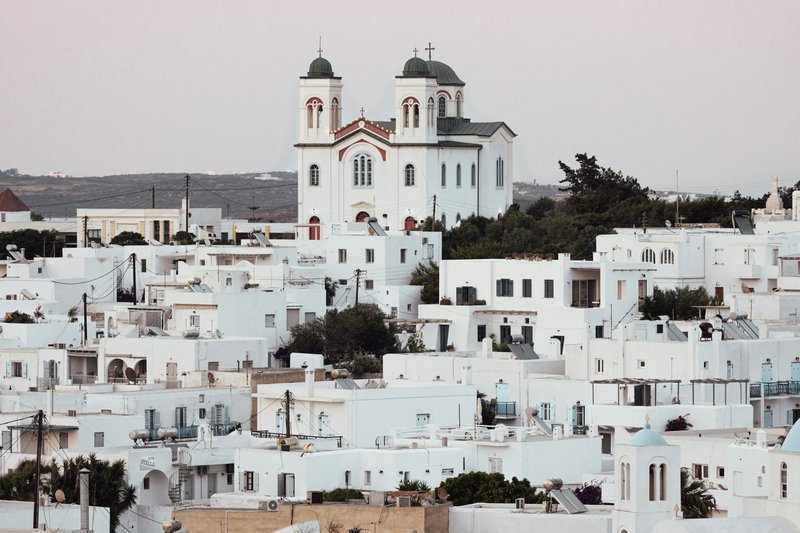
Explore GreeceParos occupies a peculiar position in the Cycladic archipelago — close enough to Mykonos and Santorini to benefit from their infrastructure, yet sufficiently off the main circuit to retain the unhurried rhythms of island life. The marble quarries that once supplied the Venus de Milo and Napoleon's tomb now stand silent in the hills above Marathi, while the port towns of Parikia and Naoussa have evolved into distinct personalities: the former a working harbor with Byzantine footpaths threading through its kastro, the latter a fishing village turned destination where caïques still unload the morning catch beneath waterfront tavernas.
The island's geography creates natural divisions. The western coast catches the meltemi winds that draw kitesurfers to Golden Beach, while the eastern shores around Logaras and Piso Livadi offer calmer waters and a quieter pace. Between them, the hilltop village of Lefkes — once the island's capital during pirate-plagued centuries — provides the template for what Parian hospitality looks like when stripped of pretension: stone-walled courtyards, family-run tables, afternoon light falling through bougainvillea. The hotel scene here reflects this duality, ranging from converted sea captains' houses in Naoussa's backstreets to minimalist retreats on remote headlands.