


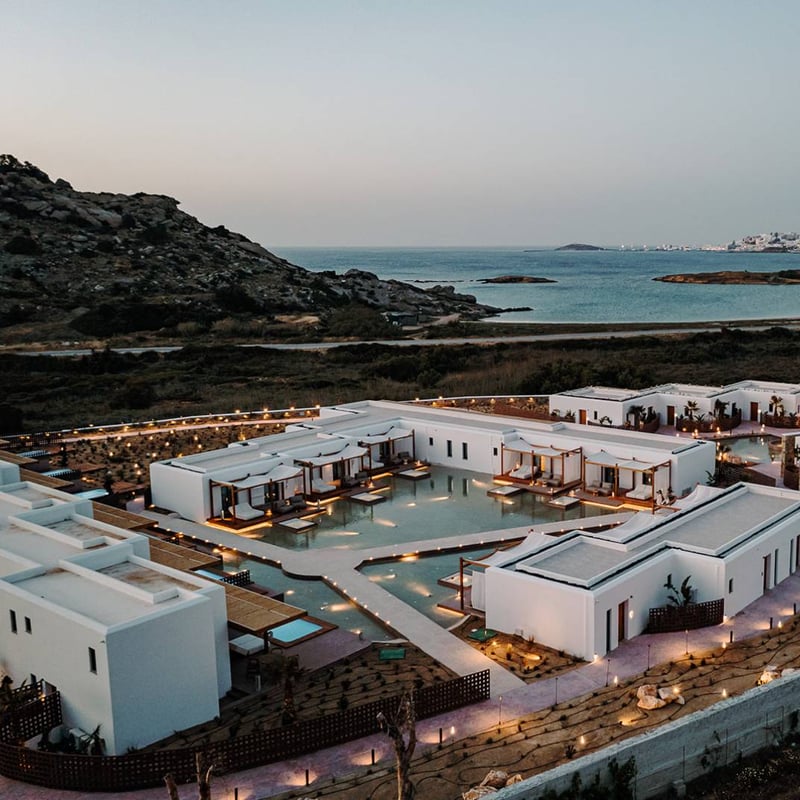
Anchoring the largest ecological regeneration project in the Cyclades, this intimate 21-room retreat occupies 480 acres of protected wetlands, reef, and private coastline where flamingos wade among rare birdlife. Cedar-lined villas with private pools offer earth-toned refinement, while horseback rides and e-bike trails traverse the reserve. Evenings unfold at a lantern-lit open-air restaurant—ideal for eco-conscious travelers seeking wilderness with polish.
Naxos Travel Guide: Best Hotels, Restaurants & Experiences 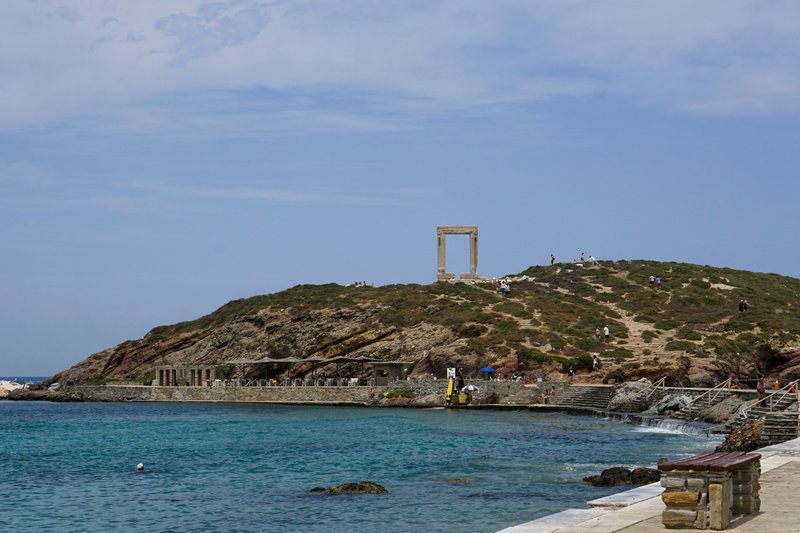
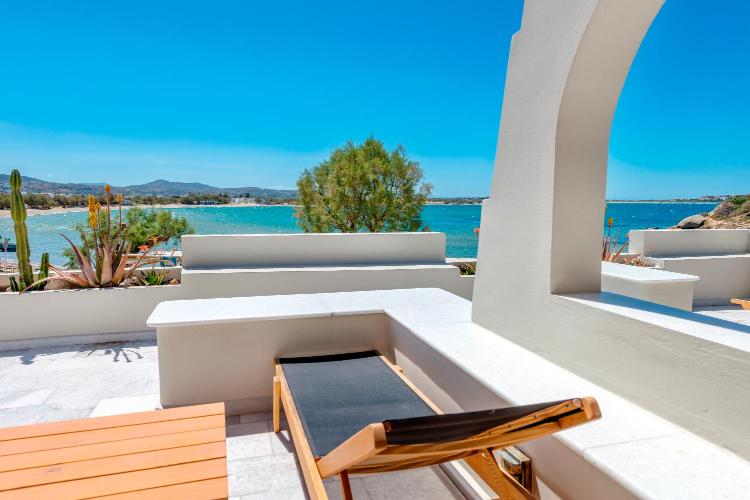
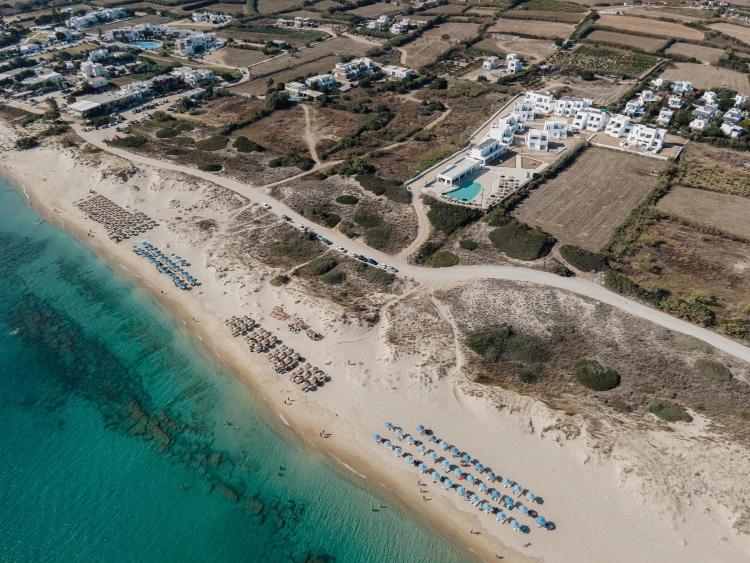
Explore Naxos
Hotels (8)

Small Luxury Hotels
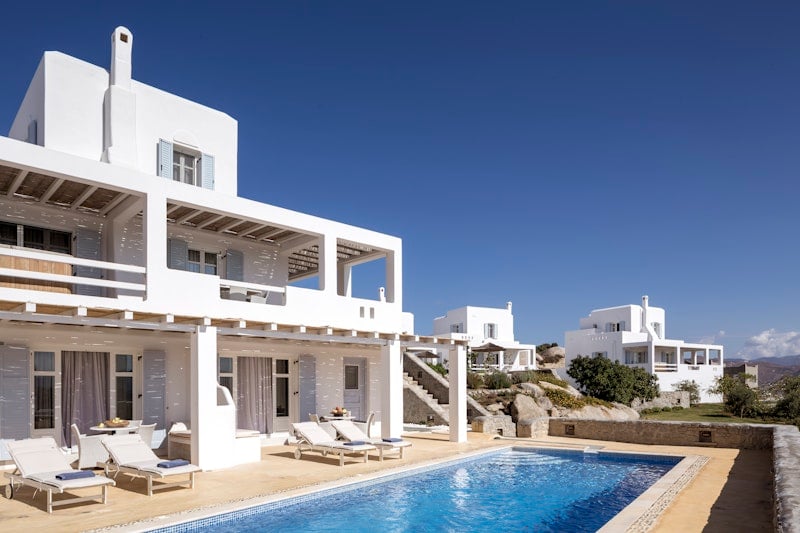
A glass-walled reception frames sweeping views toward Naxos town from this intimate ten-villa retreat on a rocky Stelida hillside. The family who built it also tends the vineyard supplying the cellar and the centuries-old olive groves that furnish the kitchen. Guests dine on garden-picked produce, join cooking classes, or simply settle poolside among cedar trees and contemporary sculpture—an ideal base for families seeking polished Cycladic seclusion.

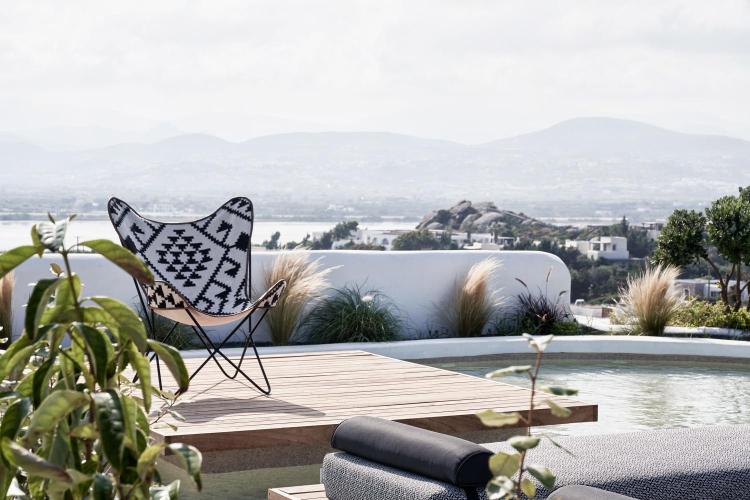
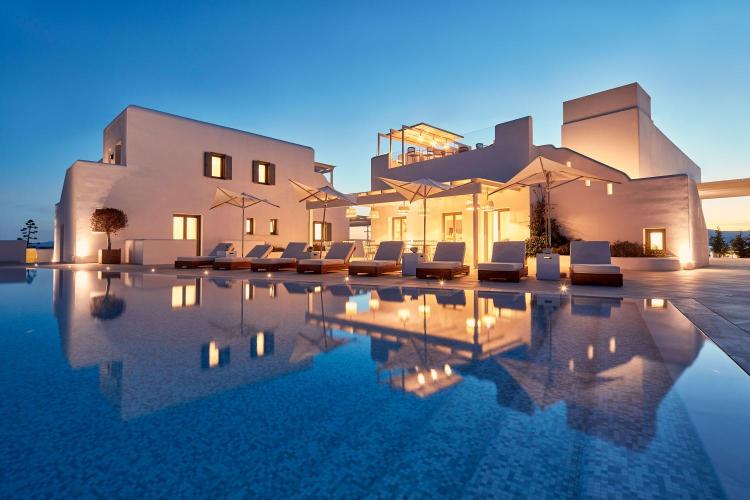
Nine Cycladic-white suites and villas climb a hillside above Agios Prokopios' salt lake, each with a private terrace and plunge pool. Interiors feature tadelakt tubs, Coco-mat beds, and polished concrete floors; some villas add full kitchens for longer stays. A rooftop pool offers all-day drinks with views across the island, while the spa draws on organic Greek botanicals. Ideal for families and couples seeking seclusion near the beach.

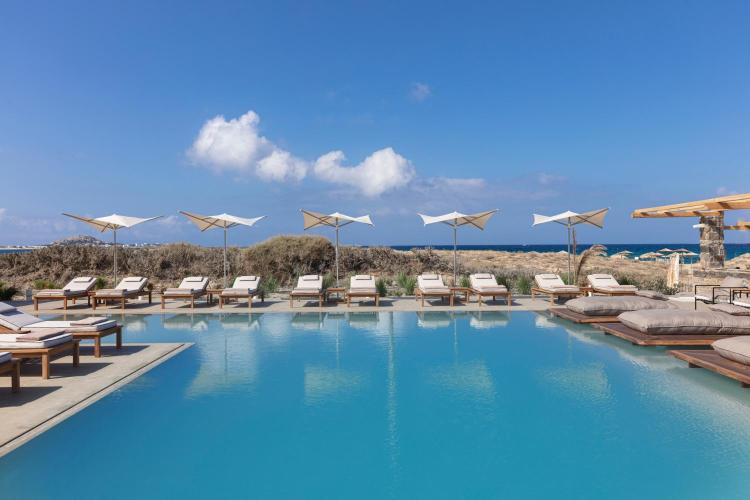
Ten suites of rough-hewn timber and natural textures line Stellida beach, evoking the barefoot ease of a Maldivian camp rather than a conventional Cycladic retreat. This adults-only property leans into its handcrafted aesthetic—driftwood, linen, sun-bleached palette—while a Michelin-starred chef oversees the beachfront restaurant. Greek wines, a jacuzzi amid the garden, and an atmosphere of unpretentious comfort complete the picture.

At this family-owned retreat in Agios Prokopios, siblings and cousins deliver polished yet personal service—a rarity in modern hospitality. The rooftop restaurant pairs Greek fusion cooking with sunset panoramas over the Aegean, while a compact spa offers respite after beach days. Connecting rooms suit families of four, making it an appealing choice for multi-generational groups seeking style without corporate sterility.

Fragrant gardens and ornamental grasses frame this family-owned sixteen-suite retreat set behind Plaka's powder-soft shore, where the sand shelves so gently that toddlers wade safely for meters. A generous pool anchors the grounds, and the decked restaurant sources ingredients from on-site gardens—expect unfussy Cycladic cooking alongside cocktails mixed with local herbs. Two-bedroom maisonettes suit multigenerational groups seeking barefoot refinement.

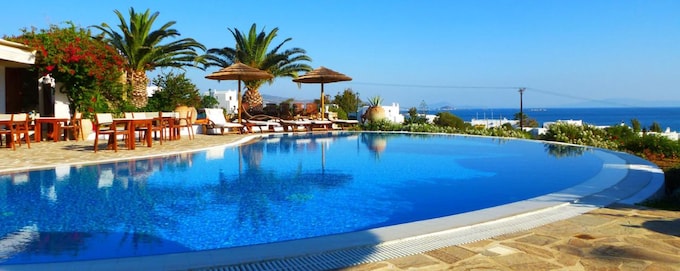
Among Naxos' earliest hotels, Kavos occupies a steep hillside wrapped in mature gardens, its terraced layout cascading toward a central infinity pool. Spacious villas—one with a private lawn perfect for young children—make this a natural choice for families, while the on-site restaurant delivers a varied menu that punches well above typical resort fare. Sandy beaches lie within easy walking distance.

Stark white walls and pared-back interiors frame sweeping Aegean panoramas at this family-run property on Naxos. The beach taverna pulls in the day's catch for uncomplicated seafood lunches, while the bar has earned a reputation for mixing some of the island's finest cocktails. A palm-shaded pool offers respite between swims, suiting couples and families seeking understated Greek charm.

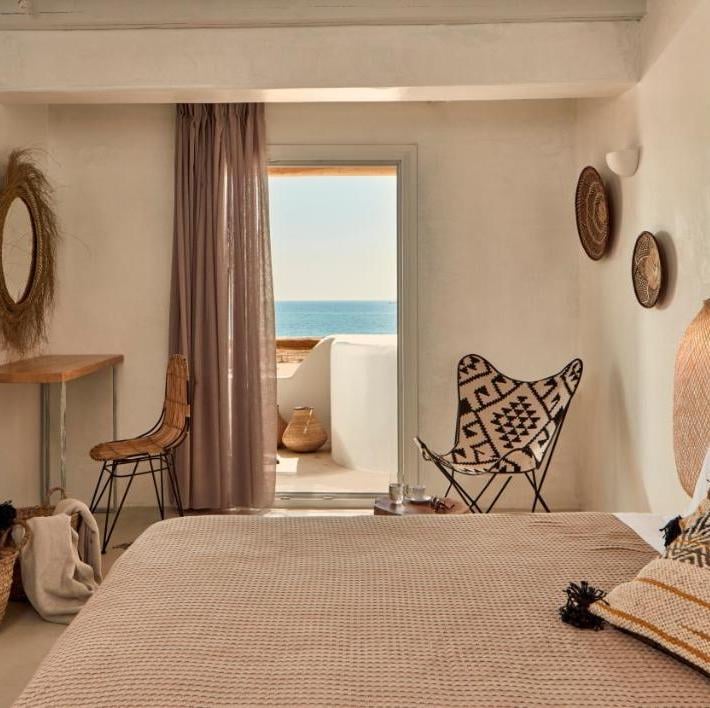
Born from one of Naxos's most stylish beach clubs, Sundunes Hotel brings that same effortless cool to its accommodations. The architecture riffs on Cycladic tradition through a contemporary lens—white-on-white interiors, clean geometry, light flooding every room. Families find particular appeal here: shallow waters along Plaka beach suit young children, while dedicated suites and practical touches accommodate traveling parents without sacrificing design integrity.
Frequently Asked Questions
Which area of Naxos is best for first-time visitors?
+
Naxos Town (Chora) offers the most convenient base, with the Venetian Castro's atmospheric lanes, waterfront dining, and ferry connections. Staying near Agios Georgios beach provides sand access within walking distance of the old town's restaurants and shops.
What makes Naxos different from other Cycladic islands?
+
Agricultural self-sufficiency sets Naxos apart. While most Cycladic islands import provisions, Naxos produces its own potatoes, cheeses, olive oil, and the distinctive kitron liqueur. This fertility creates a greener landscape and a food culture rooted in local ingredients rather than imported supplies.
When is the ideal time to visit Naxos?
+
Late May through June and September through early October offer warm seas, manageable crowds, and pleasant temperatures. July and August bring the meltemi winds — excellent for windsurfing at Mikri Vigla but occasionally challenging for beach lounging. Spring wildflowers carpet the mountain villages, making hiking particularly rewarding.
Nearby Destinations
Explore Greece



Naxos
The largest of the Cyclades rewards those who venture beyond Santorini's crowds. Naxos Town, known locally as Chora, climbs from its Venetian harbor toward the Castro, a medieval quarter where thirteenth-century mansions have been quietly converted into intimate hotels. The Portara — Apollo's unfinished temple gate on the Palatia islet — frames sunsets that rival any in the Aegean. Beyond the capital, the island's unusual fertility (rare in the Cyclades) means villages like Halki and Apiranthos sit amid olive groves and citrus orchards rather than barren rock.
The western coastline strings together beaches that range from organized (Agios Prokopios, Agia Anna) to nearly empty (Mikri Vigla, Alyko). Hotels here lean toward low-rise complexes with direct sand access, while inland properties in villages like Filoti offer stone-built seclusion beneath Mount Zas, the highest peak in the Cyclades. Local kitiri cheese, Naxian potatoes, and kitron liqueur distilled from citron leaves define a culinary identity distinct from neighboring islands. Tavernas in the fishing hamlet of Apollonas or the mountain village of Koronos serve dishes unchanged for generations.