Stark modernist lines and whitewashed volumes define this adults-only retreat on Milos's western coast, where every suite includes a private plunge pool and Sea View accommodations command 180-degree panoramas of the Aegean. The open-air terrace restaurant, a sibling to Athens's acclaimed MAKRIS, serves Mediterranean cuisine against that same sweeping seascape—a compelling draw for design-minded couples seeking polish without pretense.
Seven rooms cling to Milos's remote southern cliffs, each a study in restraint—high ceilings, earth-toned minimalism, wood and stone, private patios angled toward the Aegean. This adults-only retreat, built with sustainability in mind, caters to couples seeking stillness: wine tastings, massage treatments, and crystalline waters a short drive below. The architecture channels the volcanic landscape into something quietly luxurious.
Captain Zeppos occupies a converted three-floor building in Pollonia's luminous harbour, its intimate scale—four suites and one apartment—reflecting the family stewardship behind it. An adults-only policy ensures tranquility, while the shared terrace and plunge pool frame unobstructed Aegean views. For couples seeking a boutique Cycladic retreat without the crowds, this understated property delivers genuine warmth alongside polished simplicity.
Three modernist villas perch on a clifftop above a traditional fishing village, their clean architectural lines framing uninterrupted Aegean panoramas. The protected archaeological site ensures absolute seclusion, while a private swimming platform provides direct sea access without the crowds. Villas Levanda and Kapari interconnect for families or groups seeking a two-bedroom arrangement—an intimate retreat for travelers prioritizing landscape and solitude over resort-style amenities.
Three Greek Australians fell for Milos while tracing their heritage and channeled that affection into this twelve-suite retreat in Pollonia. Whitewashed buildings echo traditional Cycladic architecture, while eight suites offer private plunge pools with Aegean views. A spa draws on Greek olive oil and local botanicals, and the owners' network of skippers, geologists, and walking guides opens the island to curious couples.
Frequently Asked Questions
Which Milos village offers the best base for exploring the island?
+
Adamas provides the most practical base with ferry access, car rentals, and restaurant variety, though Pollonia suits those prioritizing beach proximity and a village atmosphere. Plaka appeals to travelers who prefer hilltop walks and evening strolls over immediate beach access.
When is the ideal season to visit Milos?
+
Late May through June and September offer warm swimming temperatures without peak-season crowds. July and August bring strong meltemi winds that can affect boat excursions to sea caves and beaches accessible only by water.
How many days are recommended for a Milos stay?
+
Four to five nights allow time for beach exploration, a boat trip around the coastline, visits to the catacombs and ancient theater, and unhurried evenings in Plaka. The island rewards slower itineraries given its seventy-plus beaches and dispersed points of interest.
Nearby Destinations
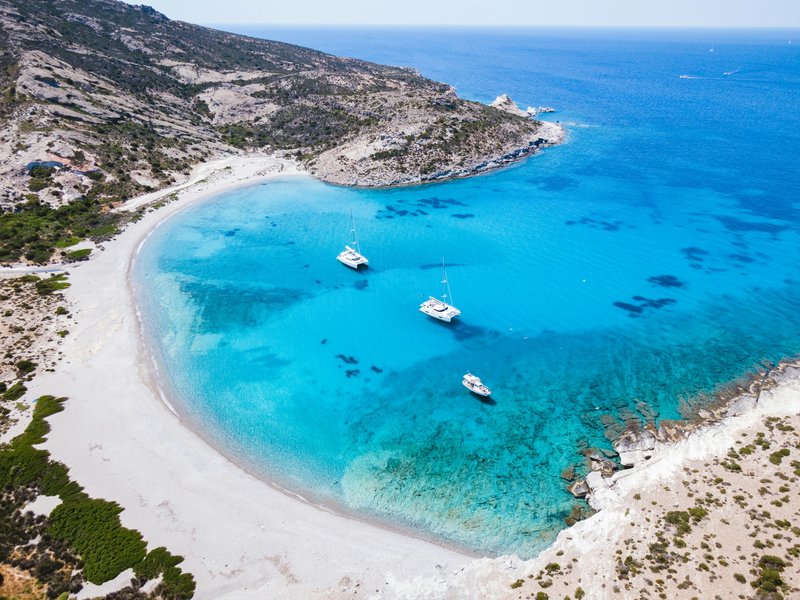
Explore GreeceMilos curves around a vast central caldera, its volcanic origins visible in the rust-red cliffs of Firiplaka and the otherworldly rock formations at Sarakiniko. The island's settlements climb hillsides in classic Cycladic fashion — Plaka's whitewashed lanes offer sunset views toward Sifnos, while the fishing village of Klima lines the waterfront with syrmata boathouses painted in faded blues and terracottas. Pollonia, on the northeastern tip, serves as the departure point for Kimolos and draws a quieter crowd to its sheltered beach.
The accommodation scene reflects the island's geography. Properties cluster around Adamas port, the commercial hub with ferry connections and yacht moorings, while boutique options scatter across Plaka, Trypiti, and the coastal stretches near Provatas. Dining skews toward fresh catches — gouna sun-dried mackerel, sea urchin, and local pitarakia cheese pies appear on most taverna menus. The pace here remains unhurried even in high season, shaped by an island that hosted one of the ancient Mediterranean's most important obsidian trades long before anyone arrived seeking the perfect caldera view.