


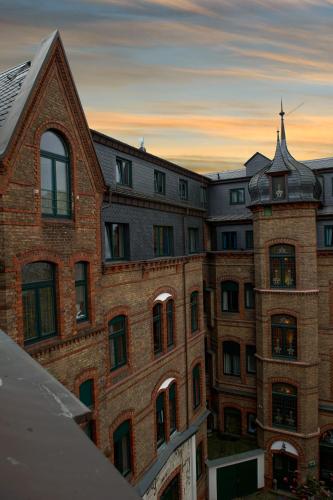
An 1888 Art Nouveau townhouse anchoring a handsome historic row at the old town's edge, Klemm delivers understated Germanic elegance across 63 smoke-free rooms outfitted in clean contemporary lines. Mornings center on a lavish breakfast spread; four-legged companions receive a genuine welcome throughout. The address suits travelers who prize architectural character and central positioning without sacrificing modern comforts.
Wiesbaden Travel Guide: Best Hotels, Restaurants & Experiences 
Explore Wiesbaden
Hotels (1)
Restaurants (3)
Where to Stay

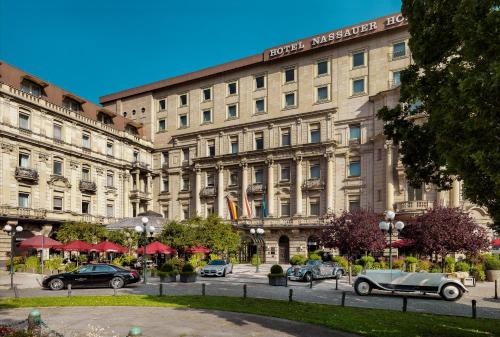
Dating to 1813, this grand dame of Wiesbaden hospitality maintains its classic bearing while offering thoroughly modern comforts across 159 rooms. The fifth-floor spa commands city views through floor-to-ceiling windows, its 32°C thermal pool and sauna providing restorative escapes. Downstairs, the Orangerie restaurant serves seasonal dishes beneath a graceful winter garden. Dogs welcome throughout.
Where to Eat

★ Michelin
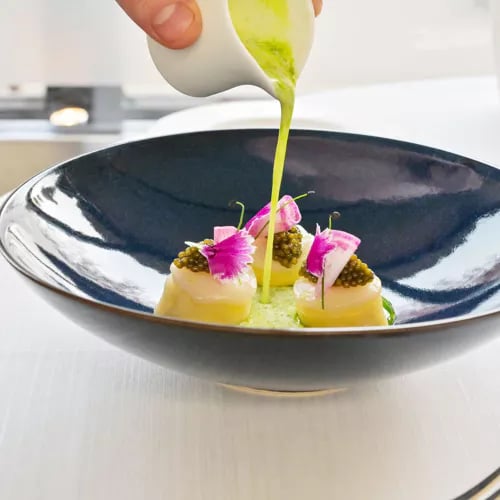
Within the 1813 Nassauer Hof grand hotel, Ente delivers one-starred dining across an elegant two-level room where a curved wrought-iron staircase ascends to a gallery above. Chef Michael Kammermeier applies a modern sensibility to classic French foundations through two tasting menus—Küchenrunde and Querbeet—while a signature three-course duck menu rewards advance planning. A front terrace extends the experience outdoors.

Michelin Selected
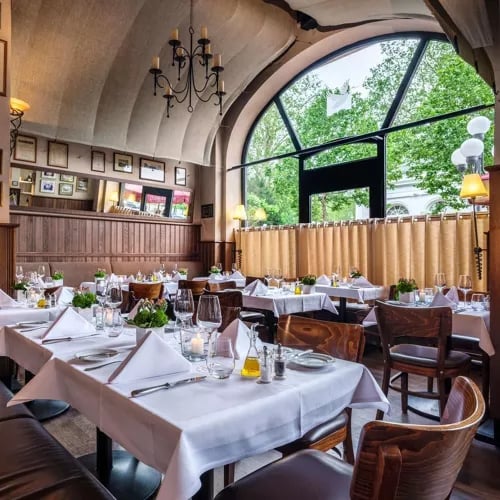
Born from the legacy of Wiesbaden's celebrated Ente restaurant, this intimate bistro channels classic French cooking through a seasonal, Mediterranean lens. The narrow dining room, lined with photographs of notable guests, maintains an authentic Left Bank atmosphere, while floor-to-ceiling windows flood the space with light. A Michelin Plate holder, the kitchen delivers creative dishes in relaxed, convivial surroundings.

Michelin Selected
A former rifle club house five kilometers into the Wiesbaden woods provides an unlikely setting for this sleek dining room. The kitchen favors Austrian traditions while drawing on French technique and occasional Asian accents. Guests browse the walk-in wine cellar before settling into the upscale interior—an atmospheric retreat for those willing to venture beyond the city center.

Michelin Selected
Chef Martino Stirn commands an open kitchen at this intimate Marktplatz address, turning out Mediterranean and Italian dishes built on seasonal produce. Evening diners can opt for a surprise tasting menu, surrendering to the kitchen's creative direction. Summer meals on the terrace unfold to the sound of the Marktkirche carillon—a civilized accompaniment to the approachable, well-executed cooking.
Frequently Asked Questions
Which neighborhoods in Wiesbaden are best for evening dining?
+
The streets radiating from the Kurhaus — particularly Taunusstraße and the lanes near Marktplatz — concentrate most of the city's notable restaurants. The Altstadt quarter offers wine taverns and traditional Hessian cooking, while the area around Adolfsallee has attracted newer culinary concepts.
Is Wiesbaden connected to the Rheingau wine region?
+
Directly. The wine villages of the Rheingau begin just west of the city limits, making vineyard visits and cellar tastings an easy half-day excursion. Many restaurants in Wiesbaden feature Rheingau producers prominently on their lists, and the region's Rieslings pair naturally with local cuisine.
What is the historic spa culture like in Wiesbaden today?
+
The thermal tradition remains active. Several hotels maintain their own thermal facilities, while the Kaiser-Friedrich-Therme offers Roman-Irish bathing rituals in an original 19th-century bathhouse. The Aukammtal thermal complex provides a more modern alternative on the city's outskirts.
Nearby Destinations
Explore Germany



Wiesbaden
Wiesbaden carries the quiet confidence of a city that once hosted European royalty at its thermal springs. The Kurhaus district remains the civic heart — a neoclassical casino flanked by colonnaded promenades where evening strolls still feel like a 19th-century ritual. The Wilhelmstraße corridor links this old spa quarter to the pedestrianized shopping streets, while the hillside Neroberg offers vineyard walks with views across the Rhine-Main basin.
The dining scene draws heavily on the Rheingau wine region that begins at the city's western edge. Expect Riesling-focused wine lists and menus built around seasonal Hessian produce — white asparagus in spring, game in autumn. The café culture runs strong: historic konditorei serve afternoon Kaffee und Kuchen with silver service. Hotels tend toward the traditional, many occupying Belle Époque buildings with thermal bath access, though contemporary boutique properties have begun appearing along the quieter residential streets near the Kurpark.