Two villas dressed in French Riviera whites face the Märkisches Meer, their thirteen rooms offering an intimate counterpoint to Brandenburg's lakeside calm. The spa sprawls beyond expectation—jacuzzi, sauna, indoor and outdoor pools—while gardens slope toward the water. A refined restaurant completes the picture, drawing guests who prize seclusion and aesthetic coherence over scale.
Where to Stay
A sustainably built retreat on the Spree River's edge, this 20-room boutique property draws weekend escapists from Berlin with balconied rooms overlooking the water and oak-floored interiors featuring spa-style walk-in showers. The riverfront lawn and open-air beer garden encourage idle hours outdoors, while paddleboats and bicycles at reception offer direct access to the Spreewald's legendary canal network.
An adults-only retreat on the shores of Scharmützelsee, this 170-room lakeside complex pairs its own marina with an extensive spa featuring Turkish bath, jacuzzi, and private-sauna suites. Guests swim between indoor and outdoor pools, then choose between the multi-level Dependence restaurant or the rustic Pechhütte for traditional German fare. The mood is cheerful modernism with serious wellness credentials.
An hour from Berlin, this 11-room farmstead channels the Michelberger ethos into the Brandenburg countryside. Guests choose between rustic-chic barn quarters or private garden cottages, all overlooking forest. The owners' commitment to regenerative farming means most ingredients come directly from the land. Days unfold with horseback rides through the woods and canoe trips along the Spreewald's legendary waterways—a pastoral counterpoint to urban life.
On the shores of the Madlitzer See, this 69-room countryside retreat draws wellness seekers to its BRUNE BALANCE med & SPA, where a Turkish bath, saunas, and both indoor and seasonal outdoor pools anchor an extensive therapeutic program. Gardens surround the property, and the rustic Klosterscheune offers an atmospheric alternative to the main restaurant—ideal for travelers prioritizing restorative seclusion over urban diversions.
An eighteenth-century castle surrounded by sweeping landscaped grounds, Schloss Neuhardenberg offers 56 rooms ranging from split-level gallery suites to the singular Stargazer room, where a glass ceiling frames the night sky. The on-site Brennerei serves hearty German country fare in rustic surroundings, while guests can borrow bicycles to explore the Brandenburg countryside at leisure.
Where to Eat
Named for Prince Hermann von Pückler's nickname, Lou occupies the elegant Kavaliersbau on his 620-hectare landscaped estate near Cottbus. Chef-patron Tim Sillack crafts modern seasonal cooking that weaves regional Brandenburg ingredients with broader European influences, each course available à la carte or as a menu. The signature Pückler Eis pays homage to the prince who invented the layered ice cream. Three refined guestrooms extend the experience overnight.
Chef-patron Andreas Staack named his lakeside address after both his initials and its position on Scharmützelsee—a clever nod that sets the tone for this wine bar-bistro hybrid. The five-course menu moves through modern compositions: gnocchi dressed in morel cream with sot-l'y-laisse, sea bass paired with fennel and mussel cream. A leafy terrace near the spa gardens rewards the pre-dinner lakeside stroll.
Beside Neuzelle's 13th-century Cistercian monastery, this Bib Gourmand restaurant holds a Michelin Green Star for its radical commitment to local sourcing—nearly all ingredients travel less than 50 kilometers. The open kitchen produces earthy, flavor-forward dishes: beetroot prepared in multiple textures with delicate goat's cream cheese flakes proves a signature triumph. They even distill their own gin on site.
Frequently Asked Questions
How do I reach Spreewald from Berlin?
+
Regional trains connect Berlin Hauptbahnhof to Lübbenau in approximately 70 minutes, with hourly departures. By car, the A13 motorway leads directly to Lübbenau and Lübben exits. Many hotels arrange punt transfers from village harbors to properties located deeper within the waterways.
What is the Sorbian culture present in Spreewald?
+
The Sorbs are a Slavic minority who have inhabited this region for over a millennium. Their presence remains visible in bilingual German-Sorbian signage, traditional costume worn during festivals, distinctive architectural styles, and culinary traditions. The town of Burg hosts the Heimatmuseum documenting Sorbian heritage, while villages like Lehde preserve traditional building methods.
When is the best season to visit Spreewald?
+
Late spring through early autumn offers ideal conditions for punt excursions and cycling along the canal paths. June brings the cucumber harvest and associated festivals. Winter transforms the region into a quieter retreat, with some hotels offering spa-focused programs and traditional Advent markets in Lübbenau and Burg.
Nearby Destinations
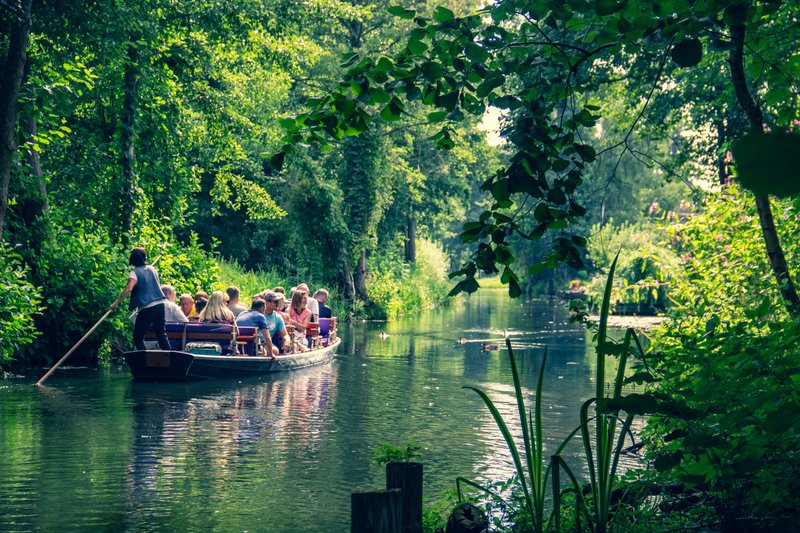
Explore GermanyThe Spreewald unfolds southeast of Berlin as a labyrinth of over 300 waterways cutting through ancient alder forests and pastoral villages where Sorbian culture remains a living presence. The biosphere reserve stretches across two distinct zones: the Oberspreewald around Lübbenau, where punts glide past timber farmsteads and cucumber fields, and the quieter Unterspreewald near Schlepzig, favored by those seeking deeper solitude. Hotels here tend toward converted historic properties — former manor houses, traditional Blockhaus lodges, and spa retreats drawing on the region's mineral-rich waters.
Dining follows the seasons and the land. Local menus feature Spreewaldgurken (the region's famous pickled cucumbers carrying PGI status), freshwater fish from the channels, and game from surrounding forests. Lübbenau's harbor area concentrates most culinary activity, while smaller villages like Lehde — reachable only by punt or footpath — offer authentic farmhouse cooking. The Sorbian influence persists in specialties like Plinsen (buckwheat pancakes) and in the decorated Easter eggs sold throughout the region.