Inside a converted historical vicarage, chef Thomas Merkle honours his Kaiserstuhl roots through regional ingredients while threading cosmopolitan accents into each considered plate. The one-Michelin-starred kitchen delivers accomplished country cooking in sleek, elegant surroundings, with Merkle and his team stepping into the dining room to greet guests personally. A thoughtful wine-by-the-glass selection accompanies, and house-made sauces, oils, and salts make for distinctive parting gifts.
Explore Kaiserstuhl
Three generations of winemaking heritage inform the sensational cellar at Schwarzer Adler, where Bordeaux vintages share the list with estate bottles. Chef Christian Baur maintains the classic French lineage this Michelin-starred institution built its legend upon—turbot arrives with impeccable beurre blanc, while robust roasts carved tableside reward those dining à deux. The atmosphere retains old-world charm without feeling preserved in amber.
Thomas Merkle's second address earns its Bib Gourmand through honest, ingredient-driven cooking that lets Black Forest beef shine alongside crowd-pleasing burgers and a rotating weekly carte. The dining room pairs contemporary lines with rustic textures, striking an easygoing tone that carries through to the service. When temperatures rise, the garden terrace becomes the prime seat in Kaiserstuhl wine country.
Four generations of the Dutter family have shaped this sixteenth-century inn into a Bib Gourmand destination for seasonal, regional cooking. The Stubenrestaurant offers a refined set menu, while the adjoining Dorfwirtschaft keeps things rustic with flammkuchen and rump steak. A vine-shaded terrace and charming summerhouse extend the experience outdoors—ideal for unhurried afternoons in the Kaiserstuhl wine country.
Chef Simon Bantle, trained in multiple Michelin-starred kitchens, anchors this tradition-steeped Kaiserstuhl address with cooking that bridges rustic German soul and French technique. His braised ox cheeks arrive glazed in local pinot noir, accompanied by kohlrabi three ways, while jellied veal tripe with fried potatoes speaks to unflinching regional authenticity. Emma Ambs, from a neighboring restaurateur dynasty, oversees service with inherited ease. The wine list rewards exploration.
A four-century-old townhouse, meticulously restored, shelters this address where classic French cooking takes on seasonal and Mediterranean accents. Diners choose between intimate wood-paneled rooms, a contemporary wine bar, or a connecting terrace — all paired with an exclusively regional wine selection from surrounding Kaiserstuhl vineyards. Guestrooms upstairs allow the evening to extend without urgency.
Konstantin Keller, the youngest scion of the family behind nearby Schwarzer Adler, brings Michelin-starred training to this convivial inn. The kitchen favors honest execution over flourish: escargots glossy with garlic-parsley butter, crisp cordon bleu, and a notable Zwiebelrostbraten made with dry-aged Black Forest pork. Wines flow from the family's Franz Keller estate, best enjoyed on the leafy courtyard terrace.
Six generations of the Isele family have shaped this traditional German table since 1854, a lineage evident in the confident simplicity of the seasonal cooking. Regional ingredients anchor a menu where house-made terrines and pastry-room desserts take center stage, paired with wines drawn almost exclusively from nearby vineyards. The atmosphere remains warmly convivial rather than formal—Sunday lunch territory for travelers exploring the Kaiserstuhl wine country.
A culinary lineage stretching back to 1561 anchors this Baden kitchen, where regional traditions persist in hearty preparations of calf's kidney, tripe, and slow-braised oxtail stew. Local wines accompany each dish, whether served in the intimate wood-paneled dining room or on the sun-dappled terrace. Summer brings lighter fare—notably a crisp sausage salad that captures the Kaiserstuhl's rustic spirit.
Frequently Asked Questions
What cuisine defines dining in the Kaiserstuhl region?
+
The regional cooking blends Baden German traditions with Alsatian influences from just across the Rhine. Expect seasonal dishes built around local asparagus, game, freshwater fish, and forest mushrooms, typically paired with wines from the surrounding volcanic vineyards. Many restaurants operate within wine estates, emphasizing the deep connection between table and terroir.
Which villages offer the best restaurant options in Kaiserstuhl?
+
Ihringen, Achkarren, Oberrotweil, and Burkheim each host well-regarded restaurants, often attached to wine estates. Breisach, the largest town in the area, provides additional variety. The smaller villages tend toward traditional Weinstuben and estate restaurants, while Breisach offers a broader range of dining styles.
Is it necessary to book restaurants in advance when visiting Kaiserstuhl?
+
During harvest season (September through October) and the asparagus weeks of spring, reservations at popular wine estate restaurants become essential. The region draws food-focused visitors from Freiburg and across the border, and the better tables fill quickly on weekends year-round.
Nearby Destinations
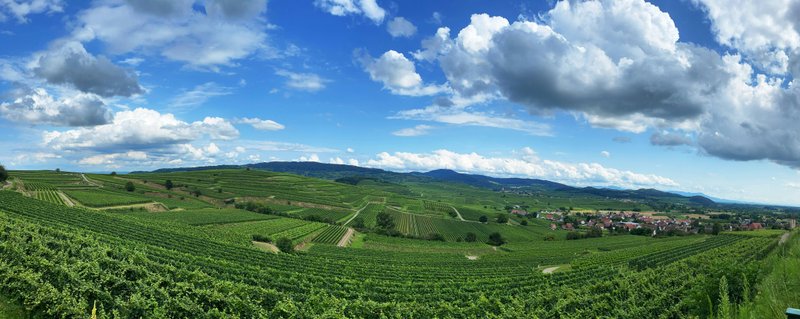
Explore GermanyThe Kaiserstuhl rises unexpectedly from the Upper Rhine Plain, a volcanic anomaly where terraced vineyards climb steep slopes and wild orchids bloom in microclimates warmer than anywhere else in Germany. Villages like Ihringen, Achkarren, and Oberrotweil have built their identities around Spätburgunder and Grauburgunder, and the local dining scene reflects this wine-first culture. Restaurants here source from the surrounding farms and forests — white asparagus in spring, chanterelles in summer, game in autumn.
The culinary tradition draws heavily on Baden and Alsatian influences, given the French border lies just across the Rhine. You'll find Flammkuchen alongside Zwiebelkuchen, Spätzle prepared with local cheese, and fish from the nearby rivers. Many of the better restaurants operate within family-run wine estates, where meals unfold on shaded terraces overlooking the vines. The pace is unhurried, the portions generous, and the wine lists exclusively local — exactly as they should be in a region where viticulture has shaped daily life for over a thousand years.