

A former hunting lodge from 1265, Schlosshotel Weyberhöfe carries its medieval bones beneath refined contemporary interiors where classic architectural details meet modern design sensibility. The wellness circuit spans multiple saunas, hammam, and Turkish bath alongside an indoor pool, while the Rumpolt restaurant delivers seasonal international cooking. Garden grounds and nearby golf appeal to active guests; pet-friendly policies accommodate traveling companions.
Franconian Wine Country Travel Guide: Best Hotels, Restaurants & Experiences 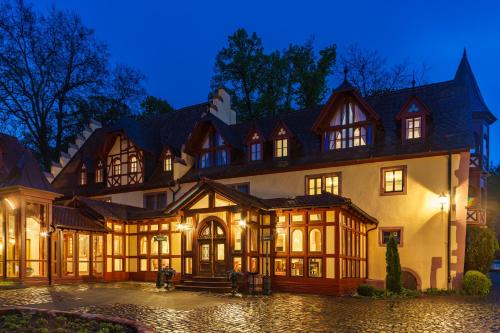
Explore Franconian Wine Country
Restaurants (8)
Where to Stay

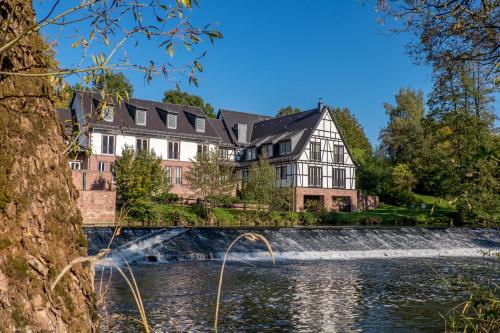
A half-timbered mill on the River Saale, Romantik Hotel Neumühle channels rustic Franconian charm through 31 rooms and two fireplace suites. Guests drift downstream on the hotel's private boat for riverside picnics, then return to an indoor pool, Turkish bath, jacuzzi, and sauna. Tennis courts and bicycles extend the pastoral idyll—an unhurried retreat for couples seeking romance without pretense.
Where to Eat

★★ Michelin· Green Star ●
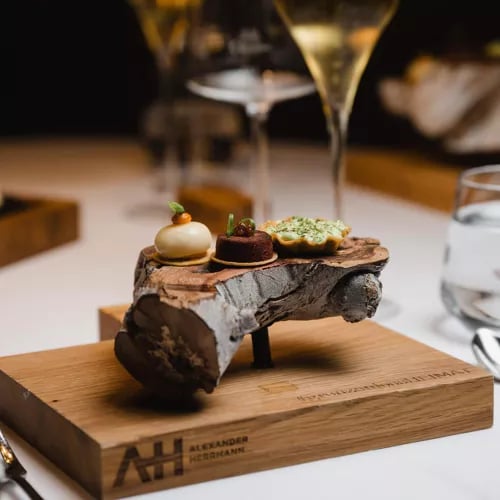
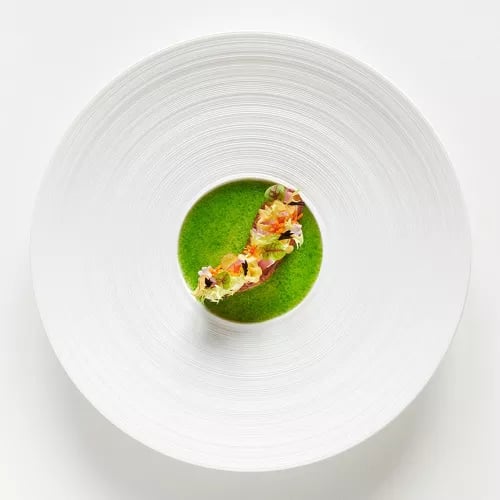
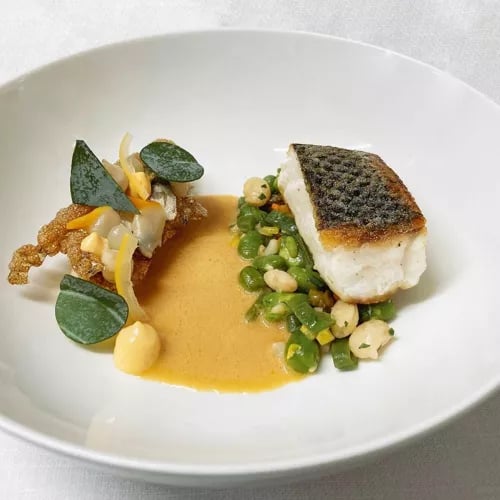
Alexander Herrmann and Tobias Bätz helm this two-Michelin-starred table with hands-on theatricality, often presenting their intricate Franconian compositions tableside. The signature pike-perch arrives translucent alongside Bamberg Savoy cabbage and a pork knuckle broth sparked with pimientos and sriracha—bold, regional, precise. Ingredients from their Future Lab ANIMA underscore a Michelin Green Star commitment, while local wines complete a meal rooted in Franconian terroir.

★ Michelin
Christian Steska and Jansen Schouten hold a Michelin star at this intimate old-town address, where an eight-course menu showcases Franconian terroir with particular pride in local caviar from the region's sustainable sturgeon farms. The open kitchen invites curious diners to observe between courses, while the adjoining Bordeaux & Friends wine bar offers serious bottles at honest markups. A lighter four-course option runs midweek.

★ Michelin
Five generations of the Alex family have shaped this Franconian table since 1886, now guided by chef Domenik Alex and Madlen Häckel. Wednesday through Saturday, a six-course set menu begins promptly at 6.30pm for all guests, showcasing seasonal cooking with creative modern touches and ingredients drawn partly from their own gardens. Sunday lunch pivots to regional comfort—roast meat, dumplings—served in warmly wooded, design-conscious rooms.

★ Michelin
Chef Daniel Schröder, formerly of Würzburg's Kuno 140, now commands the intimate dining room at Landgasthof zum Kaffelstein alongside Marcel Meining. Their French-inflected seasonal menus—five or six courses built around masterful textural contrasts like kohlrabi with pear and pecan—have earned a Michelin star. The wine list draws heavily from Franconian vineyards, a fitting complement at this two-generation family inn.

★ Michelin
A Michelin star has graced this elegant dining room continuously since 1994, a rare constancy in German gastronomy. Chef Frederik Desch works with Rhön salmon trout and local venison, his cooking threading classic technique through contemporary presentation. The wine list draws from Franconian estates alongside broader selections. Summer service moves to a terrace overlooking the parkland, where attentive sommeliers guide each pairing.

★ Michelin
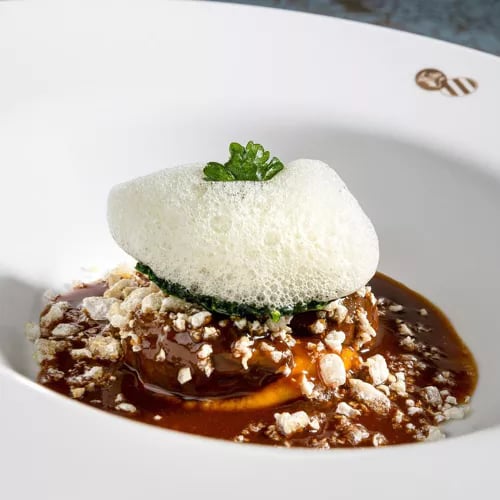
Crossing a bridge to reach the lavishly restored Schloss Frankenberg sets the tone for Chef Steffen Szabo's one-starred table. The elevated estate, encompassing both winery and hotel, provides a theatrical backdrop for seasonal five- to eight-course menus that play with regional and international ingredients. Dishes such as char paired with pumpkin purée, foam, and roasted seeds demonstrate his command of contrasting textures within an elegantly historic setting.

★ Michelin
Occupying the first floor of the historic Zur Schwane hotel, this one-Michelin-starred table showcases modern country cooking grounded in classical technique. The kitchen draws produce from local suppliers and the hotel's own garden, with herbs playing a starring role throughout the menu. An exclusively German wine list features bottles from the restaurant's estate vineyards, each available by the glass with thoughtful pairing suggestions.

Michelin Selected
Chef Moritz Techet's ten-course surprise menu unfolds in a minimalist dining room where vegetables take center stage. The kitchen team tends its own herb garden, forages local mushrooms and berries, and applies fermentation techniques to coax depth from regional ingredients. Chefs present each dish tableside, explaining their creations directly. With limited covers and a fixed 7pm start, advance booking is essential.

Michelin Selected
Behind a weathered archway bearing its namesake date, this Fulda address pairs old-town heritage with sleek contemporary design. The gutted interior now frames an open kitchen through expansive windows, where chefs compose sophisticated modern plates that foreground premium ingredients with restrained flair. Several set menus allow flexibility, while a tightly edited wine list delivers confident pairings. A companion brasserie offers a more casual register downstairs.
Frequently Asked Questions
When is the best time to visit Franconian wine country?
+
Late April through October offers the most rewarding experience. Spring brings asparagus season and flowering vineyards, summer fills the Weinstuben terraces, and autumn harvest festivals animate villages throughout the region. The Würzburg Mozart Festival in June and Volkach's wine festival in August draw visitors, though the shoulder months remain quieter.
How do I travel between villages in Franconian wine country?
+
The Main Valley cycle path connects most wine villages and runs flat along the riverbank, making bicycle touring practical even for casual cyclists. Regional trains link Würzburg to larger towns, while smaller villages require a car or bicycle. Several operators offer guided wine tours with transportation from Würzburg, convenient for those preferring not to drive between tastings.
What makes Franconian wine different from other German wine regions?
+
Silvaner dominates here rather than Riesling, producing dry wines with a mineral character shaped by the region's shell limestone soils. The distinctive flat-bellied Bocksbeutel bottle, protected by EU designation, has identified Franconian wine since the 18th century. Wines tend toward a drier, earthier profile than those from the Mosel or Rheingau, reflecting both local tradition and the continental climate.
Nearby Destinations
Explore Germany

Franconian Wine Country
The Main River carves through this lesser-known wine region east of Frankfurt, where steep vineyard slopes rise above medieval villages. Würzburg anchors the western end with its Baroque Residenz and centuries-old wine cellars beneath the Marienberg Fortress. Smaller towns like Iphofen, Volkach, and Sommerhausen retain their half-timbered streetscapes and fortified walls, each hosting traditional Weinstuben where Silvaner is poured from the distinctive Bocksbeutel bottle.
The culinary landscape reflects Franconia's position at the crossroads of Bavarian and Thuringian traditions. Würzburg's Juliusspital and Bürgerspital operate wine estates with attached restaurants serving regional classics — Schäufele, Blaue Zipfel, freshwater fish from local rivers. Beyond the city, family-run Gasthäuser in villages like Randersacker and Escherndorf pair seasonal menus with wines from the surrounding slopes. The region's compact geography makes it possible to visit multiple estates in a single afternoon, each village revealing a different microclimate and terroir expression.