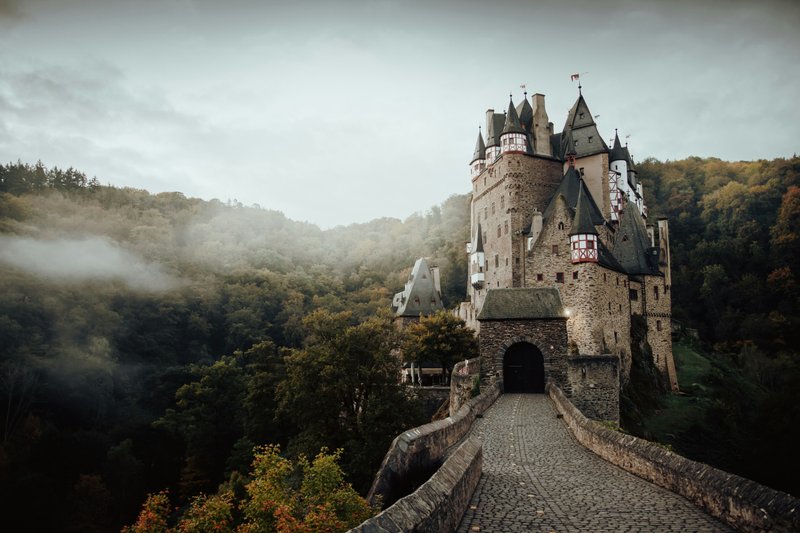
Perched within a 12th-century castle overlooking Nideggen, this one-Michelin-star restaurant pairs dramatic panoramic views with refined farm-to-table cooking. Chefs Herbert Brockel and Tobias Schlimbach craft seasonal set menus that draw on classic and Mediterranean traditions—sea bream with mussels and Jerusalem artichokes, suckling pig with quinoa and cumin yoghurt. The historic dining room, updated with contemporary wood panelling, creates an atmosphere both intimate and theatrical.
Explore Eifel
Since 1988, the Kucher family has cultivated a one-Michelin-starred table in rural Eifel, now steered by siblings Florian and Stefanie. The kitchen delivers five to seven courses of classically rooted country cooking, each dish precisely balanced without superfluous flourish. A legendary cellar—some 1,700 labels reaching back to 1868—rewards oenophiles, while guestrooms allow the evening to extend unhurried into morning.
A rustic counterpart to the castle's fine-dining room, Eiflers Zeiten delivers hearty Eifel cooking—roast local beef with crisp potatoes, cod under a lemon crunch crust paired with Chinese cabbage—alongside daily specials that shift with the season. Bottle-fashioned chandeliers hang overhead while floor-to-ceiling windows frame the estate pond, lending warmth to an unhurried countryside meal.
Within the ancient Meerfelder Maar volcanic crater, chef-patron Sven Molitor runs Poststuben with quiet confidence. His Bib Gourmand cooking draws on regional traditions—think delicate spinach and cheese dumplings—while demonstrating refined technique throughout. The family-run hotel Die Post provides comfortable, contemporary rooms upstairs, making this an ideal base for exploring the Eifel's dramatic landscapes between thoughtfully crafted meals.
Within the ancient walls of Burg Nideggen, Kaiserblick pairs a striking medieval setting with thoroughly modern cuisine. The kitchen draws on regional suppliers for market-driven dishes that shift with the seasons—expect fresh, ingredient-led plates rather than elaborate constructions. A courtyard terrace offers open-air dining against centuries of stone, while inside, clean contemporary lines contrast the historic surroundings. Michelin Plate distinction.
Mismatched antique furniture and an almost familial warmth define this Eifel address, where Florian Kucher's kitchen honors regional tradition. The Swabian-style sour kidneys with sautéed potatoes command a devoted following, while braised Ellscheid lemon chicken signals a lighter, Mediterranean-inflected repertoire. Most meats are sourced locally, and senior chef Martin Kucher personally guides diners through an impressive wine selection.
A 1751 Baroque castle's former corn barn now houses this refined dining room, where exposed timber trusses soar overhead and two antique carriages mounted on stone walls spark conversation. The kitchen delivers flavourful seasonal plates complemented by a wine list rich in rare bottles, many poured by the glass. A charming garden extends the experience outdoors when weather permits.
Beside Dudeldorf's medieval Obertor gate, this Michelin Plate restaurant delivers French and Mediterranean cooking rooted in impeccable seasonal produce. The dining room maintains a relaxed, unpretentious warmth, while a leafy terrace offers summer refuge. Service strikes the right balance—attentive without hovering—and the kitchen's confident simplicity makes Torschänke a reliable detour for travelers exploring the Eifel countryside.
Attached to the Bitburger Brewery, this convivial tavern pairs solid wooden tables and picture-lined walls with a menu that swings between hearty and refined. Cordon bleu showcasing local Eifelschwein pork sits alongside Ōra King salmon served both as tartare and pan-fried. A daily special draws the midday crowd, while upstairs guestrooms allow diners to linger.
Frequently Asked Questions
What makes the Eifel's volcanic lakes worth visiting?
+
The maars — circular lakes formed in volcanic craters — rank among Germany's most distinctive natural features. The Laacher See near Maria Laach spans over three square kilometers and still shows volcanic activity through gas bubbles rising along its eastern shore. Smaller maars like the Gemündener Maar and Weinfelder Maar offer swimming in summer and frozen landscapes in winter, surrounded by forested crater rims that invite hiking.
Which historic towns in the Eifel offer the best dining scenes?
+
Monschau, with its half-timbered houses along the Rur River, concentrates several respected restaurants within walking distance of its iconic Rotes Haus museum. Bad Münstereifel's pedestrianized old town within medieval walls hosts traditional taverns and modern bistros alike. The spa town of Bad Neuenahr-Ahrweiler, though technically in the adjacent Ahr Valley, serves as a dining destination for Eifel visitors seeking wine-paired menus.
When is the best season to experience Eifel's regional cuisine?
+
Autumn brings the region's culinary peak: wild boar and venison appear on menus as hunting season opens, forest mushrooms feature in daily specials, and the Ahr Valley grape harvest supplies fresh Spätburgunder wines. Spring offers wild garlic dishes and young lamb, while summer means fresh trout and outdoor terrace dining. Winter draws visitors to hearty stews and the region's traditional Christmas markets in Monschau and Bad Münstereifel.
Nearby Destinations
Explore GermanyThe Eifel massif stretches across western Germany's Rhineland-Palatinate and North Rhine-Westphalia, a volcanic landscape of ancient craters now filled with deep blue maars. The region's spa tradition dates to Roman times — Bad Münstereifel's fortified old town still operates thermal baths within its intact medieval walls. From the motorsport heritage of the Nürburgring to the Romanesque abbey at Maria Laach, the area draws visitors seeking both adrenaline and contemplation.
Dining here follows the rhythms of the Rhenish countryside. Restaurants in villages like Monschau and Blankenheim serve hearty regional fare: Döppekooche (potato casserole), wild game from surrounding forests, and trout pulled from clear streams. The volcanic soil produces distinctive mineral waters, while local breweries maintain centuries-old brewing traditions. Spring brings wild garlic foraging; autumn means mushroom season and the grape harvest in neighboring Ahr Valley vineyards.



