Perched at 1,000 meters with the Bavarian Alps as a dramatic backdrop, this 138-room property channels contemporary mountain luxury through sleek interiors and premium materials. The spa complex delivers thermal indulgence via Turkish bath, sauna, and jacuzzi, while dual swimming pools—indoor and outdoor—frame the peaks. Penthouse duplex suites with private roof terraces suit travelers seeking alpine grandeur matched by refined design.
Explore Berchtesgaden
Where to Stay
Reborn from a historic alpine retreat, Kulturhof Stanggass channels the raw beauty of the Berchtesgaden Alps through a stripped-back, nature-first philosophy. Mornings begin with bracing dips in the natural swimming pool, followed by sauna sessions and quiet hours on blonde-wood balconies overlooking the Watzmann massif. Evenings drift toward the beer garden, where live music and communal long tables foster easy conversation among like-minded travelers seeking mountain clarity.
Contemporary art and modernist furniture share space with parquet floors and rough-hewn timber at this nine-room retreat near Berchtesgaden, where a spare aesthetic keeps the focus squarely on Alpine panoramas. The junior suite adds a wraparound balcony and private sauna. Mornings bring locally sourced breakfast on the terrace; evenings, a bar stocked with fine cigars from Cuba, Nicaragua, and the Dominican Republic.
Where to Eat
Chef Ulrich Heimann holds two Michelin stars at this Kempinski dining room perched on the Obersalzberg, where floor-to-ceiling windows frame an alpine panorama as dramatic as the cuisine. His five- and seven-course tasting menus favor precision over complexity, with sauces that define each dish—the Challens duck breast gains depth from a remarkably concentrated jus paired with celery, truffle, and quince. Summer evenings belong on the terrace.
Hungarian-born chef Zsolt Fodor earns a Michelin star at this striking timber-clad restaurant within the Kulturhof complex, where floor-to-ceiling windows frame the Berchtesgaden peaks. His six- or eight-course tasting menus—including a dedicated vegetarian sequence—showcase seasonal ingredients through precise, layered compositions. The pale-wood dining room maintains an alpine clarity that matches the focused, flavour-driven cooking.
Maximilian and Roxana Kühbeck run this intimate vaulted-ceiling inn entirely as a duo, foraging herbs from surrounding meadows and cultivating their own organic garden to supply a Michelin Green Star kitchen. The seasonal menus—including a fully vegetarian option—showcase hyper-local Berchtesgaden ingredients with quiet confidence. Two Kitchen Tables offer front-row seats to the cooking, though the unhurried pace throughout rewards patient diners seeking substance over spectacle.
Named for Germany's first official mountain guide—the man who conquered the Watzmann's fearsome east face—Johann Grill commands sweeping views over Berchtesgaden from its perch at the Kempinski. The kitchen channels alpine terroir into refined seasonal plates built on local ingredients, while the sleek contemporary dining room opens onto a terrace where the signature Eckerbichl-Haustorte arrives against a panorama of peaks.
A Bib Gourmand address on the road between Bischofswiesen and Berchtesgaden, Kulturhof Stanggass Gasthaus occupies a light-wood dining room where glass walls frame garden views. The kitchen works with regional producers, turning local ingredients into modern dishes with precise, unfussy technique. For a convivial meal, the handcrafted Stammtisch seats twenty-five guests at a single communal table—an ideal format for sharing plates and conversation.
Chef Sebastian Oberholzner's Bib Gourmand kitchen in a handsome historic building draws devoted regulars to nearby Piding. His cooking favors seasonal, regional produce sourced from suppliers he knows personally—an ethos evident in dishes like braised veal cheeks with Cabernet reduction, where patient technique honors tradition. Set menus and à la carte options pair with a well-chosen wine list. Reservations strongly advised.
A short drive from Berchtesgaden, MundArt2015 earns its Bib Gourmand through precisely executed seasonal cooking that balances regional tradition with contemporary touches. The kitchen sends out dishes like veal topside terrine accented with wasabi and lemongrass, or venison ragout paired with chestnut spaetzle and wild lingonberries. Both set menus and à la carte options reward those who book ahead at this welcoming dining room within Gut Edermann.
A 500-year-old Bavarian farmhouse serves as the atmospheric setting for this mother-and-daughter kitchen, where guests pass through the working cooking space to reach their table. The vegetarian set menu draws entirely on regional produce, prepared with evident care and technical skill. Awarded a Michelin Green Star for its sustainable approach, Lockstein 1 suits travelers seeking substance over spectacle in the alpine foothills.
Frequently Asked Questions
What is the best time of year to visit Berchtesgaden?
+
Summer months from June to September offer prime hiking conditions and full access to high-altitude trails and the Königssee boat service. Winter transforms the region into a ski destination, with the Jenner and Rossfeld areas providing downhill runs and extensive cross-country networks. Shoulder seasons bring fewer crowds and dramatic weather shifts across the peaks.
How accessible is Berchtesgaden from Salzburg?
+
The Austrian city lies just thirty kilometers north, making it the primary gateway. The drive follows scenic routes through the Berchtesgadener Land, taking roughly forty minutes. Regular bus connections operate between Salzburg Hauptbahnhof and Berchtesgaden, offering a practical alternative for those without vehicles.
What traditional Bavarian dishes should visitors try in Berchtesgaden?
+
Local menus feature Enzian schnapps as a digestif, Kasnocken — cheese dumplings baked until crisp — and various preparations of venison and wild boar from the surrounding forests. Freshwater fish from Königssee appears smoked or pan-fried, while mountain cheese from Alm dairies accompanies most traditional spreads.
Nearby Destinations
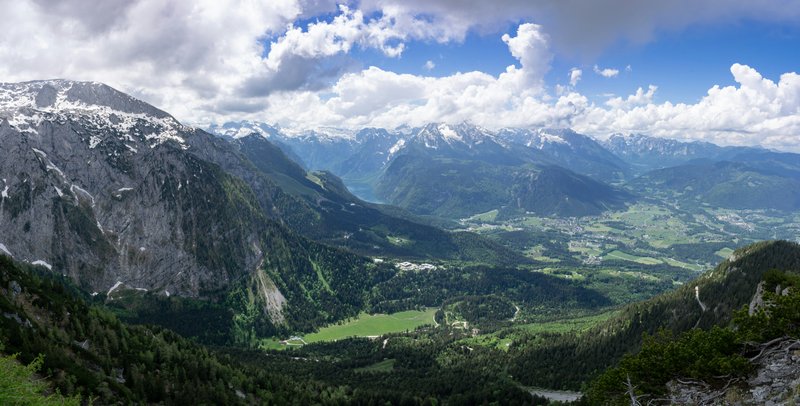
Explore GermanyThe Bavarian Alps reach their dramatic peak here, where the Watzmann massif drops sheer into the emerald waters of Königssee. This is Germany's oldest Alpine resort tradition, established when nineteenth-century aristocrats discovered the curative mountain air and the particular silence of high valleys. The village clusters around its central Marktplatz, where painted facades and onion-domed churches speak to centuries of salt-trade prosperity.
Beyond the historic core, the landscape dictates everything. Hotels occupy former hunting lodges and sanatoriums converted for modern comfort, their terraces oriented toward the peaks. Restaurants draw on a larder shaped by altitude: wild game from surrounding forests, freshwater char from glacial lakes, dairy from summer pastures. The Ramsau valley and shores of Hintersee offer quieter alternatives to the town center, while serious hikers find multi-day routes threading through the Berchtesgaden National Park — Germany's only Alpine national park, sharing a UNESCO biosphere designation with Austria's Salzburger Land.