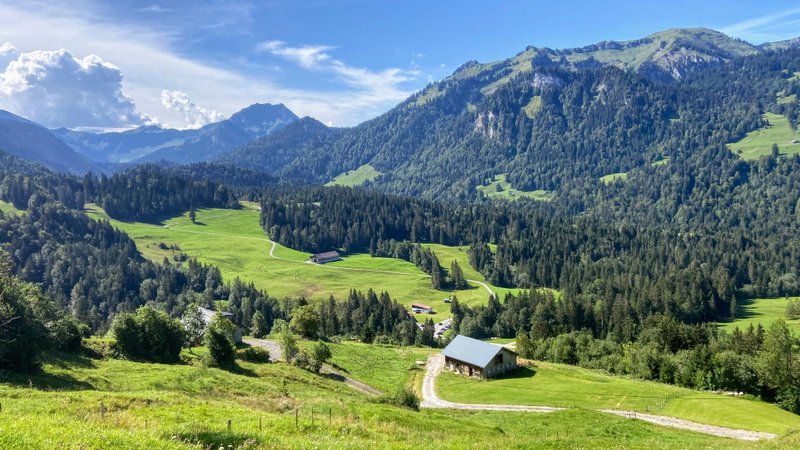
A century of family stewardship has shaped this Ofterschwang resort into a 218-room Alpine compound where the 20,000-square-meter wellness world anchors the experience—indoor and outdoor pools, saunas, jacuzzi, and beauty treatments spread across a facility rivaling small villages. Multiple fine-dining restaurants fuel days split between golf courses and winter slopes, with pet-friendly policies and private chalets accommodating extended stays.
Where to Stay
A former 1714 farmstead turned family-run Alpine retreat, Hanusel Hof pairs rustic heritage with contemporary mountain style across 53 rooms. The adjacent golf course and cross-country skiing trails suit active travelers, while dual indoor and outdoor pools, Turkish bath, and sauna cater to those seeking restoration. A cheerful restaurant opens toward a sun-flooded terrace—ideal for leisurely post-hike meals.
Sprawling across 150 acres near Oberstaufen, Haubers Naturresort commands its own mountain ridge, two alpine pastures, and a golf course. The panoramic wellness center draws spa-seekers with Turkish bath, sauna, and indoor-outdoor pools, while bright rooms open onto private balconies framing hillside views. Natural wood accents and oversized nature prints reinforce the alpine immersion. Cultural events animate the grounds year-round.
Perched near the Austrian border, this 66-room alpine retreat offers ski-to-door access with a cable car station steps away and Balderschwang's slopes just beyond. A standalone spa chalet houses an infinity pool and ten treatment rooms, while the Slow Food kitchen sources locally for terrace dining against panoramic peaks. Solid wood furnishings and artisanal details throughout suit wellness seekers and winter sports devotees alike.
Built on the footprint of a former Bavarian schoolhouse, this nine-room boutique hotel sits where Germany, Austria, Switzerland, and Liechtenstein converge. High-ceilinged rooms bear compass-point names—some facing alpine peaks, others the village below—furnished with Schramm beds and Danish pieces from Nor11 and Fredericia. A spa with sauna and steam rooms, garden, library, and honesty bar complete the retreat.
Perched over 4,000 feet high beside Germany's oldest castle ruins, this family-run sixteen-room retreat commands sweeping views across the Allgäu Alps. Interiors lean into mountain chalet aesthetics—oak floors, knotty pine walls, exposed beams—while one suite surprises with Moroccan arches and clay finishes. The spa, warmed by multiple fireplaces and a Finnish sauna, opens onto a wooden deck facing the peaks.
Apartment-style chalets at this 19-room Oberstaufen retreat feature warm wood, natural stone, and personal fireplaces—a refined alpine vocabulary suited to extended mountain stays. Private balconies frame 360-degree panoramas, while design kitchens encourage self-sufficiency. Skiers benefit from on-site equipment rental; warmer months bring the seasonal outdoor pool and sauna. A property calibrated for active travelers who want comfort without ceremony.
Spread across heritage buildings in the Bavarian spa town of Bad Wörishofen, Der Sonnenhof houses 156 rooms dressed in contemporary-classic style. The extensive spa complex delivers everything from hammam and sauna to medical treatments, while indoor and outdoor pools open onto landscaped gardens. Dining spans Bavarian-rustic to modern fine dining—an hour from Munich, suited to wellness seekers wanting substance over flash.
The Bolkart-Fetz family's Romantikhotel offers 27 rooms ranging from extravagantly styled suites to refined modern-traditional duplexes, each individually designed. A garden with outdoor pool anchors the summer experience, while the spa delivers sauna sessions and massage treatments. Half-board guests dine in a traditional Stube, and active visitors find tennis courts and bicycles ready for Alpine exploration.
Where to Eat
A 16th-century inn transformed into a one-Michelin-starred dining room, Christian's Restaurant pairs Bavarian heritage with French classical technique. Chef Christian F Grainer draws on his travels for unexpected accents—Simmental beef with stuffed morels might arrive alongside tom yum soup crowned with Gillardeau oysters. His wife Christiane, a sommelier, guides selections from a vaulted cellar housing over a thousand labels, including rare large-format bottles.
Behind salvaged wood furniture and edelweiss-shaped ceiling lights, chef Peter A. Strauss holds one Michelin star for his pared-back approach to classical cooking. The format is non-negotiable: seasonal surprise menus only, no à la carte, with plates like scallop alongside passion fruit and asparagus, or venison with pickled damson revealing precise, produce-driven instincts. A striking glass wine cabinet anchors the room.
A private road winds up to the Falkenstein peaks, where chef Simon Schlachter holds a Michelin star at Boutique Hotel Blaue Burg. His sharing-focused set menu arrives as intricate small plates layering subtle Asian inflections over regional Allgäu foundations. The intimate dining room, overseen by his partner as maître d', rewards the dramatic ascent with cuisine as striking as the Alpine panorama outside.
Perched on the fourth floor of the Sonnenalp Resort, Silberdistel pairs panoramic Alpine views with one-star precision. The kitchen builds its Weitblick tasting menu around seasonal ingredients, extending up to seven courses that guests can punctuate with Walter Grüll caviar from Salzburg. Request a window table to appreciate both the mountain scenery and an interior that tempers regional warmth with polished refinement.
Das Maxi brings Mediterranean warmth to the Bavarian Alps, its kitchen turning out contemporary dishes shaped by the seasons. A daily-changing set menu anchors the offering, supplemented by select à la carte options. The international wine list runs deep, matching the ambition of the food. Summer opens up garden seating with mountain panoramas; year-round, the refined interiors suit both hotel guests and visiting gastronomes.
A centuries-old farmhouse with warm wood-panelled dining rooms houses this Allgäu kitchen, where regional tradition meets occasional Mediterranean flourishes. The charcoal grill turns out succulent meats alongside locally farmed fish and thoughtfully prepared offal, while the on-site organic cheese dairy underscores a genuine commitment to provenance. Friendly, unhurried service creates the feel of a well-kept family table.
The Rimmele family runs this convivial Bib Gourmand address in Isny im Allgäu with evident dedication. Chef Susanne Rimmele moves fluidly between regional comfort and Mediterranean brightness—beef goulash arrives with seasonal vegetables and bread dumplings, while house-made ricotta and spinach ravioli come dressed in braised tomatoes. Beyond the meal, cookery classes in pasta, asparagus, and game extend the experience for those inclined to learn.
Das Fetzwerk brings Bib Gourmand-recognized bistronomic dining to the Allgäu with refreshing directness. The kitchen delivers seasonal plates distinguished by creative flair and impeccable freshness, served in a contemporary setting stripped of pretension. Attentive yet relaxed service matches the mood. On warm days, the terrace extends the experience outdoors—an ideal lunch stop for travelers exploring Oberstdorf's alpine surroundings.
A handsome 1856 timber house divided into three intimate dining rooms, Das Jagdhaus champions hyper-local sourcing—every ingredient drawn from Germany, with a strong preference for the surrounding Allgäu. The traditional menu showcases excellent game alongside a structured Prinzregentenmenü of three or four courses. In warmer months, a chestnut-shaded beer garden offers the region's most relaxed fine-dining setting. Bib Gourmand.
Esslust occupies a dining room that shifts between rustic Alpine warmth and contemporary polish, a fitting backdrop for cuisine rooted in Allgäu's seasonal bounty yet inflected with Mediterranean lightness. Guests compose their own three- or four-course progressions from an à la carte selection, guided by an attentive service team. The restaurant sits within the Alpenkönig hotel, whose wellness facilities extend the evening's indulgence.
Frequently Asked Questions
What is the best time of year to visit the Allgäu?
+
Winter brings skiing and snow activities from December through March, particularly around Oberstdorf and the Nebelhorn. Summer months from June to September offer ideal conditions for hiking the extensive trail network, with Alpine meadows in full bloom and cable cars operating to high-altitude viewpoints. Shoulder seasons — late spring and early autumn — provide quieter conditions and lower rates, though some mountain facilities may have limited hours.
How do you reach the Allgäu from Munich?
+
Munich serves as the main gateway. Direct trains run to Kempten in roughly ninety minutes, with connections onward to Oberstdorf taking another hour. By car, the A7 and A96 motorways provide access, with most destinations reachable within two hours. Memmingen Airport, served by budget carriers, sits at the region's northern edge for those flying from other European cities.
What local dishes define Allgäu cuisine?
+
Käsespätzle — egg noodles layered with local mountain cheese and topped with crispy onions — remains the signature dish. Krautkrapfen, pasta parcels filled with sauerkraut and bacon, reflect Swabian influences. The region's dairy heritage appears in dishes featuring Bergkäse, Weißlacker, and other local cheeses. Freshwater fish from the Bodensee and Forggensee appear on menus, alongside game during autumn hunting season.
Nearby Destinations
Explore GermanyThe Allgäu stretches across Bavaria's southwestern corner into the northern Alps, a landscape of rolling dairy pastures giving way to dramatic peaks around Oberstdorf and the Kleinwalsertal valley. Towns like Füssen sit at the foot of the Romantic Road, their painted facades and cobbled squares drawing visitors en route to Neuschwanstein. Further into the mountains, villages such as Oberstaufen — Germany's only Schroth cure resort — and the skiing hub of Ofterschwang maintain traditions of Alpine farming alongside contemporary wellness culture.
The regional kitchen builds on Swabian and Bavarian foundations: Käsespätzle with melted mountain cheese, Allgäuer Kässpatzen made from local Bergkäse, and Krautkrapfen stuffed with sauerkraut. Dairy dominates — the area produces more than half of Bavaria's cheese output. Restaurant menus shift with altitude: valley towns offer refined dining rooms serving reinterpreted Alpine classics, while mountain huts dish out Brotzeit platters and Kaiserschmarrn to hikers. The coffee culture leans traditional, with afternoon Kaffee und Kuchen rituals observed in wood-paneled Konditoreien throughout Kempten and Sonthofen.