


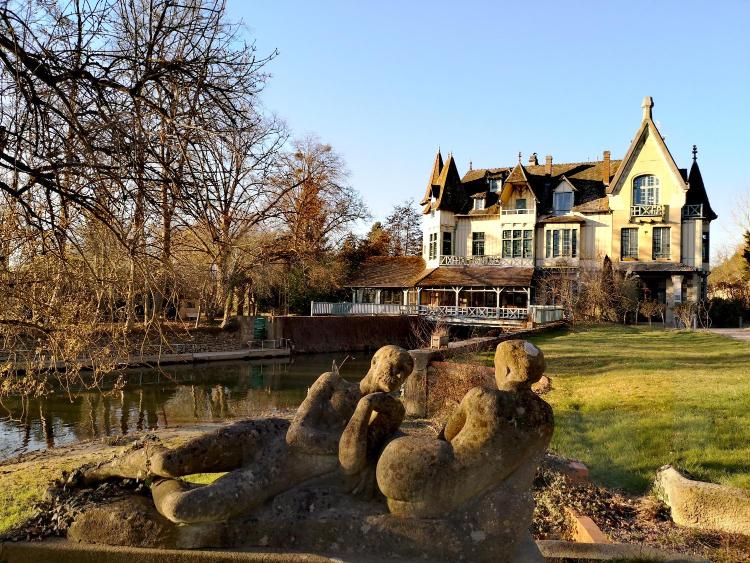
A seventeenth-century water mill straddling the Seine, this twelve-room manor underwent a handsome half-timbered transformation in the early 1900s. Baccarat chandeliers cast light across oak-paneled dining spaces, while antique-furnished rooms offer alcove balconies and private Jacuzzis. Guests row wooden boats to the hotel's own island, returning for champagne on riverfront terraces beside the seasonal pool—an idyllic retreat for couples seeking riverside tranquility near Rouen.
Rouen Travel Guide: Best Hotels, Restaurants & Experiences 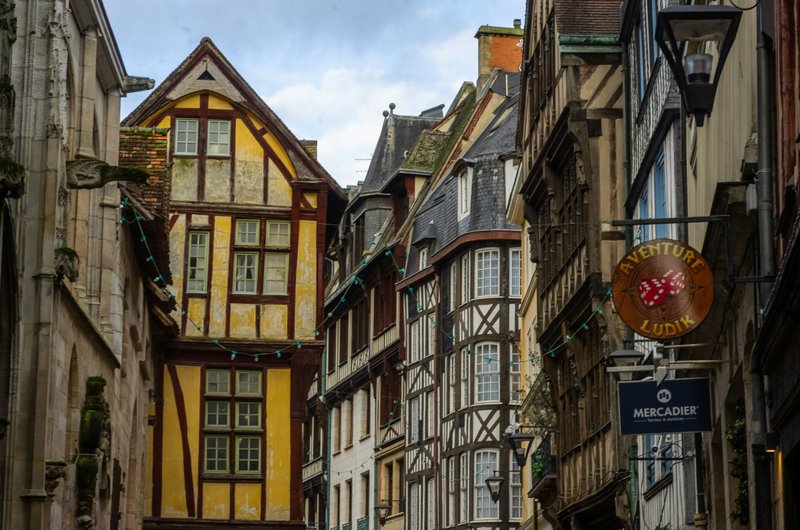
Explore Rouen
Hotels (4)
Restaurants (10)
Where to Stay

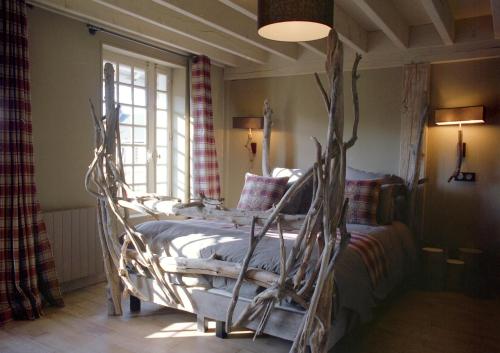
A 17th-century coaching inn anchors the main square of Lyons-la-Forêt, one of France's officially designated Most Beautiful Villages. Inside, rustic wooden beams and stone staircases frame rooms with a bohemian-chic aesthetic—beds crafted from reclaimed tree branches, skylights under sloped ceilings, plaid flannel bedding. The Nuxe spa next door features a treehouse-style treatment room, hammam, and an indoor-outdoor pool set within a restored farmhouse.

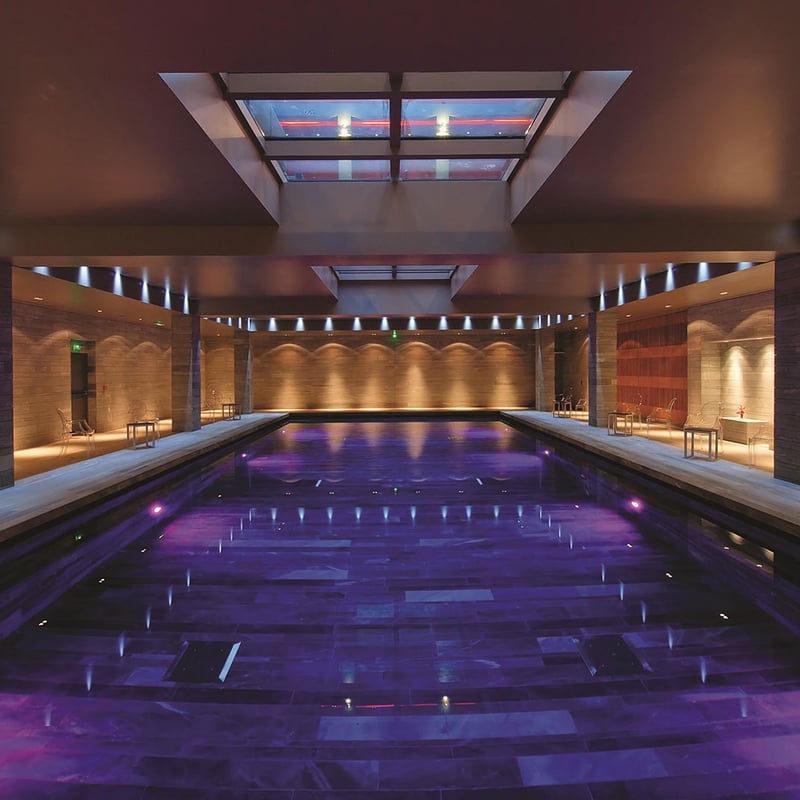
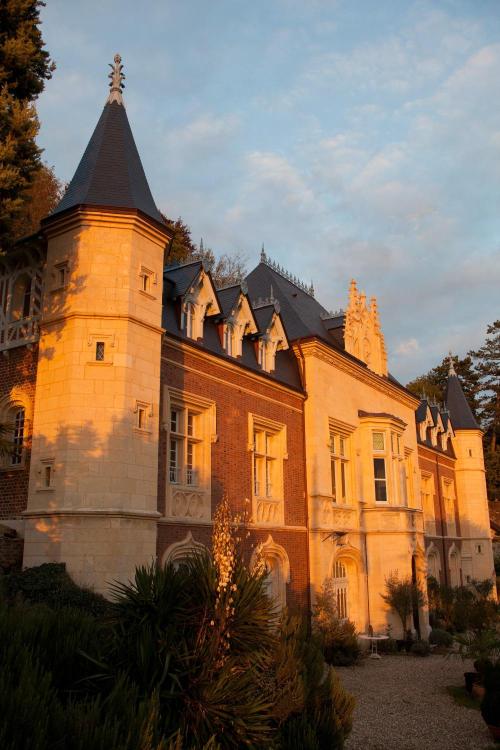
A 16th-century townhouse turned boutique hotel, Hôtel de Bourgtheroulde preserves its original timbered ceilings and antique woodwork while concealing a thoroughly modern spa underground—its pool lit dramatically through an atrium skylight, complemented by sauna, jacuzzi, and Turkish bath. The interior courtyard with its striking turret offers an atmospheric setting for evening cocktails, while Restaurant d'Aumale delivers contemporary cuisine in sleek contrast to the historic surroundings.

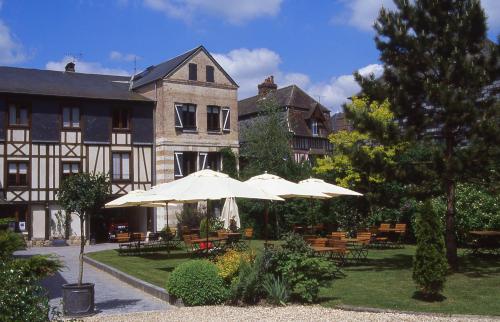
Dating from 1610, this timber-framed Norman landmark anchors one of France's officially designated Most Beautiful Villages. Beyond the cobblestoned entry, rear gardens shelter an indoor-outdoor pool framed by a restored farmhouse, while the spa surprises with a treehouse-style treatment room and hammam. Rooms dress in sophisticated neutrals—some with four-poster beds or clawfoot tubs—and an accomplished French restaurant extends onto umbrella-shaded terraces.
Where to Eat

★ Michelin
A half-timbered Norman house in the village of Lyons-la-Forêt shelters this one-Michelin-starred table, where the chef's exceptional command of sauces and emulsions anchors a menu threading local seafood and regional produce through Southern French accents. The dining room's classical décor, punctuated by Napoleonic military references, provides a fitting stage for this refined expression of traditional cuisine.

★ Michelin
Rouen's sole Michelin-starred address occupies the former Hôtel Romé, steps from the cathedral Monet immortalized on canvas. Through floor-to-ceiling windows, diners watch chefs Olivier Da Silva and Suzanne Waymel compose blind tasting menus that pivot between land and sea—Norman mussels, local saffron, vegetables from nearby Eure farms. A shaded summer terrace and private cathedral-view lounge complete the refined setting.

★ Michelin· Green Star ●
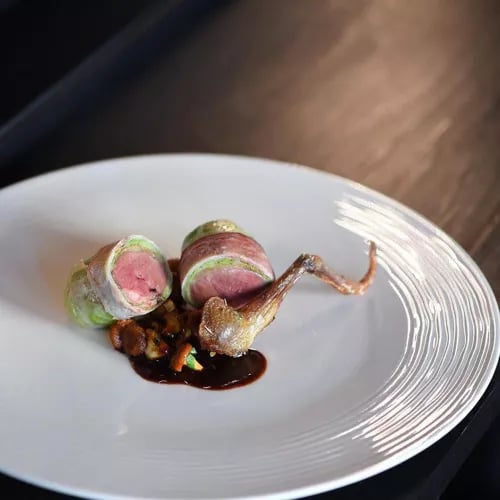
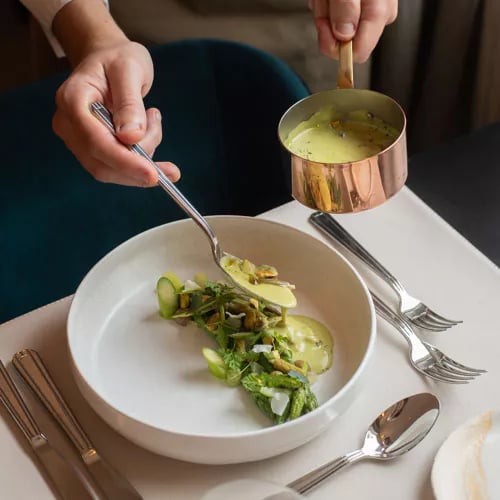
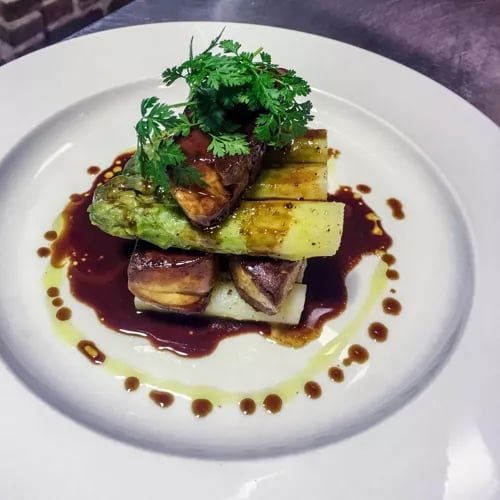
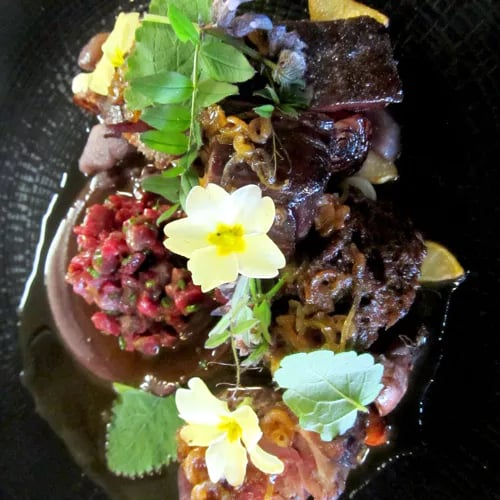
From a vintage kitchen where copper pots gleam on every wall, German-born chef David Goerne orchestrates one-star meals at an intimate table d'hôte, improvising dishes before his guests. His signature garden vegetables—arranged on soy-marinated egg yolk with herbs, flowers, and lemon emulsion—exemplify a Michelin Green Star philosophy that celebrates produce while still embracing seasonal foie gras and squab. The panoramic Seine-view terrace completes the theater.

Michelin Selected
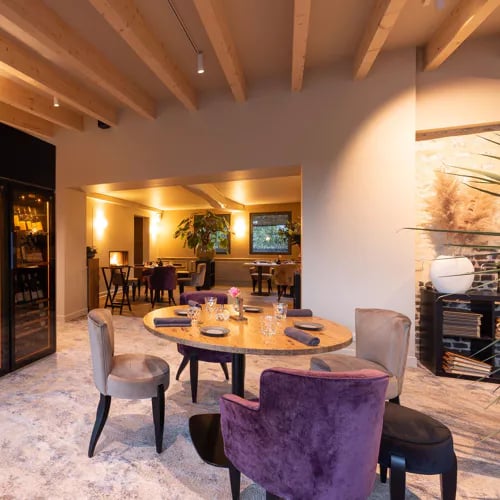
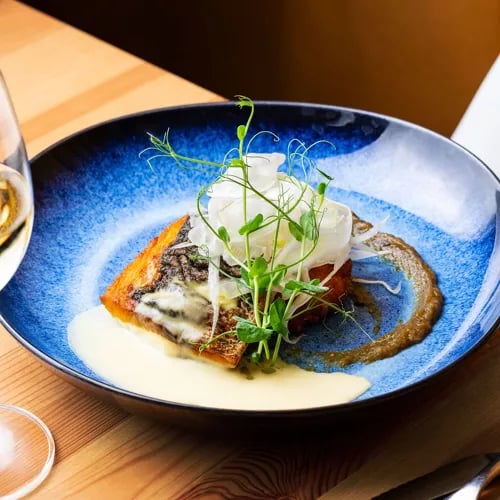
Behind a traditional half-timbered Norman façade, L'Auberge de la Pomme surprises with a sleek contemporary interior flooded with natural light. Floor-to-ceiling windows frame garden views while the kitchen celebrates regional producers—Normandy scallop carpaccio, poached monkfish dressed with watercress from nearby Cailly-sur-Eure, slow-cooked farm veal. A refined country escape minutes from Rouen.

Michelin Selected
Near the banks of the River Eure, chef Valentin Harou and pastry chef Alice Picard — alumni of Le Meurice, Le K2, and L'Oiseau Blanc — deliver polished seasonal cooking rooted in Norman terroir. The menu weaves regional accents throughout: a Camembert gougère to start, a trou normand of Cox's apple sorbet splashed with Calvados between courses. Refined technique, local soul.

Bib Gourmand
A converted watermill in the Norman countryside, Auberge de La Mère Duval sits beside a stream crossed by two small bridges—a setting as bucolic as the cuisine is rooted. Chef Alexandre Baranzelli, trained in prestigious kitchens, channels his regional heritage into Bib Gourmand-recognized cooking: traditional Norman recipes sharpened with personal flair. He and Mélanie run a warm family table suited to unhurried, generous meals.

Bib Gourmand
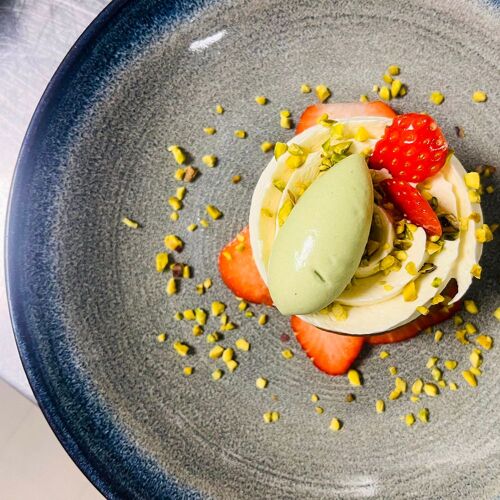
A half-timbered Norman farmhouse surrounded by grazing horses and pastoral meadows, this Bib Gourmand address delivers robust regional cooking with finesse. Steaks sizzle over an open wood fire, while forest-foraged mushrooms appear in dishes like cep ravioli with chanterelle cream. The crunchy vanilla millefeuille provides a textbook finish. An ideal country detour from Rouen for those craving authenticity over affectation.

Bib Gourmand
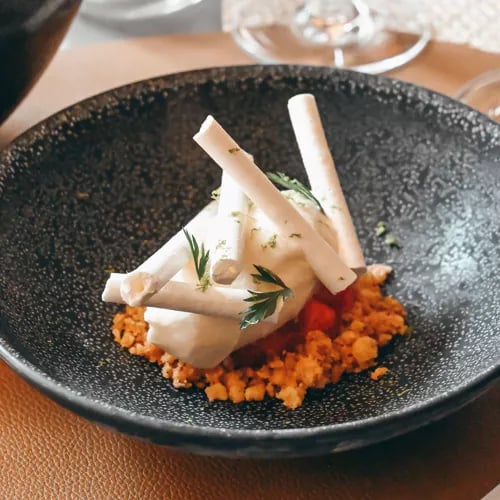
A former Top Chef contestant brings southern French sensibility to this half-timbered house on Place de la Pucelle, where original beams frame a contemporary bistro setting. The Bib Gourmand kitchen delivers inventive compositions—squid tagliatelle with guanciale, flame-kissed horse mackerel with confit aubergine—while evenings reveal greater ambition. Desserts surprise: dark chocolate mousse arrives with smoked fleur de sel, Espelette pepper, and peanut ice cream.

Michelin Selected
Facing the Gothic façade of Église St Maclou, chef Takahiro Oikawa applies Japanese precision to French bistronomy in this intimate cobblestoned address. His pâté en croûte arrives reimagined with confit octopus and yuzu, while aubergine-miso dip and karaage-style sweetbreads reveal a playful dialogue between two culinary traditions. The silky custard tart finale confirms a kitchen operating with quiet confidence and technical finesse.

Michelin Selected· Green Star ●
Facing the haunting ruins of Jumièges Abbey, this half-timbered auberge operates with quiet conviction: the chef tends his own kitchen garden, composes menus strictly from Norman terroir, and wheels out a cheese trolley sourced entirely from neighboring farms. Trout, lamb, cider, Calvados—everything arrives from the surrounding countryside. The glass-walled dining room opens onto a terrace, bridging rustic tradition with polished contemporary comfort.
Frequently Asked Questions
Which neighborhood in Rouen is best for walking to restaurants and cultural sites?
+
The right bank historic centre, particularly the streets between the cathedral and Place du Vieux-Marché, concentrates most dining options within a compact pedestrianised area. Saint-Maclou and its surrounding antiques quarter offer a quieter alternative with strong restaurant options.
What local dishes should visitors try in Rouen?
+
Canard à la rouennaise, the city's signature pressed duck preparation, remains available at traditional establishments. Norman cuisine features heavily: trou normand (calvados sorbet between courses), sole in cream sauce, and apple-based desserts. The local camembert and livarot cheeses come from farms less than an hour away.
Is Rouen suitable for a weekend trip from Paris?
+
Direct trains from Paris Saint-Lazare reach Rouen in approximately ninety minutes, making it viable for a weekend or even a day visit. The compact old town suits visitors on foot, though a full weekend allows time for the museums, the abbeys at Jumièges and Saint-Wandrille, and proper exploration of the dining scene.
Nearby Destinations
Explore France


Rouen
The Seine curves through Rouen like a slow exhalation, dividing the medieval right bank from the quieter left. On the pedestrianised streets around Place du Vieux-Marché, half-timbered buildings lean conspiratorially toward one another, their oak frames darkened by five centuries of Norman weather. The cathedral that Monet painted obsessively still anchors the old town, its flamboyant Gothic facade catching light differently by the hour. Hotels here occupy converted townhouses and former monasteries, their courtyards hidden behind heavy wooden doors.
Dining in Rouen runs from traditional Norman cooking — duck, cream, calvados, camembert — to contemporary bistros where young chefs apply modern techniques to local ingredients. The covered market of Place du Vieux-Marché supplies the raw materials. After dinner, the streets around Rue Eau de Robec offer wine bars in converted tanneries, while the antiques district near Saint-Maclou church harbours quieter spots. The left bank, long industrial, now draws a younger crowd to its converted warehouses and riverside terraces.