


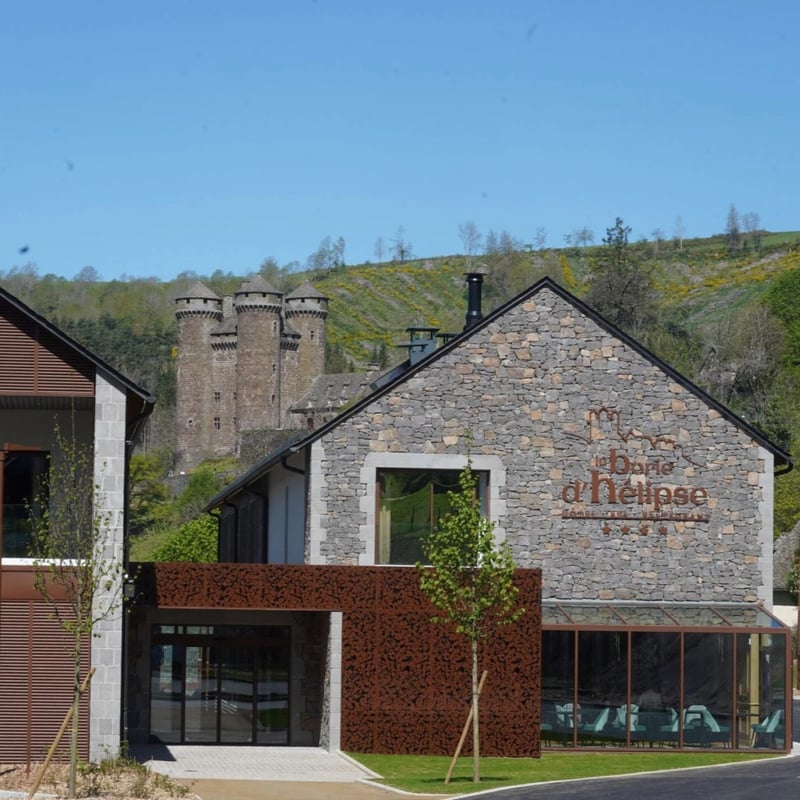
Volcanic stone, slate, and wood compose this twelve-room retreat on the edge of Tournemire, one of France's most beautiful villages. Private terraces frame the Doire Valley's pastoral sweep, while the dining room and outdoor terrace look directly onto the medieval silhouette of Château d'Anjony. After exploring the region's fortified heritage, guests withdraw to an indoor pool, hammam, and sauna—a refined base for slow-paced Auvergne discovery.
Rocamadour Travel Guide: Best Hotels, Restaurants & Experiences 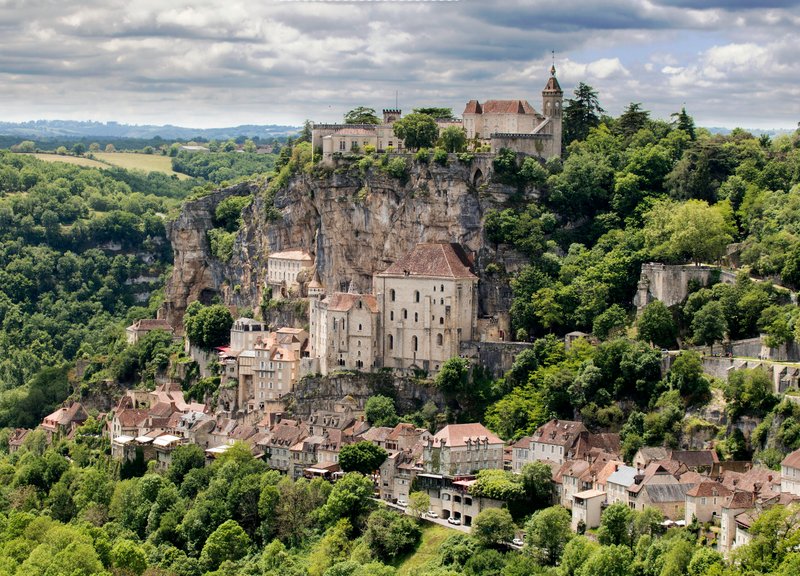
Explore Rocamadour
Hotels (3)
Restaurants (10)
Where to Stay

A former private residence converted into a 21-room boutique hotel, this Figeac address channels literary nostalgia through antique writing desks, calligraphy murals, and reading lamps that invite long evenings with a book. Stone and wood details anchor the rooms, while toile wallpaper adds provincial charm. A seasonal pool and terrace offer summer respite; complimentary bicycles encourage exploration of the medieval riverside streets beyond.

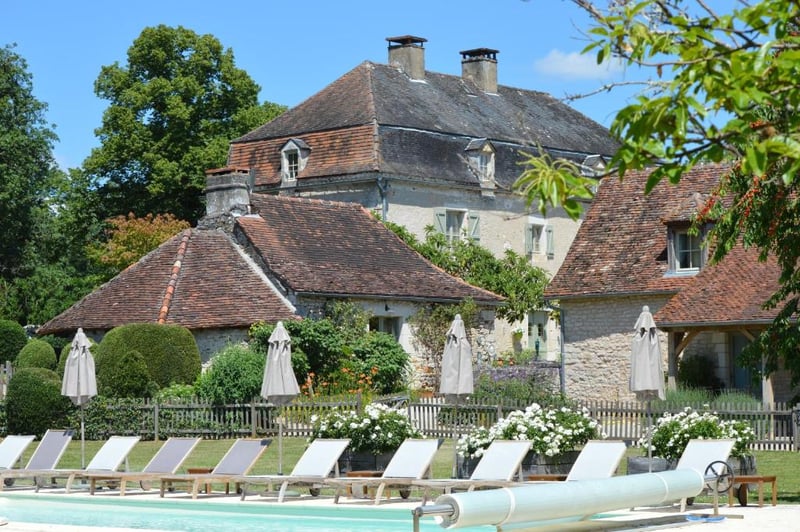
Anna and Abel devoted two decades to restoring this weathered 19th-century manor, threading contemporary design through its historic bones. Five rooms occupy ten acres of gardens anchored by a seasonal pool, while a sauna, outdoor hot tub, and yoga facilities cater to wellness-minded guests. Summer brings candlelit dinners twice weekly—an intimate retreat for travelers seeking Southwest France without pretense.
Where to Eat

★ Michelin· Relais & Châteaux
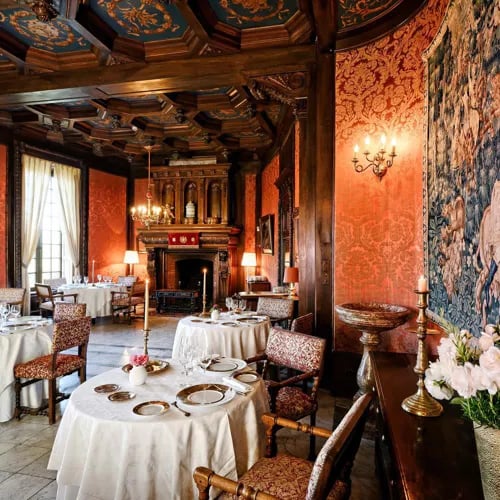
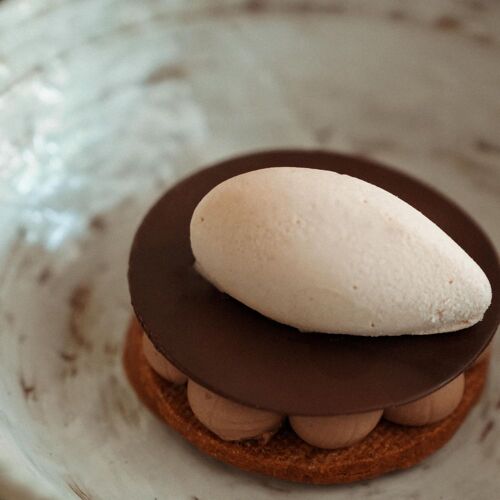
A 14th-century château whose towers seem to hover above the Dordogne provides the theatrical backdrop for Stéphane Andrieux's one-Michelin-starred cuisine. After nearly twenty-five years at the stoves, Andrieux commands Quercy's larder—lamb from the Causses, local foie gras—while pastry chef Marc Jean, present since 1995, closes meals with his strawberry-meadowsweet shortbread. The Grand Louis XIII Salon, with its coffered ceiling and carved fireplace, suits celebration; the riverside terrace, contemplation.

★ Michelin
A former antique dealer's eye shapes every detail at this one-Michelin-starred table near Saint-Céré, where Jean Lurçat tapestries and ceramics dress the elegant dining room. Chef Frédérik Bizat channels that collector's precision into traditional cuisine built on regional herbs and impeccable local produce. Summer brings a fragrant terrace; year-round, Madame Bizat's attentive service completes a first-class family affair.

★ Michelin
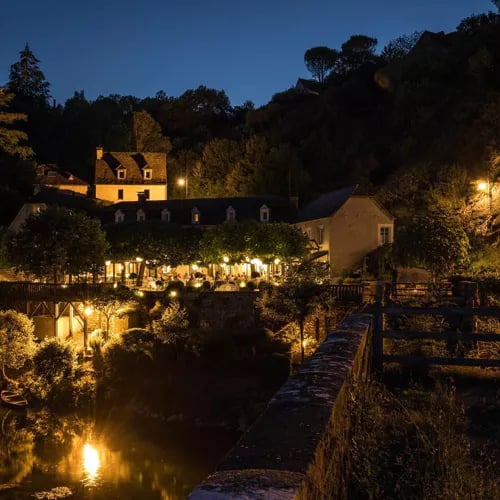
Sheer cliffs crowned by ancient fortifications plunge down to the Ouysse river, where the Chambon family has welcomed guests for five generations. Two brothers now share duties—one greeting diners, the other earning a Michelin star with tradition-rooted modern cuisine. The saddle of Quercy lamb with purple artichoke barigoule captures the Lot's terroir, best savored on the linden-shaded terrace as the tributary glides past.

Bib Gourmand
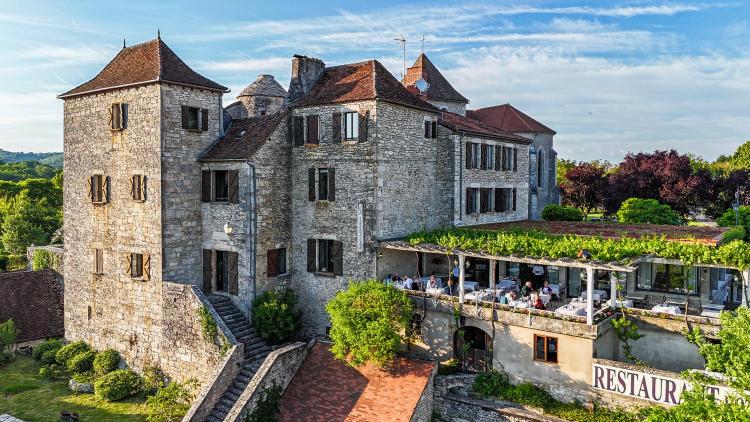
Beneath the medieval vaults of an 11th-century stronghold, La Terrasse earns its Bib Gourmand with bold, produce-driven cooking rooted in the Lot valley. Lamb from local pastures, farm-reared pork, and Mayrac poultry anchor a contemporary menu that rewards regional loyalty. The vine-shaded terrace overlooks the Dordogne and its limestone cliffs—an address for travellers seeking substance over spectacle.

Michelin Selected
Patrick Lagnès commands the kitchen at this intimate Quercy address, his classical training evident in every precisely executed dish. When inspiration strikes, contemporary flourishes appear alongside the traditional repertoire. The small dining room, lined with wainscoting and period furniture, creates a setting of quiet refinement. Desserts arrive courtesy of the chef's daughter, adding a familial warmth to the polished experience.

Michelin Selected
Inside a medieval castle's former guardroom, chef Grégory Tavan has built a reputation for seasonal French cooking with creative inflections. The historic stone walls now frame a contemporary dining space where his market-driven menus reflect both regional tradition and modern technique. A Michelin-recognized address in central Figeac, La Dînée du Viguier rewards those seeking refined cuisine in an atmospheric, centuries-old setting.

Michelin Selected
Beneath the medieval silhouette of Château d'Anjony, a striking stone and corten steel building houses this ambitious table where marine cuisine takes center stage in landlocked Cantal. The chef's meticulous preparations of fish and shellfish arrive punctuated with seaweed and briny accents, while surf-turf compositions honor local farmers and livestock producers. Floor-to-ceiling windows frame spectacular sunsets over the volcanic landscape.

Bib Gourmand
Beneath the soaring rafters of a converted Cantal barn, chef Olivier Cloteau builds seasonal menus rooted in local producers and the rugged terroir of the Doire Valley, visible through generous windows. His Charentes heritage surfaces in appetizers like saffron-laced mouclade, adding coastal brightness to mountain-grounded cooking. The Bib Gourmand recognition confirms what the setting suggests: hearty, thoughtful bistronomic fare in an architectural space of genuine character.

Bib Gourmand
A family trio—twins and partner—runs this Bib Gourmand address between Rocamadour and Padirac with uncommon precision. The brother's butcher training ensures impeccable meat from nearby Ferme Bouscarel, while vegetables arrive from Tauriac and trout from Le Gouffre du Blagour. Global inflections—za'atar, black lemon, Korean ssamjang mayonnaise—punctuate the deeply local cooking, creating a table worth the detour through the Lot.

Michelin Selected
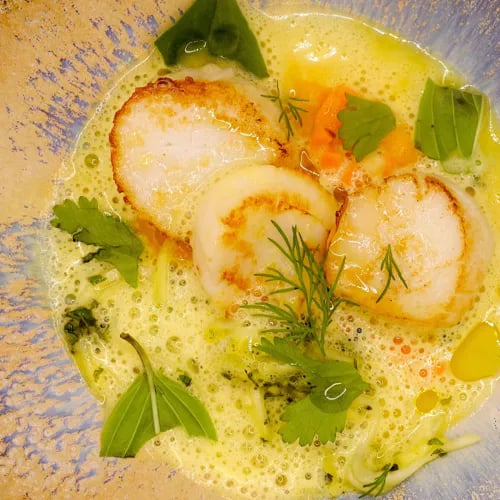
The casual counterpart to Michelin-starred Les Trois Soleils de Montal, L'Informel delivers generous modern cuisine in a relaxed, convivial setting. The kitchen champions seasonal ingredients with confident technique—Aubrac beef fillet arrives with confit shallots and a fragrant tarragon emulsion, exemplifying the straightforward yet refined approach. Ideal for travelers seeking accomplished cooking without ceremony.
Frequently Asked Questions
Which tier of Rocamadour offers the best hotel locations?
+
Hotels in the Cité Médiévale provide the most atmospheric experience, occupying restored stone buildings along the pedestrian street with direct access to the sanctuary. L'Hospitalet on the plateau above offers easier parking access and panoramic views over the canyon, though it requires descending by lift or stairway to reach the village proper.
What regional dishes should visitors expect on Rocamadour menus?
+
Quercy cuisine dominates, with duck preparations central to most menus — expect confit de canard, magret, and foie gras served with local walnut oil. The village's namesake rocamadour cheese, a small AOC goat cheese with a wrinkled rind, appears on virtually every menu, often warm on salad or paired with walnut bread.
When does the tourist season affect availability in Rocamadour?
+
The village operates at full capacity from Easter through October, with August bringing significant crowds to the narrow streets. Many hotels and restaurants close entirely from November through March. Spring and September offer the most balanced conditions — mild weather, functioning establishments, and fewer visitors on the Grand Escalier pilgrimage stairs.
Nearby Destinations
Explore France



Rocamadour
Built vertically into a 120-meter limestone cliff above the Alzou canyon, this medieval pilgrimage site defies conventional geography. The village cascades down in distinct tiers: the château crowns the summit, the sanctuary complex clusters at mid-level around the Chapelle Notre-Dame and its Black Madonna, while the commercial quarter lines the single pedestrian street of L'Hospitalet above. Stone-built hotels occupy restored medieval houses with views plunging into the gorge, their terraces suspended over centuries of pilgrimage history.
The dining scene here reflects Quercy traditions with remarkable fidelity. Duck in its many preparations — confit, magret, foie gras — dominates menus alongside rocamadour, the local AOC goat cheese that takes its name from this village. Restaurants along the rue de la Couronnerie serve these regional staples with walnut wine and cahors reds from nearby vineyards. The season runs intensely from Easter through October; winter brings near-total quiet to these cliffside streets, though a handful of establishments remain open for pilgrims visiting the sanctuary.