Spread across 2,500 hectares of Corsican wilderness, this collection of renovated stone shepherds' dwellings offers radical seclusion — each with private pool, fireplace, and outdoor kitchen. A 2km private beach and golf course anchor the estate, while three restaurants deliver farm-to-table excellence: the starred La Table de la Ferme, a driftwood-built seafood spot, and a traditional eatery carved into a terraced cave. For travelers seeking deliberate disconnection.
Where to Stay
Perched above the Gulf of Valinco on a steep maquis hillside, this 55-room retreat remains one of southern Corsica's best-kept secrets. Rooms pair blonde wood with white Carrara marble and sea-facing terraces; the 600 m² Clarins spa features a Himalayan salt sauna and Nordic ice room. One-Michelin-Star La Verrière showcases maquis-scented cuisine, while the hotel's private pontoon launches guests toward deserted coves.
Nine rooms scattered across a main house, treehouse, and hilltop dovecote rise from the Corsican maquis above Propriano Bay—each with sea views and private outdoor Jacuzzi. The infinity pool surveys the Mediterranean through ancient olive groves, while a terraced lounge captures the coastline's sweep. A complimentary shuttle delivers guests to nearby beaches, preserving the property's deliberate seclusion.
This 1845 hamlet once sustained 25 farming families with its own vineyards and olive groves—today those same landscapes frame sixteen rooms in weathered stone and three converted sheepfolds with private heated pools, hammams, and Jacuzzis. The on-site winery supplies the restaurant, where daily menus draw from the Ortolo valley's produce. Yoga and spa treatments unfold outdoors, against the distant Cagna mountains.
Where to Eat
Within the vast Murtoli estate, this one-starred table draws almost exclusively from its own land—vegetables, cheeses, honey, veal, lamb, olive oil—to compose refined Corsican dishes with subtle contemporary inflections. Bonifacio-style aubergine, Sartène-style courgette, and the vibrant aziminu arrive carefully plated on a terrace shaded by ancient olive trees, attended by a polished front-of-house team.
From the terrace, the Gulf of Valinco unfolds in sweeping panorama—a backdrop worthy of chef Romain Masset's exacting cuisine. His years alongside Jacques and Régis Marcon instilled a near-reverence for mushrooms, now woven into set menus showcasing langoustines, red mullet, and Corsican suckling lamb. Each dish balances island tradition with restrained creativity, precision without pretense.
A rustic wooden structure modeled on fishermen's huts overlooks what many consider Domaine de Murtoli's finest stretch of sand. The kitchen draws from both sea and estate—John Dory à la meunière, grilled crayfish, and meat from the property's own herds. Reservations are mandatory for this private domain, though the reward includes post-lunch beach access with deckchair in hand.
Four generations of the Parenti family have worked these kitchens since 1935, building a reputation on impeccably fresh seafood—lobster and langoustines priced by weight, fish hauled directly from the bay. The cooking remains technically precise yet unpretentious, with Corsican charcuterie and local cheeses rounding out the menu. A broad shaded terrace surveys the Gulf of Valinco, where fishing boats rock at anchor.
Deep within the maquis above Domaine de Murtoli's golf course, diners settle onto wooden benches amid ancient rock formations for a candlelit single-menu experience. The kitchen works exclusively with estate-grown produce and neighboring farms, turning out courgette à la Sartenaise and confit lamb shoulder. A signature tomato sauce fragrant with wild maquis herbs justifies the winding journey alone. Booking essential.
Chef Thomas Duval runs this quayside terrace restaurant with a direct line to the sea—his brother supplies the daily catch. The kitchen excels at bold contrasts: wild prawns given crunch with panko and lifted by sweet-sour notes, or slow-cooked umbrine in a bright lemony caper sauce alongside courgette fritters. A Propriano address for seafood purists who want their fish hours from the water.
Deep in the Corsican maquis near Sartène, this equestrian centre doubles as a farmhouse table where organic veal and beef are reared on the property itself. The rustic dining room of wood and stone opens onto a country garden with wrought-iron seating. Hearty mountain cooking showcases kitchen-garden produce: traditional soup, generous cannelloni stuffed with Brousse cheese, herb-scented strawberry desserts.
Entering through a village-style grocery stocked with Corsican charcuterie, cheeses, and myrtle liqueur, diners discover a bistro where the owner's obsessive sourcing defines every plate. The prized Abbatucci veal chop arrives tender and deeply flavored, its jus infused with wild maquis herbs. Island wines complete the picture at this seafood-focused address where provisions and pleasure merge naturally.
Frequently Asked Questions
When is the best time to visit the Valinco Gulf?
+
The season runs from May through October, with June and September offering warm swimming temperatures and fewer crowds than the August peak. Most hotels and restaurants close for winter.
How far is Propriano from Ajaccio airport?
+
Ajaccio's Campo dell'Oro airport lies approximately 70 kilometers north, a drive of about 90 minutes along the coastal and mountain roads. Figari airport to the south offers a closer alternative at roughly 45 minutes.
What are the main attractions near Propriano?
+
The prehistoric site of Filitosa, with its carved menhir statues, sits 20 minutes inland. The fortified village of Sartène and the beaches of Campomoro are within easy reach, while the Bavella needles offer dramatic hiking in the mountains above.
Nearby Destinations
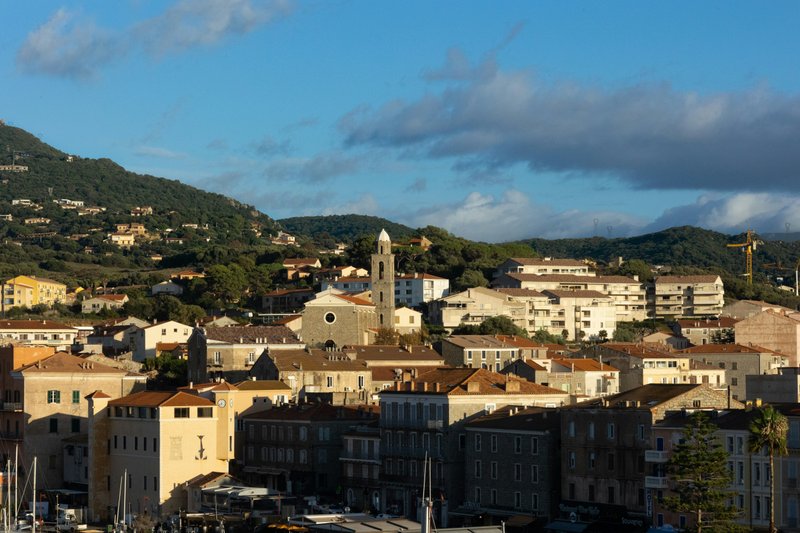
Explore FranceThe Valinco Gulf curves between the granite headlands of Campomoro and Capo di Muro, sheltering one of Corsica's most dramatic coastlines. Propriano sits at its northeastern edge, a working fishing port that has evolved into a base for exploring the wild interior — the prehistoric sites of Filitosa, the mountain villages of Alta Rocca, the forests of Bavella. Hotels here range from waterfront properties with private beach access to hillside estates overlooking the gulf's impossible blue.
The dining scene draws on both sea and mountain traditions. Restaurants along the port serve the morning catch alongside Corsican charcuterie from pigs raised on chestnuts in the nearby hills. Evening aperitifs happen on terraces facing west, where the sun sets directly into the Mediterranean. The pace is unhurried, the season short — most establishments operate from May through October, when the maquis-scented breezes soften the summer heat.



