


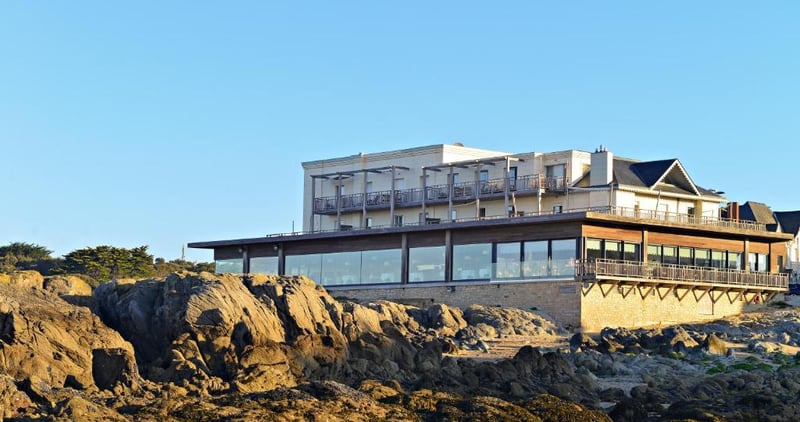
Perched directly on the granite rocks of Port Lin beach, this ten-room property has remained in the same family for three generations. Every room opens onto a private balcony facing the Atlantic, where waves crash against the wild Brittany coastline—a scene made theatrical by the dramatic illumination at dusk. The on-site restaurant serves breakfast with local artisanal produce, while tennis courts, bicycles, and nearby golf courses suit active guests.
Guérande Travel Guide: Best Hotels, Restaurants & Experiences 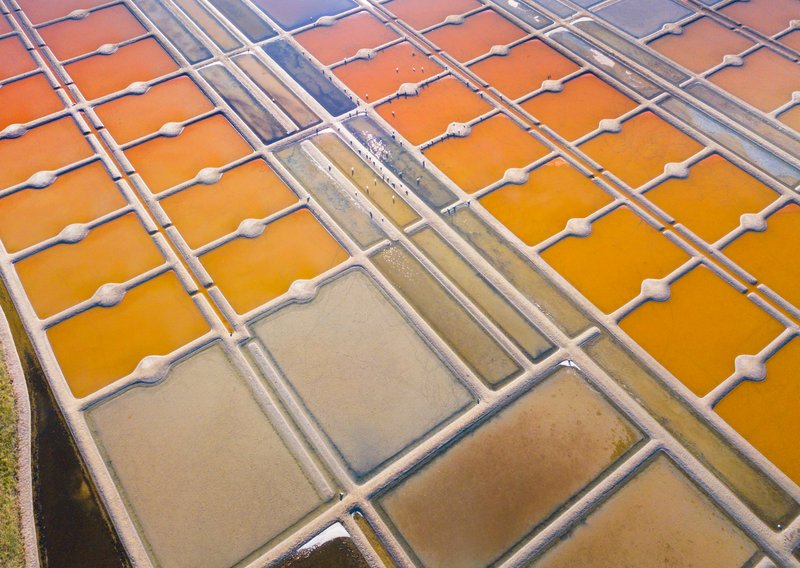
Explore Guerande
Hotels (1)
Restaurants (9)
Where to Stay

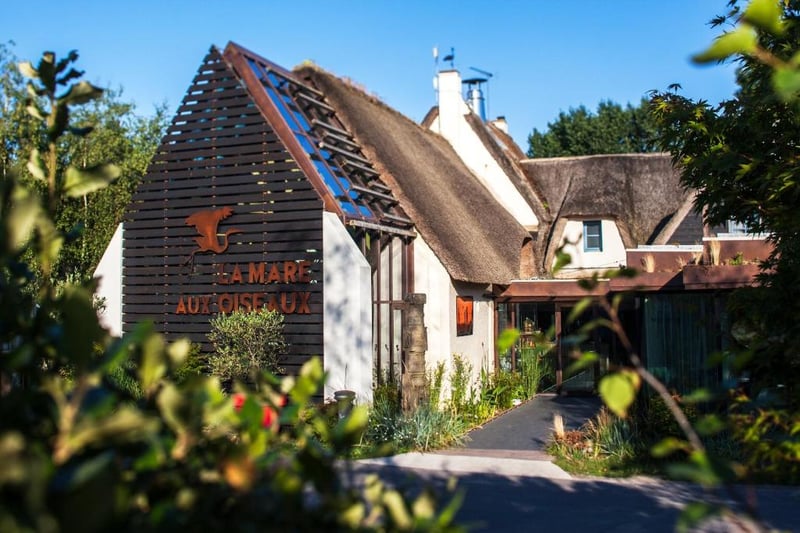
Stilted cabins hover above the Brière marshlands on a private island, their interiors drawing from African and Asian aesthetics—four-poster beds draped in linen, Balinese bathtubs, private wooden decks overlooking wetland wildlife. Wooden footbridges wind through bamboo groves to reach the main building, where Chef Éric Guérin runs a celebrated restaurant. A singular retreat for travelers seeking immersion in one of France's largest protected wetlands.
Where to Eat

★ Michelin
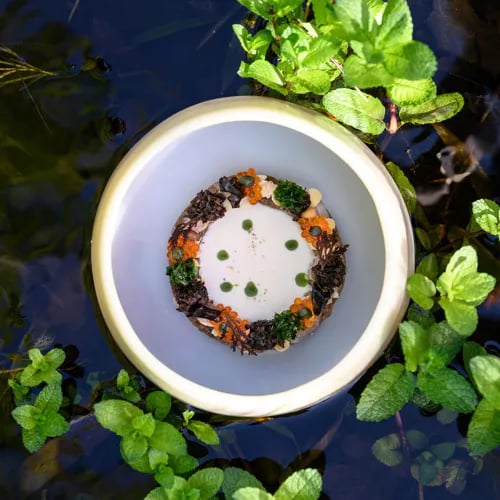
On an island encircled by canals within the Brière Regional Nature Park, chef Éric Guérin—an avid ornithologist with birds roaming his garden—channels his artistic temperament into terroir-driven cooking. His one-starred table delivers dishes of remarkable delicacy and freshness, each plate expressing a near-poetic sensibility. Exotic guestrooms allow diners to linger in this singular wetland setting.

Michelin Selected
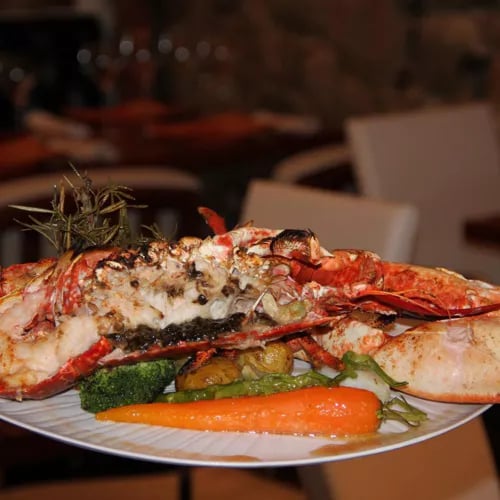
A glass-walled conservatory at Port-Lin frames the Atlantic horizon, where second-generation owners continue a four-decade tradition of impeccable seafood. The kitchen deals in timeless preparations: glistening plateaux de fruits de mer, scallops pulled from nearby waters, whole seabass baked in a salt crust for two. A rich lobster bisque arrives studded with tender chunks of the crustacean, while rum baba provides a nostalgic finale as the sun dips below the waves.

Michelin Selected
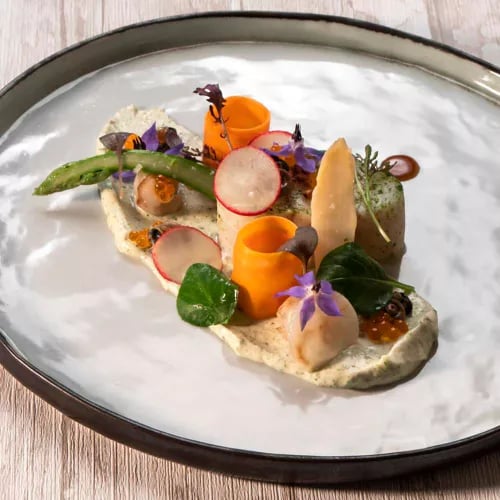
Occupying the outbuildings of a thirteenth-century manor on Guérande's outskirts, La Tête de l'Art delivers modern cuisine built on rigorously local sourcing. The kitchen's confident hand shows in dishes like asparagus paired with octopus under a canopy of herbaceous notes, or cod in hazelnut butter alongside delicate ravioli. A pear dessert balances sweet against sour with precision, closing meals on a memorable note.

Michelin Selected
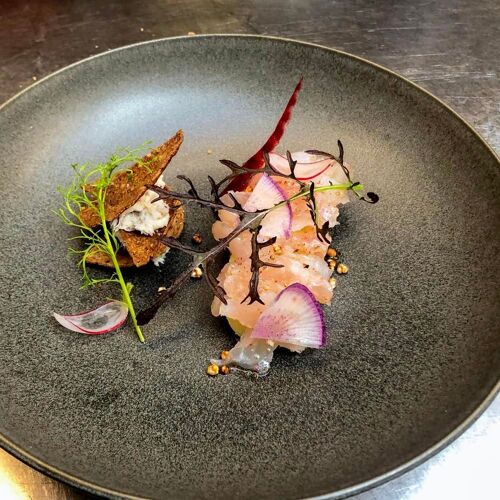
Marine and Julien's portside bistro commands views over La Turballe's working harbor, where the daily catch travels directly from auction to plate. The chef orchestrates a single tasting menu from his open kitchen, weaving local seaweed, samphire, and Mesquer pigeon into compositions marked by precise, artful presentation. Each course reflects the Guérande peninsula's coastal terroir with unwavering attention to detail.

Michelin Selected
A whitewashed cottage amid the salt marshes of Saillé sets the stage for chef Takashi Aoki's quietly inventive cooking. His French-rooted menu shifts with the seasons, each dish showing Japanese precision in its restraint. The intimate dining rooms feel appropriately cocooned, while an exceptional wine list—most bottles poured by the glass—rewards extended exploration.

Michelin Selected
Steps from Guérande's medieval ramparts, this family-run bistro delivers modern cuisine rooted in Breton terroir—catch of the day, seaweed, buckwheat, rich butter milk—while weaving in unexpected accents of ginger, lemongrass, and coconut. The Michelin Plate-recognized kitchen produces hearty, meticulously balanced plates in a sober contemporary setting. Ideal for travelers seeking regional authenticity with creative flair.

Michelin Selected
Facing Le Croisic's fish market from its quayside perch, L'Estacade draws on the freshest possible supply chain for its seafood-forward menu. Two young proprietors with pedigree from elite kitchens deliver hearty, precisely executed plates showcasing regional fish, shellfish, and local seaweed alongside meat options. The dining room radiates warmth under attentive service, making this Michelin Plate holder a natural choice for travelers exploring the Guérande peninsula's coastal gastronomy.

Michelin Selected
Seasoned chef Gilles Charpy commands this contemporary urban bistro in Pontchâteau, crafting market-driven dishes that reflect both precision and generosity. The menu pivots with the seasons—white asparagus velouté paired with Serrano, tender lamb navarin bright with spring vegetables, ethereal choux topped with strawberries and rhubarb. Warm, attentive service completes an unpretentious yet refined dining experience suited to leisurely lunches.

Michelin Selected
Directly facing Le Croisic's fish market, Le Lénigo captures the essence of Brittany's maritime heritage through its nautical décor of varnished wood and brass portholes. This family-run address channels the day's catch into carefully executed modern preparations, where seafood freshness speaks for itself. The welcoming atmosphere suits both leisurely lunches watching the boats and intimate evening meals.
Frequently Asked Questions
What is the best season to visit the Guérande salt marshes?
+
The salt harvest runs from June through September, when paludiers work the marshes daily and the crystallisation ponds display their characteristic pink and violet hues. Late afternoon light is particularly striking across the geometric basins. Visiting outside harvest season still offers atmospheric walks along the dikes, though the marshes appear more muted in winter.
How does Guérande's medieval town compare to other fortified cities in Brittany?
+
Unlike Concarneau or Saint-Malo, Guérande's ramparts enclose a living town rather than a primarily tourist quarter. Residents still occupy the granite houses, local shops outnumber souvenir boutiques, and the Saturday market draws farmers and fishermen from across the peninsula. The circuit des remparts offers uninterrupted walks along the full perimeter.
What regional specialities should visitors seek out in Guérande restaurants?
+
Look for dishes featuring fleur de sel and sel gris as finishing elements rather than mere seasoning. Agneau de pré-salé — lamb grazed on the salt meadows — carries a distinctive mineral character. Seafood arrives daily from Le Croisic and La Turballe: tourteau crab, palourdes clams, and bar de ligne. The local Muscadet sur lie provides the classic pairing.
Nearby Destinations
Explore France


Guerande
The ramparts of this fortified town have stood since the fifteenth century, encircling a maze of granite houses, half-timbered merchants' residences, and the collegiate church of Saint-Aubin. Beyond the walls, the landscape opens onto the salt marshes of the Presqu'île de Guérande, where paludiers still harvest fleur de sel by hand using methods unchanged for a thousand years. The town sits at the junction of three distinct territories: the wild Atlantic coastline of La Baule and Le Croisic to the west, the mysterious peat bogs and thatched cottages of the Brière regional park to the east, and the vineyards of Muscadet to the north.
Within the medieval enclosure, place du Marché-au-Bois hosts the weekly market where producers from the marshes sell grey salt, salicornia, and lamb raised on the salt meadows. The dining scene draws on this terroir: chefs work with line-caught bar from Le Croisic, oysters from Pénestin, and vegetables grown in the black soil of the Brière. Outside the ramparts, the Route du Sel winds through the marais salants, passing centuries-old salorges where salt was once stored and traded with ships bound for the Baltic.