Five suites occupy an 18th-century mansion within walking distance of the alabaster cliffs Claude Monet painted twenty times. Antique oak furniture, parquet floors, and original oil paintings furnish each room; several open directly onto a terrace. A 900-bottle wine cellar supplies both the small cinema and gourmet picnic baskets prepared for clifftop day trips, while leafy gardens complete the intimate country-house atmosphere.
Explore Etretat
Where to Stay
Occupying an 1862 Anglo-Norman château above Étretat's chalk cliffs, this 25-room domain spreads across three historic buildings, each guest room individually designed and named for figures like Monet and Sarah Bernhardt. Chef Killian Allain's Michelin-starred table unfolds beneath a Jean-Charles de Castelbajac fresco, while Racines explores Lebanese-inflected bistronomic plates. La Canopée rooftop features a private jacuzzi commanding 360-degree vistas of sea and stone, and Le Masdar bar captures the Channel's sunset theatrics.
Where to Eat
Chef Killian Allain's modern cuisine celebrates Haute-Normandie's dual terroir—land and sea—with gutsy sauces and seasonal produce that draw discerning diners to this 1862 manor perched above Étretat. Jean-Charles de Castelbajac's fresco-adorned dining room frames sunset views over the town's iconic cliffs, while Wednesday evenings introduce a three-course vegetarian menu reflecting the kitchen's responsible, evolving approach to coastal gastronomy.
Sister to the Michelin-starred Domaine Saint-Clair, this colourful bar-à-manger channels its owner's Lebanese heritage through a Mediterranean menu built for sharing. Mezze showcases local ingredients—beef tataki with bottarga, grilled watermelon carpaccio with camembert espuma, cappuccino-style ceviche—before mains like croaker wrapped in vine leaf with spinach gnudi and arak-spiked bisque. A small wine cellar hosts tastings alongside the bottle list.
Frequently Asked Questions
What is the best area to stay in Étretat for cliff views?
+
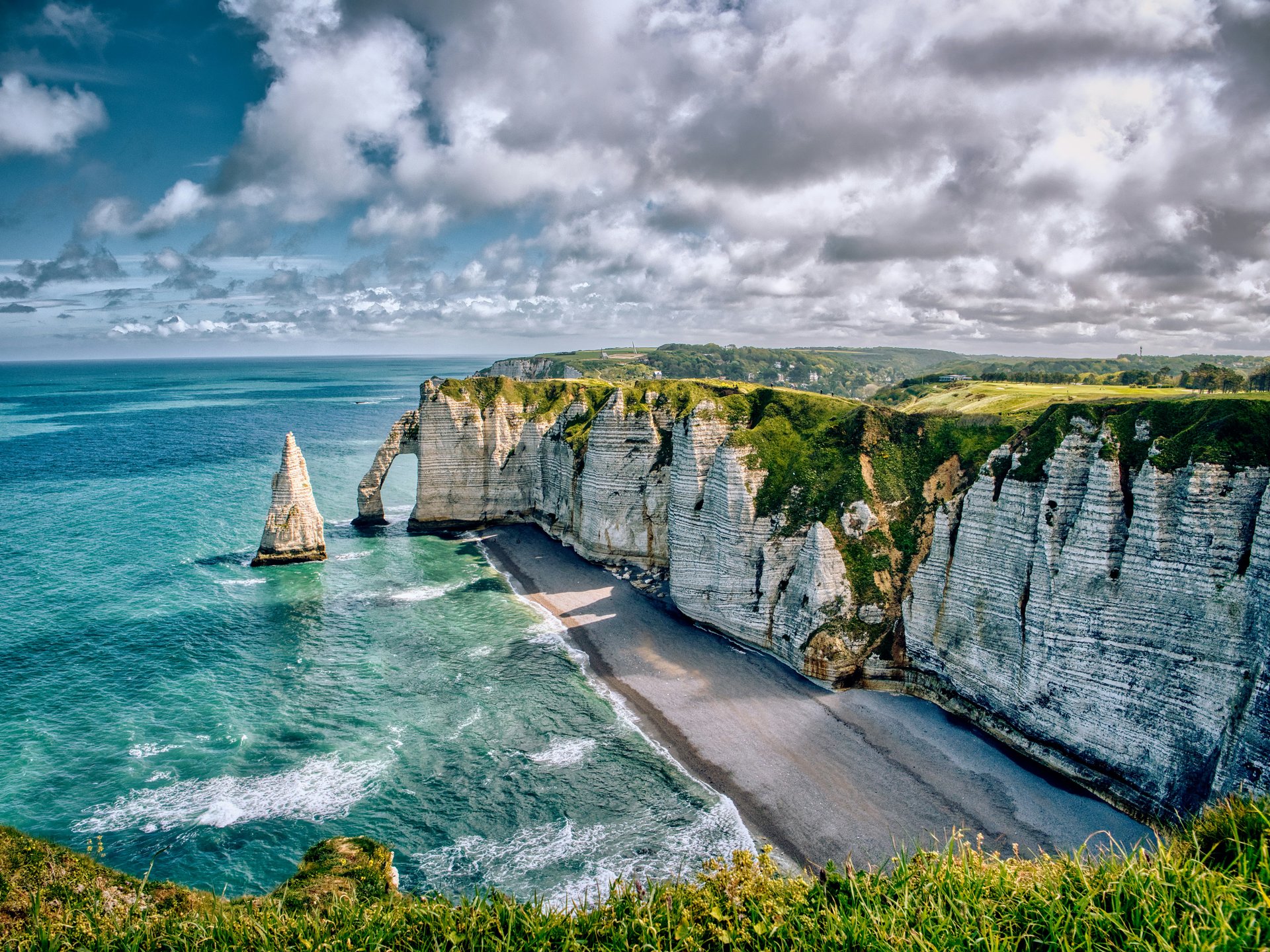
Properties perched on the falaise above the village offer unobstructed views of the Aiguille needle rock and the Porte d'Aval arch. The cliff-top position also provides direct access to the GR21 coastal path toward Fécamp and Le Havre.
When is the best season to visit Étretat?
+
Late spring and early autumn bring fewer crowds and softer light for the cliffs. Winter appeals to those seeking storm-watching from seafront rooms, while summer delivers the warmest swimming conditions at the pebble beach.
What local specialties should visitors try in Étretat?
+
The Alabaster Coast is known for its seafood platters, particularly coquilles Saint-Jacques from October to May. Pair dishes with local cider from the Pays de Caux or a trou normand of Calvados between courses, following the traditional Norman dining custom.
Nearby Destinations
Explore FranceThe chalk cliffs that inspired Monet and Maupassant frame a fishing village where the Belle Époque still lingers. Along the seafront promenade, former fishermen's cottages have been converted into boutique properties, while up on the falaise, a handful of manor houses offer panoramic views of the Aiguille and the Porte d'Aval. The town's compact scale—walkable end to end in fifteen minutes—means the beach, the market hall, and the cliff paths remain within easy reach from any address.
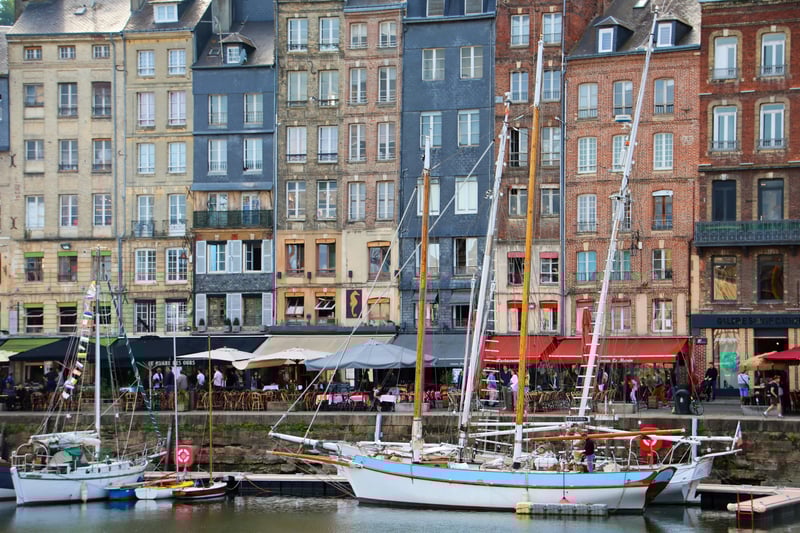
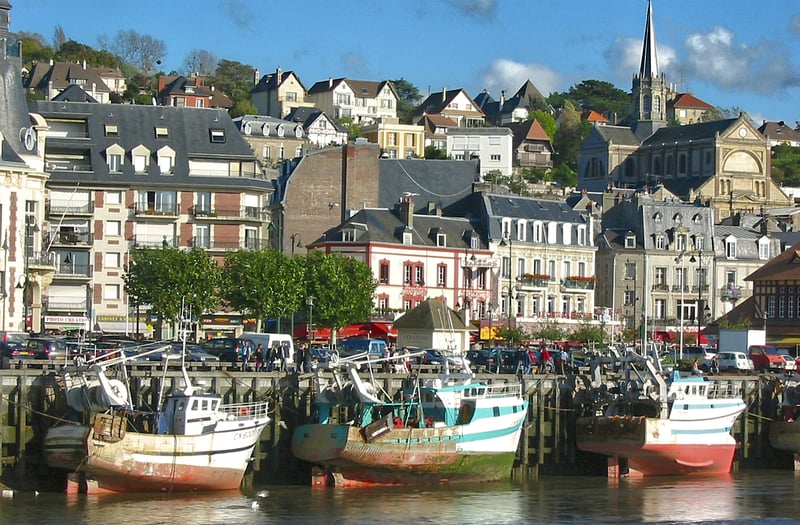
Étretat's dining scene reflects its dual identity as fishing port and artistic retreat. The quayside restaurants serve the morning's catch—sole meunière, moules de bouchot, coquilles Saint-Jacques in winter—while newer establishments along the Rue Adolphe Boissaye bring contemporary Norman cooking to tables set with local cider and Calvados. The covered market, rebuilt after wartime destruction, anchors the town's culinary life with producers from the Pays de Caux selling cream, butter, and the apples that define the region's gastronomy.