


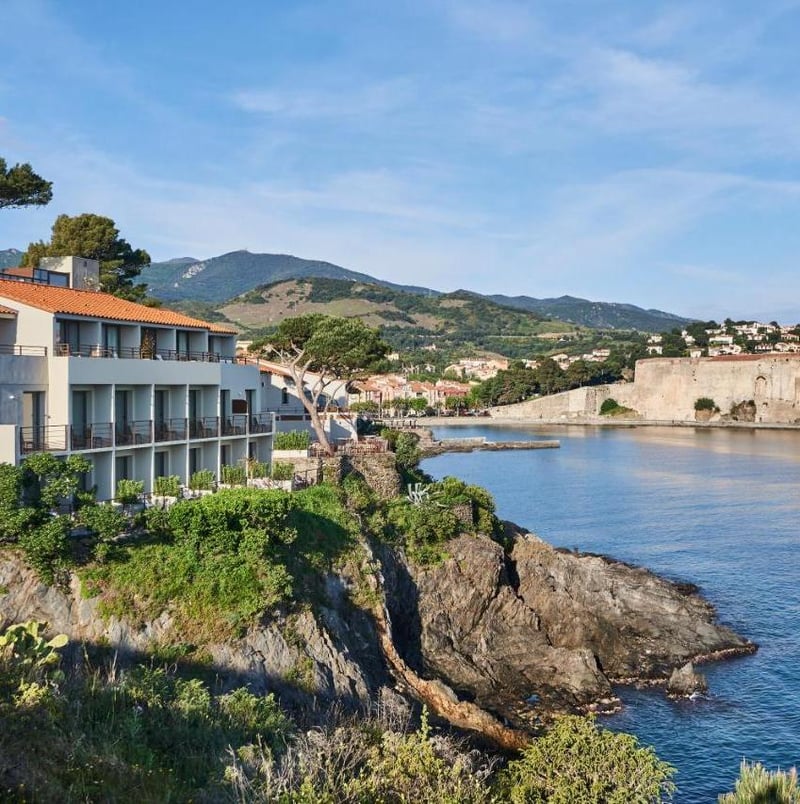
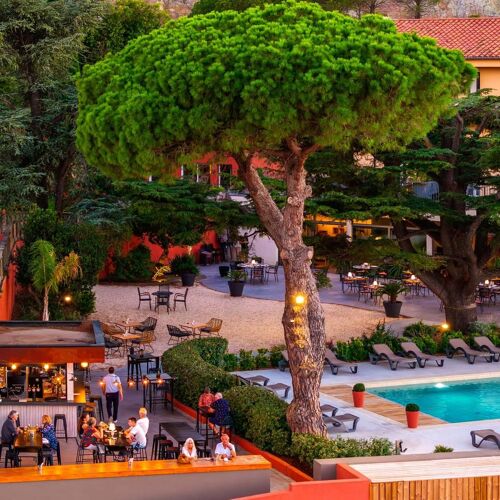
Clinging to a rocky hillside above the Baie de Collioure, this intimate 18-room retreat takes its name from the brown rocks where its terraces meet the water's edge. Gardens envelop the property, while interiors favor a minimalist warmth—neutral palettes, clean lines, quiet sophistication. The on-site restaurant draws visitors with Italian-inflected cooking and a thoughtful natural wine list, rewarding those who prefer their Catalan coast uncrowded.
Collioure Travel Guide: Best Hotels, Restaurants & Experiences 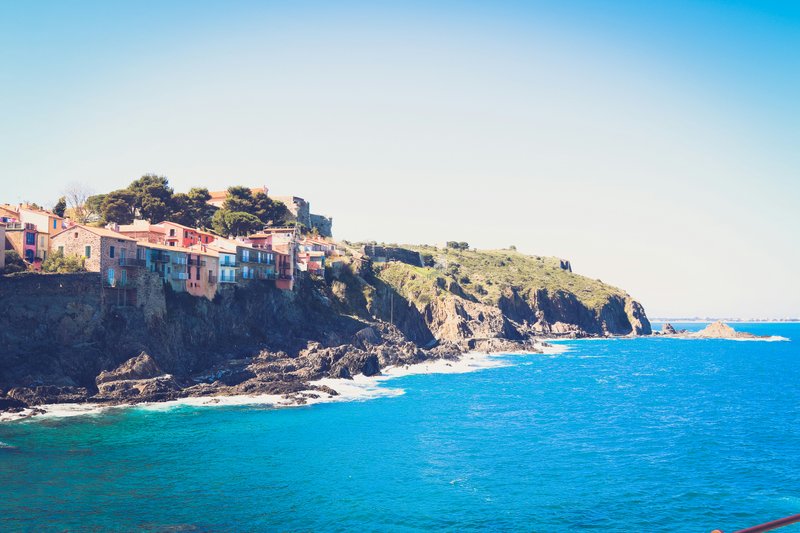
Explore Collioure
Hotels (1)
Restaurants (10)
Where to Stay
Where to Eat

★ Michelin
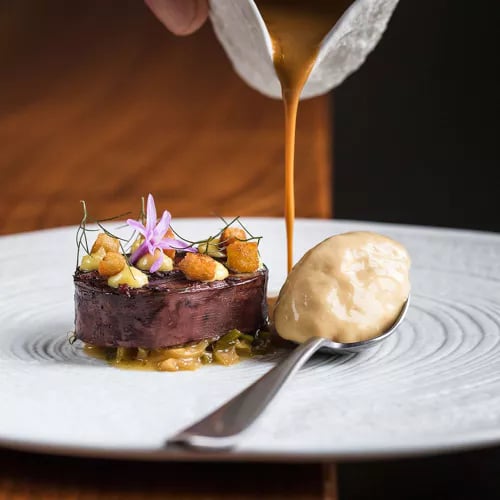
Perched above Collioure's harbour with the Mediterranean stretching below, Laurent Lemal's one-starred kitchen celebrates Catalan terroir through inventive preparations—his signature Toulouges red onion arrives as mousse, ice cream, and confit in a single dish. The maître d'hôtel consults each table before service begins, tailoring the evening's rhythm. Julie Lemal's desserts echo the region's soul, while Roussillon's finest domaines fill the glass.

Michelin Selected
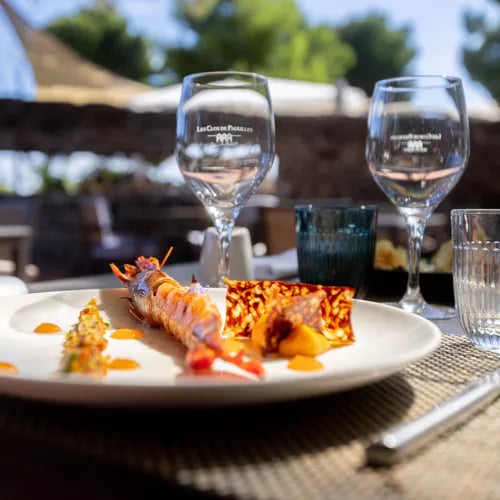
Maison Cazes, one of Roussillon's foremost wine producers, operates this modern cuisine restaurant on their 90-hectare estate at Paulilles Bay. The kitchen works exclusively with local ingredients, crafting regional dishes like capon with green crab bisque and squid ink tagliatelle. A vineyard-facing terrace provides the setting, while a casual tapas bar offers a lighter alternative just steps from the Mediterranean.

Michelin Selected
A panoramic window frames the working port of Port-Vendres and the Mediterranean beyond, setting the stage for seafood that draws deeply from Catalan tradition. The kitchen follows the seasons without constraint, reshaping its menu as the catch and harvest shift. A fine terrace extends the dining room into the salt air, making this an address where the region's coastal identity arrives unfiltered on the plate.

Michelin Selected
Perched on a rocky promontory with the Château royal de Collioure filling the horizon, this bohemian-chic dining room channels the Mediterranean through creative Catalan cooking. The kitchen builds dishes around pristine seafood: Palamós prawns arrive with an unexpected coffee emulsion, while arroz seco gains depth from baby squid and blue crab stock. Plancha-seared dentex with suquet demonstrates confident technique rooted in local tradition.

Bib Gourmand
A 19th-century building draped in greenery sets the stage for this Bib Gourmand address near Collioure. Through large bay windows, diners look out onto a flower-filled garden while sampling robust bistronomic fare: warm calf's head with Charroux mustard, Cerdagne pig confit glazed with honey and ginger. The terrace beckons in warmer months, and service remains graciously attentive throughout.

Michelin Selected
An open secret among serious food lovers, La Bartavelle showcases the husband-and-wife talents of chef Thibaut Lesage and pastry chef Stéphanie. Their modern repertoire draws on first-class Catalan produce, paired with a thoughtful selection of local and natural wines. An upstairs art gallery adds cultural depth to the experience. Reservations are essential at this intimate Argelès-sur-Mer address.

Michelin Selected
Perched on the Quai du Fanal, this modern seafood restaurant commands sweeping views across Port-Vendres harbour, best appreciated from the upstairs terrace where fishing boats bob below. The kitchen maintains a sharp focus on the day's catch, with a signature bouillabaisse — rich, fragrant, and loaded with local fish — drawing regulars from neighbouring Collioure and beyond.

Michelin Selected
A Tokyo-born chef channels his devotion to French gastronomy through a Catalan-Japanese lens at this intimate old-town address. Ultra-fresh fish anchors the creative menu—rockfish soup enriched with coconut milk, braised ox cheek glazed in local banyuls alongside prawns. The compact dining room fills quickly; reservations are essential for travelers seeking Collioure's most inventive table.

Michelin Selected
Perched along the scenic coastal road to Collioure, this hotel restaurant commands sweeping Mediterranean views from its terrace. The kitchen celebrates regional sourcing with conviction, weaving local produce into dishes alive with southern French aromatics—herbs, olive oil, sun-ripened vegetables. A Michelin Plate holder, Le Bistrot à la Mer suits travelers seeking accomplished modern cooking against a backdrop of sea and sky.

Michelin Selected
Beside a small bridge over the coastal river La Massane, this charming stone-and-brick building houses a kitchen devoted to the Catalan littoral. Mediterranean fish, locally caught anchovies prepared in traditional style with summer vegetables and grilled pepper sorbet, and wild sea bass alongside spring asparagus define a menu rooted in regional terroir. The modernized rustic interior suits relaxed yet refined coastal dining.
Frequently Asked Questions
What is the best area to stay in Collioure?
+
The old town around the Mouré quarter offers the most atmospheric setting, with direct access to the harbor, galleries, and restaurants. Properties here are typically small-scale, occupying historic buildings with character. For quieter surroundings, the residential streets behind the Plage du Faubourg provide easy beach access while remaining within walking distance of the center.
What is Collioure known for gastronomically?
+
Anchovy is the local specialty — salted and cured according to traditional Catalan methods that date back centuries. The Maison Roque and Maison Desclaux maintain these artisanal practices. Beyond anchovies, the cuisine reflects its position between sea and vineyard: grilled catch of the day, Catalan-style preparations with peppers and tomatoes, and wines from the Collioure and Banyuls appellations grown on the steep terraced slopes above town.
Why did the Fauvist painters choose Collioure?
+
Henri Matisse arrived in summer 1905, followed by André Derain, and together they developed the bold color theories that became Fauvism. The particular quality of Mediterranean light here — intensified by the surrounding mountains and reflected off the bay — allowed them to experiment with pure, unmixed pigments. The Chemin du Fauvisme walking trail now marks the exact spots where they set up their easels, connecting twenty reproductions of their paintings to the original viewpoints.
Nearby Destinations
Explore France



Collioure
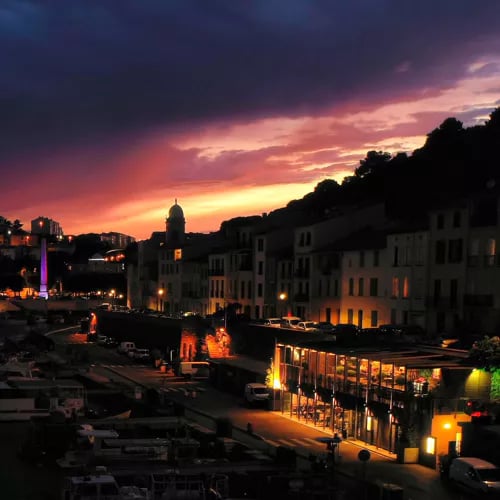
This former fishing village at the foot of the Albères mountains drew Matisse, Derain, and the Fauvist painters who found inspiration in its chromatic intensity — the bell tower rising from the harbor, the ochre and pink facades of the Mouré quarter, the fortified Château Royal anchoring the bay. The old town remains compact and walkable, its narrow streets lined with galleries and artisan workshops that reflect a century of artistic heritage.
The dining scene centers on the portside terraces along the Quai de l'Amirauté and the quieter Place du 18 Juin, where anchovy — the town's culinary signature — appears in multiple preparations alongside Banyuls-braised dishes and Roussillon wines. Accommodation tends toward intimate properties: converted fishermen's houses with sea-facing rooms, small hotels with rooftop terraces overlooking the Église Notre-Dame-des-Anges. The rhythm here follows the Mediterranean: morning markets, long afternoon lunches, evening paseos along the rocky beach of the Faubourg.