Chef Isma'il Guerre-Genton, previously at Empreinte in Lambersart, structures his single set menu around a flower's metamorphosis—bud, bloom, achene—each course unfolding with botanical logic. The sauces prove masterful: vivid green pepper, silken fish jus, concentrated poultry reductions revealing hours of patient extraction. Line-caught fish and Licques chicken anchor bold, personal compositions served within an elegantly muted dining room of cream tones and brushed walls.
Art Deco posters and mirrored walls set the stage at this Bib Gourmand bistro, where chef Patrick Comte builds hearty seasonal plates with classical precision. Snail persillade gives way to egg bourguignonne enriched with buttery turnip, while Angus faux-filet arrives alongside a gratin dauphinois laced with pungent Maroilles. The Paris-Brest éclair, reimagined with hazelnut ice cream, closes meals on an indulgent note.
From its top-floor perch, Aquar'aile commands sweeping views across the Strait of Dover to the English coastline—a theatrical backdrop for seafood drawn straight from local waters. The kitchen delivers regional classics with precision: lobster casserole, sea bass baked in a salt crust, sole meunière. The proprietor's personally assembled wine list complements each dish, making this an essential address for Channel-crossing gourmands.
Travelers bound for England find a refined pause at Le Channel, where modern cuisine takes a distinctly maritime turn. The kitchen favors classic preparations with an emphasis on seafood, presented in an elegant dining room whose most striking feature is a wine cellar visible from the tables. A well-curated selection complements each course, making this an accomplished address for the Channel-crossing crowd.
Chef Matthieu Colin channels his Michelin-starred pedigree into inventive seafood preparations that celebrate Calais's fishing heritage. His signature cod arrives with seafood condiments, grapefruit, crozets, and spiced fennel—a dish emblematic of his creative yet grounded approach. The contemporary dining room provides a stylish backdrop, while attentive service ensures a polished experience for travelers seeking refined coastal cuisine.
Frequently Asked Questions
What local seafood specialties should I try in Calais?
+
Calais is renowned for its Channel seafood, particularly the small gray shrimp (crevettes grises) caught in local waters. Sole meunière, moules-frites, and fish soup feature prominently on menus. The Welsh — a regional adaptation of Welsh rarebit made with melted cheese, beer, and ham served over toast — has become an adopted local specialty worth seeking out.
Which neighborhoods in Calais are best for dining?
+
The reconstructed city center around Place d'Armes offers the greatest concentration of restaurants, from brasseries to contemporary tables. The Courgain Maritime quarter, the historic fishing district near the eastern port, provides a more authentic atmosphere with family-run establishments. The waterfront along Boulevard des Alliés offers seafood restaurants with views toward England on clear days.
Are Calais restaurants influenced by English cuisine given the proximity to Dover?
+
Centuries of cross-Channel trade have left subtle marks on local cuisine. The Welsh rarebit adaptation is the most visible example, now firmly established as a regional dish. British travelers have long frequented Calais restaurants, encouraging some establishments to maintain bilingual menus and afternoon tea service, though the culinary foundations remain firmly French and Flemish.
Nearby Destinations
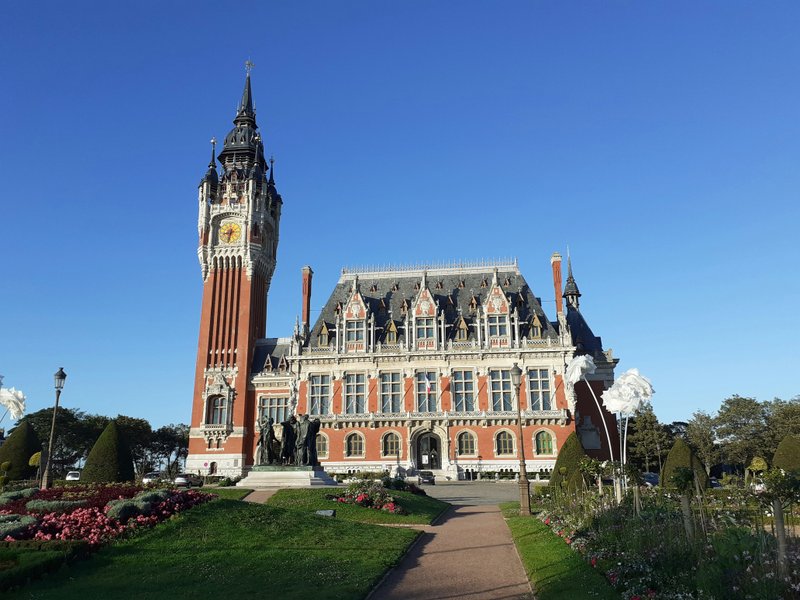
Explore FranceCalais occupies a singular position on France's northern coast, where the Pas-de-Calais strait narrows to just 33 kilometers from the English shore. This proximity has shaped the city's culinary identity for centuries — fishermen still land catches at the Bassin de la Batellerie each morning, and the day's haul appears on restaurant tables by noon. The reconstructed city center, rebuilt after extensive wartime damage, organizes itself around Place d'Armes and the striking Flemish-Renaissance town hall, its belfry now a UNESCO monument.
The dining scene draws heavily on the Channel's bounty: sole, turbot, and the famous Calais shrimp appear across menus from simple estaminets to refined contemporary tables. The Courgain Maritime quarter, the old fishermen's district hugging the eastern port, preserves a village atmosphere with low brick houses and locals who still speak fragments of Picard dialect. Welsh rarebit, adopted from cross-Channel trade, has become an unlikely regional specialty here, served bubbling in cast-iron dishes alongside local beers from the Boulonnais.