Perched on a rocky promontory above the Lot Valley, this 13th-century fortress served as the summer residence of Cahors bishops for seven centuries. The 30 guest rooms—including the coveted Tower and Bishop's chambers—occupy fairy-tale turrets with exposed stone and antique furnishings. The Vigouroux family continues producing Malbec in the castle cellars, while the kitchen builds its reputation on black Lalbenque truffles and Quercy lamb.
Where to Stay
This 18th-century domaine on a private estate near Cahors delivers chic French country living with genuine warmth—charming hosts and their resident Jack Russells set an instantly relaxed tone. The property earns high marks for style and character, with interiors balancing period elegance and contemporary comfort. Families benefit from an upstairs room accommodating up to five, making it a rare countryside retreat suited to multi-generational stays.
Where to Eat
A 13th-century fortress that housed the Counts and Bishops of Cahors for seven centuries now stages refined contemporary dining above the Lot valley. Chef Clément Costes builds his single tasting menu around Quercy pigeon, black Lalbenque truffles, and local chanterelles, each course matched with Malbec wines from the château's own vineyards. Summer lunches move to the courtyard terrace, with a lighter bistronomy approach.
A seventeenth-century wine estate provides the backdrop for this refined table, where a restored barn's raftered ceilings and stone walls frame an open kitchen with vineyard views. The cooking draws on regional terroir—Breton langoustine paired with ikejime John Dory, Quercy saffron threading through intense jus, Occitan veal alongside artichokes and pissaladière accents. Precise, legible, and deeply rooted in place.
Patrick Duler farms before he cooks—his black pigs yield ham ranked among France's finest, while 8,000 truffle oaks and organic orchards supply the rest. Top chefs across the country source ingredients here and return as guests. The cuisine stays deliberately simple, letting extraordinary raw materials speak through meticulous, soulful preparations that reward the drive from Cahors.
A globe-trotting couple finally dropped anchor in Cahors, bringing with them a Bib Gourmand-recognized repertoire of modern French cooking. Chef Jean-François draws on years of culinary wandering to craft dishes like fennel-marinated salmon and wild seabass paired with pan-fried chard and Lautrec pink garlic cromesquis—regional ingredients elevated through a restless, well-traveled imagination.
Beneath the medieval ramparts of Château des Lapopie, this Michelin Plate restaurant delivers honest cuisine du terroir with an emphasis on regional ingredients—tender lamb, rich foie gras, and local cheeses prepared with straightforward skill. The dining room opens onto views of the Lot valley below, and a handful of guestrooms allow visitors to extend their stay in one of France's most dramatically perched villages.
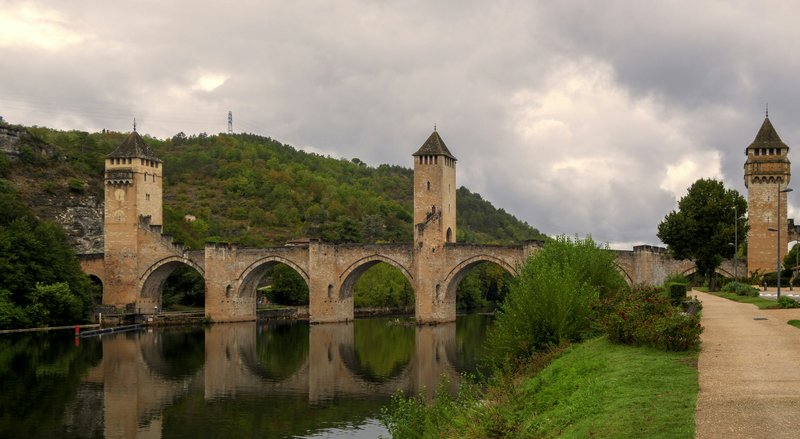
Positioned at the foot of the magnificent Pont Valentré, this modern French table benefits from chef Julien Poisot's refined technique, honed at Château de Mercuès. The approach pairs sophisticated execution with unfussy presentation—lunch brings regional comfort like stuffed Gascon pork and brioche perdue, while evening service shifts toward premium compositions: gilthead bream with oyster mushrooms, leek soubise, and a precise shellfish sauce.
A tiny bistro in Cajarc where the day's offerings appear on a blackboard, Jeu de Quilles delivers market-driven cooking with confident simplicity. The kitchen works regional ingredients—think iced courgette velouté brightened with mint and burrata, or grilled Aubrac beef paired with smoked pepper—into dishes that reward without pretension. The arbour-shaded terrace provides an idyllic setting for unhurried summer lunches.
A former village school in Les Arques has traded chalkboards for contemporary cuisine, its classroom-style dining room retaining a gentle nostalgia beneath high ceilings. The old playground now flourishes as a kitchen garden, supplying ingredients that arrive at the table with unmistakable freshness. On warm evenings, the courtyard terrace offers an unhurried meal in the Lot countryside, roughly forty minutes from Cahors.
A stone farmhouse on the Causse de Limogne provides the rustic setting for this nose-to-tail celebration of regional meat. The sommelier owners learned butchery from the proprietress's father, the village butcher, sourcing exclusively from the Lot, Aveyron, and Tarn-et-Garonne. Sunday brings wood-fired leg of lamb from the old bread oven, while a 200-label wine list leans organic and biodynamic.
Inside the wine storehouse of Château de Haute-Serre, amid rolling vineyards near Cahors, diners find a rustic tableau of charcuterie racks, a butcher's block, and stacked wine cases. The kitchen works closely with the estate's own bottles, while Friday evenings bring a dedicated rotisserie service. A Michelin Plate address for those seeking vineyard authenticity over urban polish.
Frequently Asked Questions
What is the best area to stay in Cahors?
+
The medieval center within the river loop offers the most atmospheric setting, particularly around Boulevard Gambetta and the cathedral quarter. Properties along the Lot quays provide river views and easy access to both the old town and the Pont Valentré. For those with transport, vineyard estates in the surrounding Lot valley combine wine country immersion with easy access to the city.
When should I visit Cahors for wine experiences?
+
Harvest season in late September and early October brings the vineyards to life, though estates welcome visitors year-round. The Cahors Malbec Lounge festival in summer showcases local producers, while winter truffle season from December to February adds another dimension to vineyard visits. Spring offers ideal weather for exploring the causse plateaus where many vineyards are planted.
How do I explore the Lot Valley from Cahors?
+
The riverside D8 road east toward Saint-Cirq-Lapopie follows dramatic cliff-side scenery through medieval villages. River cruises depart from the city quays, passing through locks and beneath limestone cliffs. Cyclists can follow the voie verte along the former railway line, while the GR36 hiking trail crosses the Pont Valentré and climbs to panoramic viewpoints above the river bend.
Nearby Destinations
Explore FranceThe medieval capital of Quercy rises from a dramatic peninsula formed by a loop in the Lot River. Stone towers and fortified gates punctuate the skyline, remnants of the city's medieval wealth when Lombard bankers made it a financial center rivaling Paris. The iconic Pont Valentré, a fourteenth-century fortified bridge with three defensive towers, guards the western approach — its legend of a pact with the devil carved into the stonework. Accommodation clusters around Boulevard Gambetta, the tree-lined promenade that divides the old town, and along the riverside quays where converted medieval merchants' houses now welcome guests.
Cahors gave its name to one of France's oldest appellations: the deep, tannic Malbec wines that have been cultivated on the surrounding causse limestone plateaus since Roman times. The Saturday morning market fills Place Chapou and spills into the surrounding streets, stalls laden with local walnuts, black truffles in winter, and foie gras from neighboring farms. Dining leans toward hearty Quercy tradition — duck in all its forms, lamb from the causses, and the local pastis cake that shares nothing with its Provençal namesake. Small wine bars along Rue Nationale pour local vintages late into the evening.