This 18th-century château, a classified Historic Monument between Caen and Bayeux, presides over 60 acres of formal French and English gardens—an ideal base for exploring the D-Day beaches and the Bayeux Tapestry. Beyond the 29 elegant rooms, a treehouse cabin offers romantic seclusion among the trees. Chef Samuel Gaspar's Le Séran showcases Normandy's terroir, while a Sothys spa and hidden outdoor pool complete the pastoral retreat.
Where to Stay
Directly facing Bayeux Cathedral, this 28-room boutique hotel occupies a modern building that echoes the medieval streetscape while housing Belle Époque–inspired lounges within. Bright rooms feature Moissonnier furniture and historically themed contemporary art, balancing classic refinement with modern comfort. A private garden offers quiet retreat, and the concierge arranges excursions to the D-Day beaches—ideal for history-minded travelers exploring Normandy.
Where to Eat
A short drive from Bayeux, this restaurant occupies an 18th-century château classified as a Historic Monument. The kitchen delivers polished French cuisine rooted in Norman terroir—signature dishes include saddle of lamb with marjoram, potatoes, and seaweed, executed with virtuoso technique. First-class sauces and rigorously seasonal ingredients define a table suited to milestone occasions amid formal gardens and period grandeur.
An 18th-century château surrounded by Lebanese cedars and towering sequoias provides the theatrical backdrop for this Normandy-focused table. The kitchen draws heavily on regional larder—local cheeses, foie gras, line-caught fish—presented as refined modern cuisine. Guests choose between intimate paneled dining rooms and a light-filled conservatory overlooking the landscaped grounds, each setting suited to unhurried, elegant meals.
Steps from Bayeux Cathedral, L'Alcôve earns its Bib Gourmand through meticulous market-driven cooking at accessible prices. The kitchen demonstrates particular finesse with seafood—spider crab dressed in its own stock, lifted by frothy fromage blanc—and with meat, notably butter-roasted saddle of rabbit paired with grilled aubergine cannelloni and an intensely flavored jus. A bistronomic address for serious eaters.
Occupying a corner where Rue St Laurent meets Rue des Bouchers, this Bib Gourmand address channels Normandy's larder with conviction—Bayeux pork, briny local oysters, aged Carrouges gruyère—through a bistronomic lens that prizes substance over fuss. Exposed stone walls and painted beams set a warmly lit stage for traditional French cooking that rewards regional curiosity without straining the wallet.
Behind the weathered stone façade of a 15th-century building on a quiet Bayeux side street, Simon and Linda Boudet run this Bib Gourmand address with evident warmth. The kitchen turns out robust country cooking lifted by modern accents—salmon gravlax with beetroot and wasabi, chicken breast with roast apricot and polenta fries. The homemade profiterole, impossibly light yet satisfyingly crisp, alone justifies the detour.
Norman terroir takes an unexpected detour through Asia at this Michelin Plate restaurant on rue Saint-Jean. The chef sources rigorously from local producers, then layers Japanese and Thai aromatics over classic French technique—a style born from extensive travels across the Far East. Seasoning is precise, execution confident. An intriguing address for travelers seeking something beyond the regional canon.
Frequently Asked Questions
How far is Bayeux from the D-Day landing beaches?
+
The nearest beaches at Arromanches and Gold Beach lie roughly ten kilometres north of town, making Bayeux a practical base for exploring the 1944 landing sites, war cemeteries, and the remains of the Mulberry harbour.
When is the best time to visit the Bayeux Tapestry?
+
Early morning in spring or autumn offers the shortest queues. The museum opens at 9:00 and the embroidery can be studied in relative quiet before tour groups arrive. July and August bring peak crowds and longer waits.
What Norman specialities should I try in Bayeux?
+
Look for teurgoule (cinnamon rice pudding slow-baked in earthenware), tripes à la mode de Caen, and fish from Port-en-Bessin prepared with beurre blanc. Pair dishes with local cider or pommeau, an aperitif blending apple juice and calvados.
Nearby Destinations
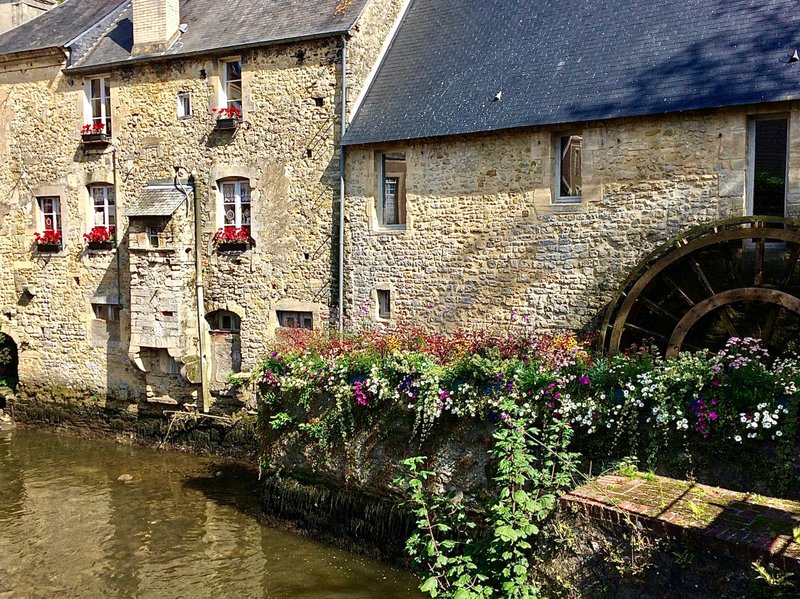
Explore FranceBayeux survived the Second World War virtually untouched, leaving its medieval street plan and half-timbered houses intact around the 11th-century cathedral. The town's famous tapestry draws visitors, but the quieter pleasure lies in walking the narrow lanes near Rue Saint-Martin or along the mill race of the Aure river, where former tanneries have become restaurants with terraces over the water. The cathedral quarter holds most of the historic accommodation, while the pedestrian zone around Place Saint-Patrice fills with market stalls on Saturday mornings.
The local table reflects Norman abundance: butter-enriched sauces, Isigny cream, cider from orchards in the Bessin countryside. Evening dining tends toward the traditional, with white-tablecloth establishments serving sole meunière and pre-dessert calvados. For something more casual, the crêperies along the main streets offer galettes with local andouille and camembert.