An 18th-century Corsican farmhouse a few miles inland from Saint-Florent, La Dimora spreads across seventeen rooms, suites, and private-pool villas surrounded by expansive gardens. The original stone sheepfolds now house Pera Bianca restaurant, while a heated communal pool, hammam, and jacuzzi offer quiet indulgence. Pet-friendly and close to local wine tours, it suits travelers seeking rustic elegance with contemporary comforts.
Where to Stay
Three contemporary villas rise directly from La Roya beach, their clean architectural lines a striking counterpoint to the wild Cap Corse landscape beyond. The 26 guestrooms maintain a deliberately calm aesthetic, each opening onto private balconies that frame either the mountainous interior or the bay sweeping toward Saint-Florent. A spectacular pool and landscaped garden extend the Mediterranean setting for travelers seeking coastal serenity without sacrificing modern design.
Coline and Matthieu's 28-room boutique hotel near Saint-Florent's beaches channels the ease of a Mediterranean guesthouse. Coastal-toned rooms open onto balconies framing the maquis, while a pine-shaded pool anchors the garden. The locavore restaurant draws on Corsican terroir, and the property's relaxed informality makes it a natural base for forays into Cap Corse and the Patrimonio wine trail.
A 19th-century aristocratic mansion anchors this 37-room retreat in Erbalunga, a fishing village on Cap Corse's rugged coastline. Accommodations span the historic demeure, a converted orangerie, and private villas—each dressed in refined simplicity rather than excess. The heated pool, jacuzzi, and compact spa offer restoration, while Les Américains restaurant channels Corsican terroir through local wines and island ingredients. Gardens and a quiet library complete the unhurried atmosphere.
Once a midcentury hideaway for French cinema stars, this 29-room boutique property remains Cap Corse's sole luxury address. The locally owned estate scatters five private villas through the maquis, while guests choose between gastronomic table Tra di Noi and beachfront A Spartera. A spa with Biologique Recherche treatments occupies an olive grove, and the hotel's Boston Whaler ferries travelers to Saleccia beach and the Italian island of Capraia.
A 17th-century nobleman's house turned nine-suite retreat, this property displays works by Anish Kapoor and Daniel Arsham throughout its uncluttered contemporary interiors. The hillside pool surveys the Corsican landscape, while Ceci restaurant applies Umbrian culinary philosophy to local ingredients. Proximity to Cap Corse and St-Florent makes it a strategic base for exploring the island's dramatic northern peninsula.
Where to Eat
Beneath elegant stone vaults in Bastia's old quarter, chef Quentin Sanchez builds his menu on rigorous sourcing: organic island vegetables, farm-reared Corsican veal, local fish dressed in native olive oil. Strategic imports—Cantabrian anchovies, Jersey beef, Breton lobster—complement without overshadowing. The cooking favors substance over spectacle, delivering bold, direct flavors through precise technique and disciplined plating that lets each ingredient speak clearly.
Virginia creeper and ancient plane trees veil this discreet table in Nonza, a classified village along the Cap Corse coastal road. The kitchen works exclusively with meticulously sourced local produce, yielding Mediterranean plates of striking precision—none more memorable than a surf-and-turf pairing ultra-fresh croaker with pancetta and pork jus. A destination for travelers seeking Corsican terroir distilled to its essence.
Breton chef Yann Le Scavarec brings his Morbihan roots to Saint-Florent's harbour front, crafting contemporary plates that showcase Cap Corse's exceptional produce. Lamb and veal arrive from Oletta's pastures; fish comes straight from local boats. The signature bluefin tuna—puffed rice crust, nori tartare, miso aubergine, sesame-lime accents—exemplifies his precise, ingredient-driven approach. An elegant modern dining room mirrors the kitchen's refined philosophy.
The fishing harbour of Erbalunga provides a postcard setting for this Cap Corse institution, where tables spill onto a generous waterside terrace. The kitchen honours Corsican tradition — fish soup, suckling pig, barbecued catch of the day — while allowing classical technique to guide preparations. A dish of barbecued capon with silky artichokes and smoky jus hints at the unexpected flourishes woven through an otherwise rooted repertoire.
A red façade and mulberry-shaded patio set the scene at this Saint-Florent corner address, where Mediterranean and Corsican traditions meet unexpected Asian inflections. The kitchen turns out langoustine carpaccio with dried caviar alongside yuzu-laced gyoza, while grilled squid arrives with chorizo and red tuna tartare showcases pristine seafood. A well-chosen regional wine list rewards exploration.
A Bastia native returned from mainland France to open this spirited bistro on Place de l'Hôtel de Ville, where raw-edged charm frames cooking rooted in Corsican terroir. The kitchen delivers bold, generous plates with creative flourishes—bluefin tuna crudo arrives in an iced prisuttu broth brightened by bottarga, while floating islands come reinvented with fermented milk cream and tarragon sorbet. Modern bistronomy with island soul.
Clinging to the mountainside above San-Martino-di-Lota, this family-run address commands sweeping sea views from a terrace shaded by ancient plane trees. The kitchen works with Corsican saffron and confit of citron, producing dishes like twice-cooked veal that justify the winding ascent. A vacherin scented with Madagascan vanilla closes the meal, paired with wines from nearby vineyards.
Perched 160 meters above the Mediterranean at the base of Paoli's eighteenth-century watchtower, La Sassa operates entirely outdoors—no interior dining room exists. The terraced layout, carved into multiple intimate alcoves, frames sweeping views across Cap Corse and Saint-Florent bay. The kitchen delivers Corsican-inflected modern cuisine with Michelin recognition, making this an essential stop for travelers seeking dramatic coastal scenery paired with confident regional cooking.
Frequently Asked Questions
What is the best area to stay in Bastia?
+
Terra Vecchia and the Vieux-Port offer the most atmospheric setting, with historic architecture, waterfront restaurants, and walking access to the citadel. For quieter surroundings with sea views, properties along the corniche toward Pietranera provide a more residential feel while remaining close to the center.
How do you explore Cap Corse without a car?
+
Public buses connect Bastia to villages like Erbalunga and Macinaggio, though service is infrequent. The most practical approach combines taxi transfers with hiking the Sentier des Douaniers coastal path, or arranging boat excursions from Macinaggio to the protected northern beaches.
When is the ideal season to visit Bastia and Cap Corse?
+
Late May through June and September through mid-October offer warm weather, swimmable seas, and fewer crowds than July-August. Spring brings wildflowers across the maquis; autumn means grape harvest season in Patrimonio and ideal temperatures for hiking the peninsula's trails.
Nearby Destinations
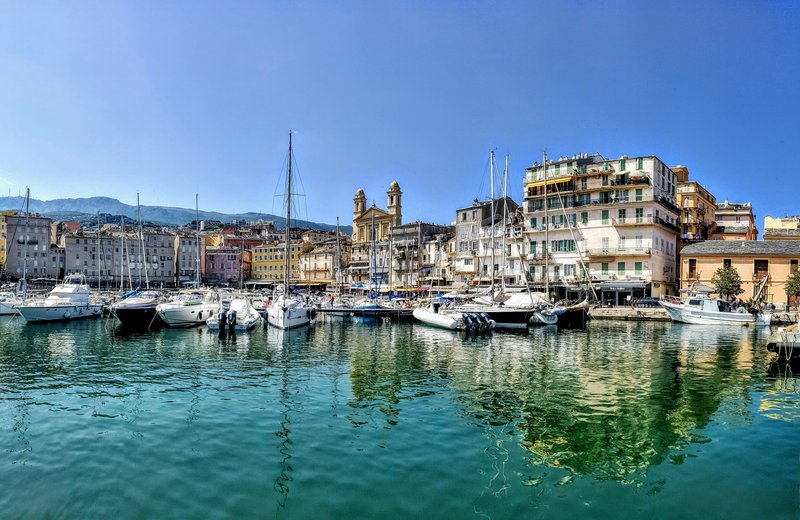
Explore FranceBastia's old port, Terra Vecchia, retains the weathered grandeur of a Genoese trading post — ochre façades, baroque churches, fishermen unloading the morning catch beneath the citadel walls. The hotels here tend toward intimate converted townhouses with views across the Tyrrhenian Sea to the islands of Elba and Capraia. North along the Cap Corse peninsula, the landscape shifts dramatically: terraced vineyards cling to schist slopes, Romanesque chapels mark isolated hamlets, and a handful of discreet properties occupy former American towers or renovated maisons de maître.
The dining scene reflects Corsica's dual French and Italian inheritance. Expect wild boar charcuterie from Patrimonio, brocciu cheese in every form, and seafood pulled from waters where Napoleon once sailed into exile. Wine here means Niellucciu reds and Vermentinu whites from domaines you can visit between meals. The pace is unhurried, the light Mediterranean, the air scented with maquis scrubland — rosemary, myrtle, and immortelle drifting down from the mountain ridges.