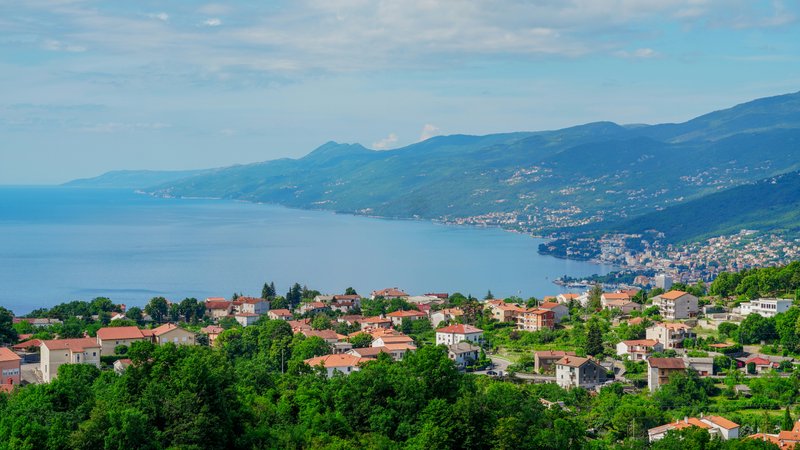
Carved into a rocky inlet where the Istrian peninsula meets open water, Hotel Navis sends 44 rooms cascading toward Kvarner Bay—each wrapped in floor-to-ceiling glass, each opening onto a private terrace above the waves. Interiors favor bold geometry and deep saturated palettes. A staircase cut into the cliffs descends to a sun deck at sea level, while the shore-edge spa and cliff-perched restaurant draw couples seeking design-forward seclusion.
Where to Stay
A seafront heritage villa of just seven rooms, Hotel Villa Astra draws travelers who prize period architecture over contemporary design. Nearly every accommodation opens onto a private terrace or balcony overlooking the Adriatic, while verdant gardens frame a heated outdoor pool ideal for quiet afternoons. Interconnecting rooms and complimentary cots make this intimate property notably welcoming for families exploring the Croatian coast.
Sixteen rooms dressed in Art Deco flourishes occupy this beachfront retreat in the quiet village of Ika, a short drive from livelier Opatija. Suites open onto private terraces facing the Adriatic, while Hermès amenities signal the attention to detail throughout. The Ikalia Spa delivers Turkish baths, steam rooms, and jacuzzi sessions; evenings belong to Nobilia's fine dining or the poolside Riva Lounge.
Where to Eat
Waves lap beneath the veranda at this fishing village address where chef-patron Stiven Vunić builds each meal around the morning's catch. Raw preparations, pastas, and shellfish priced by weight follow market availability with unwavering freshness. The cooking stays deliberately simple—tradition executed with precision, occasionally inflected by modern touches. A compact natural wine selection complements the briny immediacy of every plate.
A nineteenth-century seaside residence provides the backdrop for this acclaimed dining room, where garden terraces frame panoramic Adriatic views. The kitchen navigates deftly between regional tradition and contemporary finesse, showcasing Kvarner Bay seafood in dishes like scampi-filled ravioli bathed in shellfish bisque. Lamb sourced from Cres island anchors the meat offerings, reflecting a menu deeply rooted in Croatian coastal terroir.
A Bib Gourmand address perched above Mošćenička Draga's tiny harbour, Konoba Pescaria trades on location and honest seafood cookery. The terrace frames fishing boats and Adriatic blue; the kitchen sends out carpaccio sliced from the morning's catch, followed by scampi alla busara—a local preparation born in these very waters. Fair pricing, zero pretense, pure Kvarner coastline.
Steps from one of the Opatija Riviera's finest beaches, Johnson has served the daily catch for nearly three decades under the Jurdan family's stewardship. There's no printed menu here—servers announce whatever came off the boats that morning: scampi, shellfish, pristine fish, all prepared with restraint to let the sea speak. The panoramic terrace, sun-drenched and salt-aired, rewards those who time lunch with the tides.
Frequently Asked Questions
What is the Lungomare promenade and how far does it extend?
+
The Lungomare is a 12-kilometer seaside walkway carved into the coastline during the Habsburg period, connecting Volosko through Opatija to Lovran. It passes beneath historic villas, through tunnels cut into rock, and along beaches — serving as both the riviera's main pedestrian artery and a preserved piece of Belle Époque infrastructure.
Why is Volosko considered the culinary center of the Opatija Riviera?
+
Volosko retains its character as a working fishing village, with restaurants sourcing directly from morning catches. The harbor's concentration of chef-driven establishments has earned it recognition for Kvarner Gulf specialties — particularly scampi, which thrive in the deep waters offshore. The village's small scale means many kitchens operate from converted fishermen's houses.
When did Opatija become established as a resort destination?
+
Opatija's transformation began in 1844 when Iginio Scarpa built Villa Angiolina, but the resort era properly started after 1882 when the Austrian Southern Railway connected the coast to Vienna. Habsburg physicians promoted the mild microclimate for therapeutic purposes, and by the 1890s the town hosted European royalty and the imperial court for winter seasons.
Nearby Destinations
Explore CroatiaThe Opatija Riviera unfolds along the eastern shore of the Istrian peninsula, a crescent of former Habsburg resort towns sheltered by Mount Učka. Opatija itself anchors the coast, its seafront Lungomare promenade connecting Villa Angiolina's botanical gardens to the fishing village of Volosko, where stone houses tumble toward a working harbor. The architecture speaks to a specific moment: the 1880s and 1890s, when Viennese aristocracy and the Austrian imperial court established this as their winter retreat, building grand hotels and sanatoriums facing the Kvarner Gulf.
Beyond Opatija, the riviera stretches through Lovran with its medieval old town and chestnut festival traditions, past Medveja's pebble beach, to Mošćenička Draga tucked beneath coastal cliffs. The hotel scene divides between restored Habsburg-era palaces maintaining their original facades and contemporary properties built into the hillside. Volosko has emerged as the gastronomic center, its waterfront taverns serving Kvarner scampi and local olive oils, while Opatija's cafés along the Slatina beach maintain the coffee-house culture that arrived with the Viennese over a century ago.