Stone buildings rise from the foundations of a medieval fortification in Mužolini Donji, their contemporary interiors a striking counterpoint to the surrounding olive groves and San Canzian vineyards. The property draws food-focused travelers with daily olive oil tastings, truffle hunts in nearby Istrian forests, and Luciano restaurant's Italian-inflected cuisine. An infinity pool surveys the bucolic countryside, while an indoor spa with sauna and jacuzzi provides retreat.
Where to Stay
Bold contemporary architecture rises from Istrian hillsides at this 32-room property owned by one of Croatia's most celebrated winemakers. Interiors pulse with color and modern design flair, while the restaurant champions hyper-local ingredients through refined regional cooking. A wellness center with Finnish sauna and Turkish bath complements the seasonal outdoor pool. Family rooms and vineyard access make it equally suited to couples and traveling families.
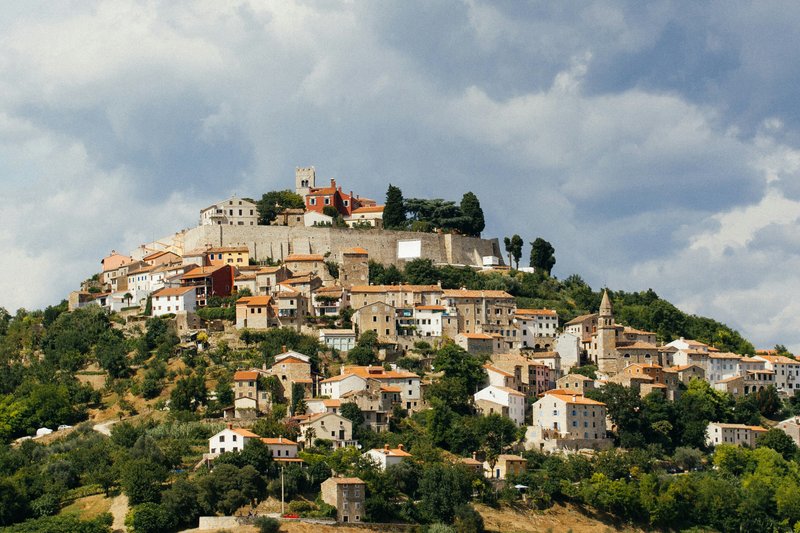
Perched atop medieval Motovun, Hotel Kaštel commands panoramic views across Istria's truffle-rich valleys. The boutique property pairs intimate scale with genuine family welcome—children accommodated without fuss. Tranquil gardens offer retreat from the cobblestone lanes, while the restaurant terrace becomes the prime evening destination, serving regional cuisine as the hill town's ancient walls catch the last light.
Croatia's only beer spa anchors this rural Istrian retreat, where the San Servolo craft brewery lends both its name and its signature wellness concept. Accommodation spans hotel rooms, compact wellness homes, and campervan pitches—an unusual range that suits couples seeking heated pools and spa immersion alongside families drawn to the children's pool and playground. Two on-site restaurants complete the picture.
Where to Eat
Named for the farmer who supplies its vegetables, Luciano operates within a hotel complex just outside medieval Buje, its terrace surveying the Istrian hills. The kitchen applies contemporary technique to regional meat and fish, available à la carte or through tasting menus of varying lengths. An extensive local wine list reinforces the commitment to terroir-driven dining.
Stone walls and a crackling fireplace set the scene at this Bib Gourmand-awarded konoba near Buje, where the scent of truffles and wood smoke drifts through the dining room. The kitchen turns out house-cured charcuterie, hand-rolled fuži dressed in boscarino sauce, and meats charred over open flames—rustic Istrian cooking executed with precision and served without pretense.
Frequently Asked Questions
When is truffle season in Istria's hill towns?
+
White truffle season runs from September through December, with peak harvest in October and November. Black truffles are available year-round but are most abundant in winter. Many hotels and restaurants organize truffle-hunting excursions with local guides and their dogs during these months.
How accessible are Motovun and the surrounding villages without a car?
+
A car is essential for exploring the hill towns properly. The villages are connected by narrow winding roads with limited public transport. From Pula or Poreč, the drive to Motovun takes about an hour. Most hotels can arrange airport transfers, and some offer guided excursions to neighbouring villages.
What distinguishes the local cuisine in Istria's interior from the coast?
+
The interior focuses on game, truffles, and foraged ingredients rather than seafood. Expect dishes like fuži pasta with wild boar, pršut cured in the bura wind, sheep's cheese from highland pastures, and Malvazija wines from surrounding vineyards. Autumn menus showcase white truffles shaved over eggs, pasta, and beef carpaccio.
Nearby Destinations
Explore CroatiaIstria's medieval hilltop villages rise from vineyards and oak forests like fortified islands in a green sea. Motovun crowns the highest of these settlements, its thirteenth-century walls still intact, while Grožnjan has reinvented itself as an artists' colony where summer jazz fills cobblestone squares. Further south, Oprtalj and Buzet guard the truffle-hunting territories where locals still forage with trained dogs each autumn.
The accommodation here favours intimacy over scale — restored stone houses converted into small hotels, agriturismos surrounded by olive groves, and wine estates offering rooms alongside their cellars. Dining follows the same philosophy: family-run konobas serving handmade fuži pasta with game ragù, wild asparagus in spring, and the prized Istrian white truffle from September through December. The pace is deliberately unhurried, roads winding between villages that seem unchanged since the Venetian Republic.