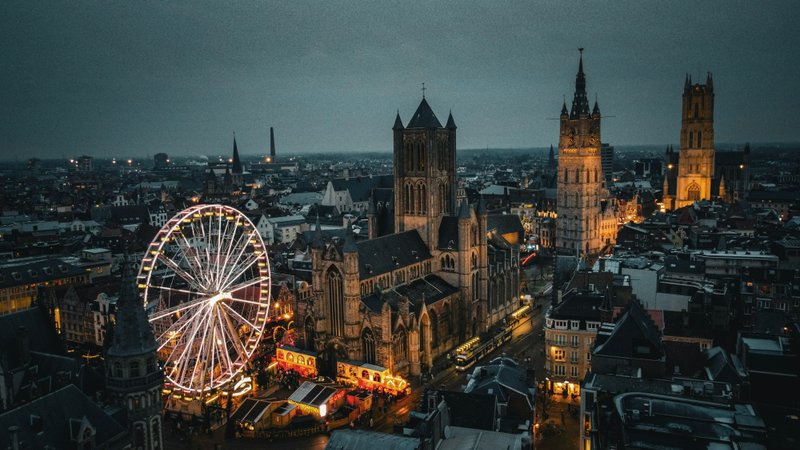
Ghent's former central post office, a striking neo-Gothic landmark on the Graslei quays, now houses this 37-room boutique hotel where Belgian architect Géraldine Dohogne has layered medieval atmosphere with moody, richly textured interiors. Rooms bear whimsical postal names—Stamp through Carriage—while tower suites deliver panoramic city views. The Cobbler bar, perched above the rooftops, draws evening crowds for refined cocktails in an atmospheric setting.
Where to Stay
Baron Reylof's 1724 mansion retains its Empire grandeur—ornate mantelpieces, Louis XIV salons, marble halls—while 156 rooms adopt a quieter modern elegance of soft tones and parquet floors. The spa occupies a converted carriage house with indoor pool and sauna; outside, a formal French garden offers retreat. Chef Hannes Vandebotermet's LOF restaurant applies classical technique to Flemish ingredients, completing a stay suited to aesthetes seeking substance over spectacle.
This 18th-century mansion, once home to Count d'Hane Steenhuyse—key diplomat behind the Treaty of Ghent—now operates as an intimate four-suite guesthouse two streets from the historic center. Owners Jan and Marc, both interior designers, have filled each room with antiques and contemporary art beneath ornate ceilings. Mornings begin amid van Reysschoot's rococo oils or in the French garden's box parterres; later, a vaulted indoor pool awaits.
An 18th-century town mansion converted into a 23-room adults-only retreat, Ganda Rooms & Suites pairs period architecture with contemporary comforts. The rooftop terrace offers views across Ghent's medieval skyline, while complimentary bicycles encourage exploration of the canal-laced city below. Attentive personal service and a peaceful library lounge define the intimate atmosphere—ideal for couples seeking refined calm without family bustle.
Converted from a pair of historic town mansions in the Patershol quarter, Hotel Harmony brings boutique intimacy to Ghent's most atmospheric medieval neighborhood. The 40 rooms maintain period character while delivering contemporary comfort, and families appreciate the adjoining room options. A heated outdoor pool and jacuzzi add unexpected resort touches to this canal-side address—rare amenities for a city hotel of this scale.
Sint-Martens-Latem, the Flemish village that once drew painters to its riverbanks, now hosts this neoclassical villa overlooking the Leie. Thirty-two compact but well-appointed rooms occupy the refreshed interiors, while the real draw lies outside: a terrace and garden sloping toward the water. The on-site restaurant and bar serve guests who arrive with dogs in tow and golf clubs ready for nearby courses.
Where to Eat
An elegant farmstead outside Ghent serves as the stage for Floris Van Der Veken's two-Michelin-starred cooking, where the chef carries forward his mentor Peter Goossens's legacy while forging his own path. Corrèze lamb arrives as delicate ravioli or a medium-rare saddle glazed in concentrated jus, yet a humble leek receives equal reverence. The legendary dessert trolley provides a fitting finale to this refined gastronomic occasion.
Chef Michaël Vrijmoed earned two Michelin stars through an intensely personal cooking philosophy that merges classical French technique with fermentation and global accents. His vegetarian Purs menu demonstrates remarkable command of vegetables, while signature dishes—like house-made pasta finished tableside with Zeeland mussels and samphire—reveal technical confidence matched by theatrical flair. The Art Nouveau townhouse setting and expert sommelier complete an experience suited to serious gastronomes.
Behind the pristine façade of a white villa in Ninove, chef Kevin has built a loyal following through his command of premium ingredients—turbot, truffles, Holstein beef—and precise technique. His signature foie gras with brioche and quince delivers intensified richness, while dishes like barbecued lobster with nori and trout roe reveal a playful creativity. An astute sommelier and glazed wine cellar complete the experience.
A former linen manufacture provides the pared-down backdrop for chef Lode De Roover's Michelin-starred French cuisine, where surgical precision meets creative instinct. His barbecued langoustine arrives with lemongrass oil and whey foam laced with shellfish jus, while Barbary duck showcases intensely rich reductions alongside spring vegetables. Each plate demonstrates obsessive attention to cooking times and inspired presentation—classical technique with unexpected flourishes.
Chef Kris de Roy cultivates his own cottage garden nearby, and that intimate relationship with produce defines every plate at this one-starred table. Bold, vegetable-driven compositions—langoustine tartare with bisque flan, kohlrabi, and pralines in ponzu-spiked yoghurt—showcase precise umami balancing. A caviar bar tempts indulgence, while the romantic garden terrace channels northern Italy. The glazed-floor wine cellar and adjacent suites complete an immersive gastronomic stay.
Charismatic host Peter Van den Driesschen presides over this Aalst landmark, where a light-flooded dining room dressed with contemporary art overlooks manicured gardens. The kitchen's philosophy favors purity over spectacle: Normandy lobster arrives pan-fried in butter and garlic, translated into silken ravioli cloaked in Cognac-spiked Nantua sauce. A legendary cheese trolley and exquisite mille-feuille among the mignardises seal the classical French experience.
Chef Davy Devlieghere returned to his native village to transform a characterful farmstead into a refined stage for French gastronomy. His Michelin-starred kitchen champions first-class ingredients—Anjou pigeon, sole, langoustine in frothy bisque with piquillo tapenade—through last-minute preparations and generous sauces. Traditional touches persist: starched toques, the chef greeting tables personally, sommeliers guiding pairings with quiet authority.
Chef Marcelo Ballardin's Italian-Brazilian heritage and globe-spanning career converge at this one-Michelin-starred table inside a 17th-century Ghent landmark. The creative menu pivots from North Sea clams to wild Amazonian manioc, with signature langoustines served in an intense head-and-shell emulsion alongside fregola-mandarin chimichurri. Contemporary art punctuates the historic interior, echoing a kitchen that balances crisp acidity against velvety depth.
Veteran chef Michiel De Bruyn applies a minimalist philosophy at this one-starred table near Ghent, letting premium ingredients—Zeebrugge sole, Guilvinec langoustine, Dombes frog's legs—speak through precise technique. Classical spit-roasting and Binchotan grilling coax nuanced textures from each dish, while whole pigeon arrives deconstructed: legs confit, offal transformed into delicate cannelloni. The pared-back dining room and inventive wine pairings complete an experience of quiet refinement.
A converted barn outside Ghent, Atelier Gist centers its cooking on open flame and fermentation. Diners sit at a counter watching Chef Jason work the charcoal-fired oven, sending out dishes where robust barbecue flavors meet citrus brightness and Japanese accents—whole-grilled pigeon with fermented touches being a signature move. Natural wines and house-made kombucha complete the experience, picture windows framing the Flemish countryside beyond.
Frequently Asked Questions
Which neighborhood is best for staying in Ghent?
+
Patershol offers the most atmospheric setting — medieval lanes steps from Gravensteen castle, with independent restaurants and quiet courtyards. For contemporary design and proximity to museums, the arts quarter near S.M.A.K. and the Design Museum provides a compelling alternative. Sint-Pieters suits visitors seeking university-district energy and excellent transport links.
What local dishes should visitors try in Ghent?
+
Waterzooi, the creamy fish or chicken stew, originated here and remains the signature dish. Gentse mokken, anise-flavored biscuits, pair well with afternoon coffee. The city also claims stoofvlees (beer-braised beef) as a local specialty, best sampled in neighborhood eateries rather than tourist-facing establishments along the main squares.
How does Ghent compare to Bruges for a visit?
+
Ghent maintains an authentic urban rhythm that Bruges, with its heavier tourist footfall, has partly lost. The university population keeps the city animated year-round, and the dining scene caters primarily to local tastes. Ghent rewards visitors who wander beyond the postcard views — its character reveals itself in neighborhood markets, working-class cafés, and the industrial heritage along the Coupure canal.
Nearby Destinations
Explore BelgiumGhent unfolds along its medieval waterways with a confidence that larger Belgian cities sometimes lack. The Patershol quarter, a tangle of cobblestone alleys behind the castle, draws visitors into what feels like a private city within the city — converted merchant houses now serve as intimate guesthouses, their exposed brick walls and timber beams intact. Sint-Pieters, the university district to the south, brings a different energy: contemporary art spaces, independent wine bars, and the kind of neighborhood restaurants where academics argue over natural wines until closing.
The city's culinary identity runs deep. Waterzooi originated here, and local chefs continue to interpret Flemish classics through modern technique. Along the Graslei and Korenlei, the paired medieval quays, terrace cafés fill with locals drinking Gruut, the wheat beer brewed without hops just blocks away. Unlike Bruges, Ghent remains a working Flemish city — students cycle past medieval guildhalls, and the Friday morning flower market at Kouter has operated continuously since 1772.