A long, wood-paneled structure commands Macquarie Wharf, its 114 rooms dressed in bright, understated tones that wisely defer to the harbor panorama beyond. The most coveted accommodations open onto private balconies facing the docks, where evening light plays across the water. Below, a restaurant and two moody bars in dark finishes draw guests for sunset drinks as fishing boats return to port.
A former jam factory and row of heritage buildings on Hobart's waterfront now houses hundreds of Tasmanian artworks beneath vaulted timber ceilings and exposed brick. The 56 rooms vary dramatically—some with sandstone walls and elliptical soaking tubs, others with harbor-view terraces. The Art Installation Suite doubles as a private gallery with atrium views, while the IXL Long Bar displays original tin cans from the building's industrial past.
Two heritage buildings—an 1840 sandstone edifice and a 1940s Art Deco landmark—anchor this 152-room property in central Hobart, their contrasting eras unified by a meticulous renovation that honors original details while introducing contemporary refinement. Guests dine at Peppina for authentic Italian fare, then retreat to Mary Mary for craft cocktails or the Deco Lounge for quieter evenings. Architecture enthusiasts and design-minded travelers find particular reward here.
Five freestanding villas perch on a ridge above Victoria's Mornington Peninsula, their floor-to-ceiling windows framing sweeping bay views across native bushland. With just seven rooms, this intimate retreat functions as an extension of Alba's thermal springs—guests move between private accommodations, hammam, and sauna in quiet seclusion. The design philosophy reflects deep respect for Country, appealing to wellness seekers craving restorative solitude.
A mid-nineteenth-century Regency farmhouse transformed by bold contemporary design, The Islington sits between downtown Hobart and Mount Wellington's rugged slopes. The eleven-room property maintains an intimate atmosphere—resident managers ensure attentive service without corporate formality, while a glass-walled conservatory hosts dinner overlooking fruit-tree gardens. Reserved for guests sixteen and over, this adults-only retreat suits travelers seeking refined seclusion with Tasmania's wilderness at the doorstep.
Eight architect-named pavilions spread across a private peninsula on the Derwent River, each filled with original works from the MONA collection. The bold contemporary structures house full kitchens and residential comforts, while guests share a heated infinity pool, sauna, and gym. The Moorilla wine bar pours vintages from the estate vineyard, cementing this as an art-world retreat for aesthetes seeking seclusion outside Hobart.
This 1825 Georgian mansion along the Derwent River operates as an intimate eight-room retreat where guests feel less like visitors than friends borrowing a country estate. Rescued from demolition two decades ago, the property maintains period simplicity—uncluttered rooms, river views from every angle, a guest kitchenette for independent schedules. The adults-only policy suits travelers seeking quietude, with the Derwent Valley's distilleries, antique shops, and kayaking routes just beyond the door.
Perched above Macquarie Street, this rooftop apartment delivers Hobart's most refined private accommodation. Panoramic views stretch across the harbor and Mount Wellington from every corner of the open-air terrace, where an outdoor soaking tub awaits after evenings spent exploring the city's galleries and cocktail bars. The adults-only policy ensures undisturbed seclusion for couples seeking a sophisticated urban escape.
A former coastal shack on Tasmania's wild west coast, Captains Rest has been reimagined as an intimate waterfront sanctuary where every detail serves restoration. The painterly setting—raw shoreline, weathered timbers, soul-deep quiet—draws couples and solo travelers seeking genuine escape. This adults-only retreat suits those who value atmosphere over amenities, solitude over spectacle.
A pioneer of Hobart's boutique accommodation scene, Salamanca Wharf Hotel occupies a historic harbourfront position along Castray Esplanade. The apartment-style suites demonstrate intelligent spatial design and meticulous finishing, appealing to independent travelers who prefer self-contained comfort over traditional hotel service. Families benefit from cots, foldaway beds, and adjoining room configurations, while the central yet tranquil waterside setting places Salamanca's galleries and restaurants within easy reach.
Frequently Asked Questions
Which Hobart neighbourhoods offer the best accommodation locations?
+
Salamanca and the waterfront place you within walking distance of restaurants, galleries, and the harbour. Battery Point offers quieter streets and heritage character. North Hobart suits those wanting a more local, village-like atmosphere with easy access to cafés and bars.
What is the best time of year to visit Hobart?
+
December through March brings the warmest weather and longest days, ideal for harbour activities and day trips. January sees the city animated by MONA FOMA festival and the Sydney to Hobart yacht race arrivals. Autumn offers milder temperatures and fewer visitors, with spectacular foliage on the mountain.
How accessible is Hobart for exploring wider Tasmania?
+
The city serves as an ideal base for Tasmanian exploration. The Huon Valley and Bruny Island lie within ninety minutes south, the Coal River wine region twenty minutes east. The Tasman Peninsula and Port Arthur are under two hours' drive, while Freycinet and the east coast make comfortable day excursions.
Nearby Destinations
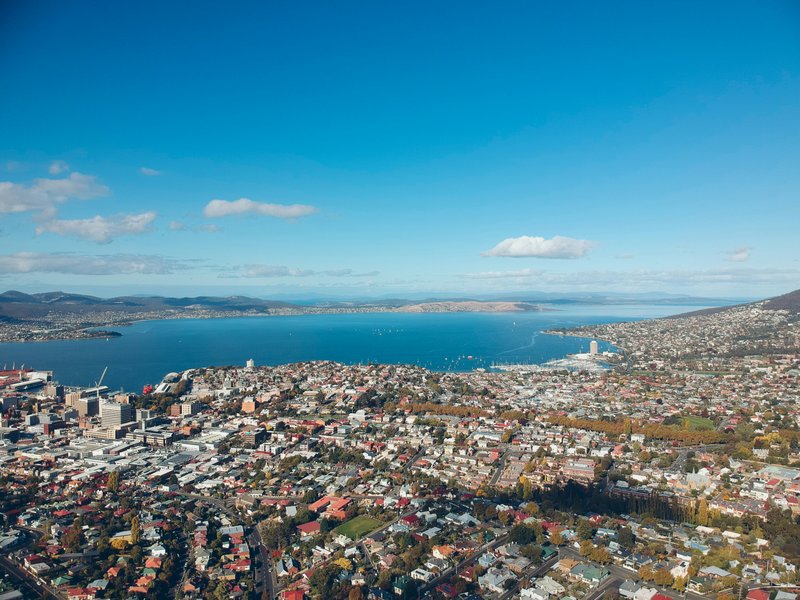
Explore AustraliaHobart unfolds along the Derwent River beneath the brooding presence of kunanyi/Mount Wellington, a city of sandstone warehouses, working fishing boats, and an arts scene that punches well above its weight. The Salamanca precinct anchors the waterfront — Georgian stone buildings now house galleries and restaurants, while the Saturday market draws half the city. Battery Point climbs the hillside behind, its narrow lanes lined with cottages built for whalers and merchants in the 1830s.
The dining scene reflects Tasmania's obsession with provenance. Local oysters from the east coast, cheeses from small dairies, cool-climate wines from the Coal River Valley — menus here read like maps of the island. Beyond the waterfront, North Hobart's Elizabeth Street strips offers neighbourhood bistros and natural wine bars. MONA, the private museum that reshaped the city's identity, sits twenty minutes upstream, its underground galleries carved into sandstone cliffs beside the river.