Rising from Tasmania's coastal bushland with a distinctive stingray-shaped roof, Saffire Freycinet claims the sole address within Freycinet National Park. Twenty suites lined in local oak and celery-top pine frame the pink granite Hazards and secluded Oyster Bay coves. The all-inclusive program pairs guided wilderness walks and an on-site Tasmanian devil sanctuary with free-flowing wine from dedicated cellars, pool, and spa.
Explore Freycinet
Architect Craig Rosevear's modernist glass house commands Tasmania's eastern coastline with unobstructed Freycinet and Tasman Sea panoramas. The three-bedroom retreat functions as a private residence rather than conventional hotel—a kitchen stocked with local provisions, an indoor-outdoor bath, and a massive open fireplace anchor evenings after days spent on the secluded beach below, reached by footpath with wetsuits provided.
On Tasmania's remote Freycinet Peninsula, sixty timber pavilions rise from native bushland with architectural boldness—high ceilings, clean lines, private terraces angled toward a crystalline bay that renders any pool redundant. The main lodge centers on a massive stone fireplace, while The Bay restaurant stocks one of Australia's finest cellars. Designed for couples seeking wilderness immersion without sacrificing comfort.
Barefoot luxury defines this beachfront retreat on Tasmania's east coast, where stylish cottages and spa suites channel an upmarket summer camp aesthetic. A sandy path leads to one of the region's most celebrated restaurants, while a swimming pool, tennis court, and polo field complete the resort grounds. Families settle into the cottages; couples seeking romance opt for the intimate spa suites.
Perched on a hilltop above Tasmania's east coast, Rocky Hills Retreat pairs striking contemporary architecture with absolute seclusion. Floor-to-ceiling windows frame sweeping views of coastline and native bush, while interiors anticipate every comfort—cashmere throws, pantries stocked with provisions for quiet evenings in. The adults-only policy ensures uninterrupted stillness, making this a refuge for couples seeking genuine disconnection.
Frequently Asked Questions
When is the best time to visit Freycinet National Park?
+
December through March brings the warmest weather for swimming and hiking, though the park remains striking year-round. Autumn delivers fewer crowds and golden light on the Hazards. Winter visitors find crisp air, dramatic skies, and easier bookings at sought-after properties.
How far is Freycinet from Hobart?
+
The drive takes approximately two and a half hours via the Tasman Highway, passing through historic villages and wine country. Many visitors break the journey at Richmond for its convict-era bridge and bakeries, or at Buckland's 1846 church with its medieval stained glass window brought from England.
What outdoor activities are available along Tasmania's east coast?
+
The Wineglass Bay circuit offers the region's signature hike, though the Freycinet Peninsula has trails for all abilities. Sea kayaking provides access to hidden coves, while Bicheno's glass-bottom boats reveal kelp forests and marine life. The area also offers diving, fishing charters, and guided penguin-watching tours after dark.
Nearby Destinations
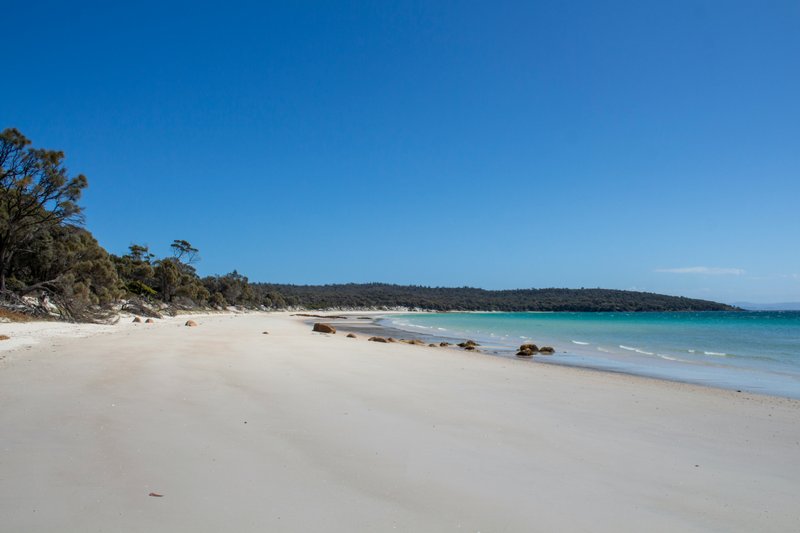
Explore AustraliaTasmania's eastern coastline unfolds as a sequence of granite headlands, white-sand crescents, and eucalyptus forests that drop directly to the Tasman Sea. Freycinet National Park anchors the region, its pink-hued Hazards range rising above Wineglass Bay — a beach consistently ranked among the world's finest. Beyond the park boundaries, the fishing village of Bicheno offers penguin rookeries and working lobster boats, while Swansea's convict-built stone buildings date to the 1820s.
The accommodation philosophy here favours seclusion over spectacle. Properties position themselves to capture bay views and bushland settings, with many incorporating Tasmanian timber, local stone, and floor-to-ceiling glass. Dining leans heavily on the region's produce: Freycinet Marine Farm supplies oysters pulled that morning from the bay, while nearby wineries along the East Coast Wine Trail pour cool-climate pinot and chardonnay. The pace is deliberately unhurried — this is a coast for hiking the peninsula tracks, kayaking past seal colonies, and watching wallabies graze at dusk.