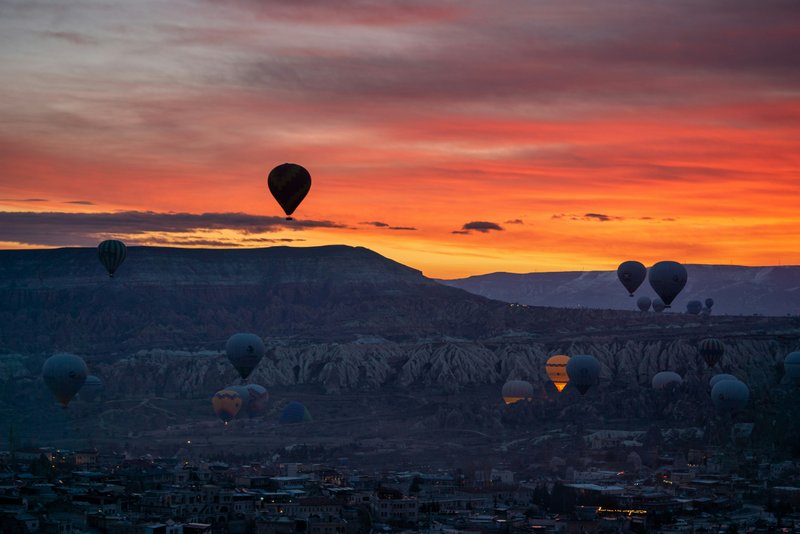
A former monastery painstakingly restored over fourteen years, Argos sprawls across Uçhisar's hillside in a cascade of arches, vaults, and rough-hewn stone. During renovation, workers uncovered ancient tunnels now housing a Hittite-era wine cellar and atmospheric concert hall. Some cave rooms feature private pools; the outdoor terrace pool surveys Pigeon Valley's fairy chimneys and the dawn parade of hot air balloons. Seki Restaurant pours wines from the estate's own vineyard.
Where to Stay
Carved into Cappadocia's volcanic rock, this adults-only retreat occupies ancient ruins transformed into thirty-four cave dwellings where exposed stone meets Ottoman tapestries and gilt mirrors. Bathtubs sit beneath natural rock awnings; headboards emerge from carved alcoves. A museum-certified collection of Roman and Turkish antiquities lines every corridor, while Lil'a Restaurant interprets regional cuisine against a 180-degree valley panorama.
Contemporary design takes precedence over heavy stone at this eleven-room retreat, where Cave Rooms carved directly into rock feature curvy modern furniture and espresso machines rather than rustic austerity. Suites add gas fireplaces and onyx bathtubs, while the glass-walled restaurant—surrounded by its own gardens and vineyard—serves farm-fresh Mediterranean cuisine with sweeping Cappadocian views. Ideal for design-conscious travelers seeking regional character without sacrificing polish.
Stone walls carved from Cappadocian rock frame twenty rooms where contemporary European design meets ancient cave architecture in Ortahisar. The pervasive silence of this hillside retreat enhances its contemplative atmosphere, while a wood-burning fireplace, garden, and library offer intimate gathering spaces. An honesty bar and concierge-arranged wine tours through the surrounding valleys complete the experience for aesthetes seeking substance over spectacle.
Perched on Cappadocia's clifftops with sweeping views toward Uchisar Castle's fairy chimneys, Via Regia occupies ancient stone chambers reimagined for contemporary comfort. The eleven rooms each possess distinct character—from the Stone Arched Honeymoon Suite with its freestanding marble bath to the Natural Cave King Suite, where a private indoor pool emerges from the rock. Couples and families seeking dramatic landscape immersion find an ideal base here.
A 250-year-old mansion once consecrated as a Christian church, Sacred House has been meticulously restored into an adults-only retreat of just ten rooms, each singular in character. Bare stone walls and antiques throughout create an atmosphere approaching the medieval, while a hammam, sauna, and indoor pool provide modern indulgence. The on-site wine cellar complements the region's celebrated vineyard tours.
Carved from ancient rock formations in Ortahisar village, Tafoni Houses reveals excavated treasures throughout its 18 suites—original iron window grates, blue-painted doors, stone archways layered with colorful tiles. Some chambers shelter museum-quality antiques and marble Jacuzzis; others feature wood-burning fireplaces beneath custom chandeliers. A Turkish hammam and sauna complement sweeping terraces, while the rooftop bar and art gallery reward those seeking Cappadocia's geological drama matched with refined hospitality.
Built within the abandoned village of Uçhisar, this 24-room property occupies centuries-old cave dwellings carved into Cappadocia's volcanic rock. Subterranean chambers feature rough-hewn stone archways and wood-burning fireplaces, while terraces frame the region's iconic fairy chimneys. A wine cellar adds to the romantic atmosphere. Suites with outdoor space deliver the most rewarding stay—travelers seeking full immersion in the surreal landscape should book accordingly.
Architect Şekibe Aslan carved this 29-room retreat from Ortahisar's ancient cave dwellings, threading Romanesque arches and backlit antiques through raw stone corridors. Each guestroom frames Cappadocia's lunar landscape differently, with hewn fireplaces and Turkish marble bathrooms fitted with Lokum Istanbul amenities. Fresko Restaurant occupies original rock chambers opening onto a broad terrace, while the full-service spa offers hammam, sauna, and jacuzzi beneath vaulted ceilings.
Where to Eat
From its terrace within the UNESCO-listed Kayakapi neighbourhood, Revithia surveys Cappadocia's valleys while its kitchen resurrects nearly forgotten Anatolian recipes. The one-starred table delivers ingredient-led cooking of striking intensity—aubergine rendered in multiple textures with tahini and pomegranate vinegar, veal tail braised to yielding tenderness alongside chickpea purée and plum-mint compote. Menus shift seasonally, each dish silky yet boldly flavoured.
A magnificent terrace overlooking the valley sets the stage at this Argos hotel restaurant, where stone walls and elegant details create an intimate atmosphere. The kitchen commits to a 60-kilometer sourcing radius, yielding dishes like warm dolmas perfumed with vine leaves and sweet-sour cherries, or pan-fried liver brightened by distinctive local herbs. Every plate delivers bold, authentic Cappadocian flavors.
From a terrace commanding 180-degree views of Cappadocia's lunar valleys, chef Saygın Sesli resurrects forgotten Anatolian recipes using ingredients from the restaurant's own garden. The partially troglodytic dining room, carved into ancient ruins and adorned with Turkish antiquities, sets the stage for theatrical presentations—steaming cloches lifted to reveal dishes like sesame-honey glazed lamb with silky aubergine cream and pistachio-finished yoghurt.
Carved into the volcanic rock of the Taskonaklar hotel, Moniq Restaurant pairs its rugged cave interiors with sweeping terrace views over Pigeon Valley. Chef Mustafa Türkten collaborates with local village women to craft dishes rooted in Cappadocian tradition—manti with roasted aubergine, slow-cooked lamb casserole finished with spiced jus. Weekend visitors should request the Ottoman mutancana, served only on Fridays and Saturdays.
Stone walls and wood beams create a rustic country-house atmosphere in Uçhisar, where traditional Turkish cooking takes contemporary form. The kitchen excels at mezze—crispy battered courgette with yogurt-dill dip, meat-filled manti draped in creamy yogurt and spicy oil. Guests often linger over local wines in the lounge before dinner, while evening DJ sets add convivial energy without additional charge.
Carved into a hillside within the former monastery that houses Argos hotel, Seki commands sweeping valley views from its romantic lounge. The kitchen reinterprets Anatolian traditions through a Mediterranean lens—confit pumpkin arrives balanced with tahini, sesame, and crushed walnuts. A 300-label wine list rewards exploration, while the menu spans mezze, lamb preparations, and thoughtful vegan options.
From their stone terrace overlooking a valley scattered with apricot trees and volcanic rock formations, Ayşe and Adem Koçdemir serve a single daily menu rooted in their own garden's harvest. The wood-fired oven yields dishes of quiet intensity—tomato broth with peppers, vine leaves stuffed with aromatic rice—presented on handmade terracotta. A Bib Gourmand address with a Green Star, requiring advance reservation.
Ancient Hittite culinary traditions find modern expression at this Bib Gourmand restaurant perched above Göreme within the Kelebek Special Cave Hotel. The kitchen resurrects recipes from millennia-old texts—lamb slow-cooked over wood fire until deeply caramelised, paired with house-baked pita, honey-ginger sauce, and fermented pickles. From the stone terraces, panoramic views across Cappadocia's fairy chimneys complete a meal steeped in archaeological imagination.
Behind a striking 19th-century Greek façade, the Özturk family has welcomed guests for generations—several were born within these very walls. The matriarch still commands the kitchen, preparing Turkish classics inflected with Greek tradition: sac tava arrives succulent and fragrant, baklava glistens with candied nuts. Dining unfolds beneath vine leaves in a frescoed courtyard, earning this Bib Gourmand address its devoted following.
Three generations of the Yazgan family have shaped this Bib Gourmand table in their ancestral home, where a kitchen garden dictates the set menu. Vegetables emerge fresh-picked, pickled, or charred in the wood-fired oven, each preparation emphasizing bright, tangy notes. The signature dried apricots stuffed with nuts and bathed in grape molasses, served alongside warm halva, distill Cappadocian terroir into a single, memorable bite.
Frequently Asked Questions
When is the best season to visit Cappadocia for hot air balloon flights?
+
Balloon flights operate year-round but April through November offers the most reliable weather conditions. Summer mornings provide clear skies and dramatic shadows across the valleys, while autumn brings softer light and fewer crowds. Winter flights are possible but more frequently cancelled due to wind and snow.
Which villages in Cappadocia offer the most authentic cave accommodation?
+
Göreme remains the epicenter for cave hotels, with properties carved directly into fairy chimneys. Üçhisar offers elevated views from its castle rock, while Ortahisar provides a quieter alternative with traditional stone houses. Urgüp, slightly removed from the rock formations, features restored Greek mansions alongside cave suites.
What local dishes should visitors try in Cappadocia?
+
Testi kebab — lamb and vegetables slow-cooked in a sealed clay pot then theatrically cracked open at the table — is the regional specialty. Mantı dumplings served with garlic yogurt and sumac represent Central Anatolian comfort food. Local wineries produce distinctive reds from indigenous Kalecik Karası and Öküzgözü grapes grown in volcanic terroir.
Nearby Destinations
Explore TurkeyThe fairy chimneys of Göreme rise from the Anatolian plateau like a geological fever dream, their soft tufa cones carved by Byzantine monks into churches, hermitages, and underground cities. Today, these same formations house some of the world's most unusual accommodations — rooms hewn directly into volcanic rock, their curved walls whitewashed and fitted with kilim rugs and copper hammam bowls. The villages of Üçhisar, Uçhisar, and Ortahisar each occupy their own rocky outcrop, connected by hiking trails through Rose Valley and Pigeon Valley.
The dining scene draws from Central Anatolian traditions: testi kebab smashed tableside from sealed clay pots, mantı dumplings with garlic yogurt, and local wines from the Kalecik Karası grape grown in volcanic soil. Breakfast spreads feature kaymak clotted cream, grape molasses, and eggs baked in pottery. The best restaurants occupy cave terraces overlooking the valleys, particularly atmospheric at sunset when the rock formations shift through shades of amber and rose.