Skip to content

Phang Nga Bay

Where to Stay

1. Six Senses Yao Noi

2 Michelin Keys

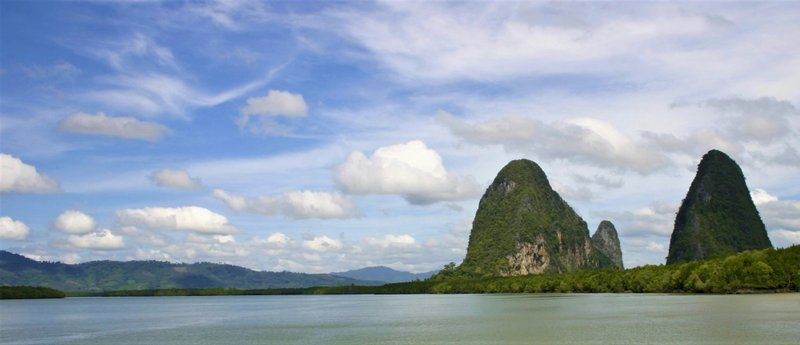
Limestone karsts pierce the horizon from every villa on Yao Noi, where 56 thatched-roof retreats shelter contemporary interiors with infinity pools and indoor-outdoor showers. The island's remove from overdeveloped Phuket ensures genuine seclusion, while strong sustainability practices ground the luxury. Families find daily activities from beach Olympics to Thai dance lessons, and adults retreat to the spa's sauna and steam rooms or the resort's wine cellar.

2. The Sarojin Thailand

2 Michelin Keys

A massive ancient ficus tree anchors this British-owned boutique retreat on a secluded Andaman beach, its canopy sheltering The Ficus restaurant while The Edge serves seafood steps from the water. The 56 rooms favor local materials and understated luxury—oversized soaking tubs, private pools in select residences. A mangrove-encircled spa offers open-air treatments with sea views, while adventurous guests book yacht excursions, jungle treks, or candlelit dinners on private islands. Adults-only for those under ten.

3. Iniala Beach House

1 Michelin Key

Eleven designers shaped this intimate ten-room property on Natai Beach, producing interiors that swing from baroque opulence to sleek minimalism. Each villa contains its own private spa, while the culinary program punches well above its weight: an Iron Chef Thailand winner handles daily menus, and Simon Rogan's fifteen-seat Aulis delivers fine dining with a global Michelin pedigree. Ideal for design-minded families seeking seclusion north of Phuket.

4. Devasom Khao Lak Beach Resort & Villas

Salvaged architectural elements, some centuries old, lend authentic character to this Thai-owned resort on Khao Lak's uncrowded Andaman shore. Villas open directly onto the sand with private infinity pools, while the spa offers Muay Thai boxing and Tibetan singing bowl meditation. The Bib Gourmand-awarded Takola Thai serves refined local cuisine. A community scholarship program reflects the property's commitment beyond its guests—ideal for families and couples seeking substance over flash.

5. Anantara Koh Yao Yai Resort & Villas (phuket)

Sprawling across an 11-hectare former coconut plantation with a kilometre of golden beach, this 148-key resort commands sweeping views of Phang Nga Bay's limestone karsts. The lobby's living wall opens onto a reflecting pool that flows toward an infinity edge meeting the Andaman Sea. Suites feature panoramic windows; one penthouse includes a glass-bottom pool visible from the living space below. The spa draws on ancestral Asian rituals—Thai massage, Tok-Sen, cannabis-oil treatments with Tibetan singing bowl therapy—while boat excursions reach the Tum Lod sea caves and James Bond Island.

Where to Eat

1. Aulis

★ Michelin

Simon Rogan's first Thai outpost holds one Michelin star for its intimate chef's table format, where diners watch precise plating unfold at the open kitchen after beginning with amuse-bouche in a lounge setting. The multi-course tasting menu draws on native ingredients sourced through local grower partnerships, each dish bearing Rogan's farm-to-table philosophy and inventive signature. A worthwhile non-alcoholic pairing complements the experience.

2. Beach Grill and Bar

Michelin Selected

A wood-burning stove anchors this beachfront dining room, turning the morning's catch into charred, smoky perfection. The kitchen's signature seafood pizza layers shrimp, squid, and mussels over blistered dough—a Mediterranean gesture with Thai coastal ingredients. Tables spill onto the sand for sunset service, and the Michelin Plate recognition confirms what the crowds already know: this is serious cooking in a barefoot setting.

3. Tonfon Bistro

Bib Gourmand

A Bib Gourmand address anchored in southern Thai tradition, Tonfon Bistro draws on nearly three decades of regional expertise. The chef-owner sources seafood and organic produce daily from nearby farms, channeling these ingredients into concentrated dishes like curry enriched with crab legs and betel leaves or stir-fried pork sparked with shrimp paste and bitter bean. The concise menu rewards focused appetites.

4. Mon

Bib Gourmand

Three decades of partnerships with local fishermen guarantee the freshest catch at this Bib Gourmand address, where Southern Thai cooking arrives uncompromising in its intensity. The open-air dining room channels old Thai-Chinese roadside charm, drawing hungry divers fresh from Similan expeditions. Signature plates—stir-fried crab bright with lime, pungent river snail curry laced with wild betel—deliver the region's culinary soul in generous, unpretentious portions.

5. Roe Dang

Bib Gourmand

Behind the unassuming façade and simple furnishings lies serious Southern Thai cooking that has earned a Bib Gourmand distinction. The kitchen works with the day's catch—red grouper paired with bitter melon, melinjo leaves flash-fried with fresh prawns—while home-made curries draw on Phang Nga's local produce. Every dish is cooked to order, delivering precise, authentic flavors at remarkably accessible prices.

Frequently Asked Questions

What is the best way to explore Phang Nga Bay's islands?

+

Longtail boats remain the traditional choice for bay exploration, offering flexibility to visit sea caves, hidden lagoons, and smaller islands inaccessible to larger vessels. Many hotels arrange private speedboat charters for guests preferring efficiency, while kayaking provides intimate access to the hongs — collapsed cave systems forming secret lagoons within limestone karsts.

When is the ideal season to visit Phang Nga Bay?

+

November through April brings dry weather and calm seas, optimal for island-hopping and water activities. The monsoon months from May to October see fewer visitors and lower rates, though afternoon storms are common. Some sea caves become inaccessible during peak monsoon swells, but the landscape takes on a dramatic, mist-shrouded quality that photographers prize.

How do Koh Yao Noi and Koh Yao Yai differ as bases?

+

Koh Yao Noi has developed more tourist infrastructure — boutique hotels, beachfront restaurants, yoga retreats — while remaining decidedly low-key compared to Phuket. Koh Yao Yai is larger but less developed, its eastern coast facing dramatic karst views and its interior still dominated by rubber plantations and rice paddies. Both islands maintain their Muslim fishing village character, with mosques rather than temples marking village centers.