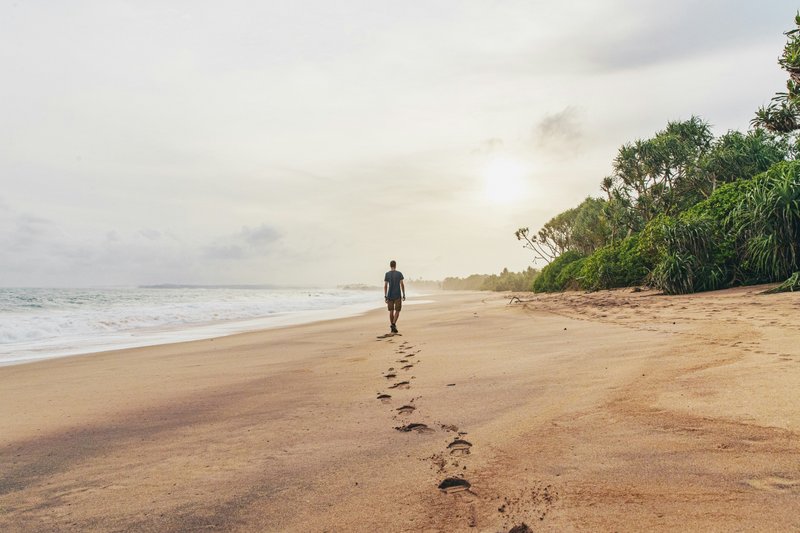
Amanwella occupies a coconut-fringed crescent beach on Sri Lanka's southern coast, its 30 suites housed in traditional wooden bungalows with interiors stripped to teak, stone and pale linen. Each opens onto a private plunge pool facing the Indian Ocean. The clifftop infinity pool appears to spill into Tangalle Bay, while the guest-only Beach Club serves seafood with sand underfoot. An intimate Ayurvedic spa and sunrise yoga suit travelers seeking stillness over spectacle.
Geoffrey Bawa's final architectural commission occupies a pristine stretch of Mawella Beach, where the surf reaches close enough to lull guests to sleep. Six rooms with direct sea views anchor this intimate property, its wraparound verandas fostering the convivial spirit of a private beach house rather than a conventional hotel. A talented local chef prepares market-fresh meals, reinforcing the personal, unhurried atmosphere that suits travelers seeking architectural heritage alongside coastal solitude.
Ten rooms, one pristine stretch of Mawella beach, and a kitchen that punches well above its weight — Halcyon Mawella delivers boutique hospitality with substance. The contemporary interiors favor calm over clutter, while the attentive team arranges surf sessions at nearby Hiriketiya's famous horseshoe bay. Family Suites accommodate four, though the relaxed atmosphere suits older children and couples seeking southern Sri Lanka's quieter coastline.
Warm, unfussy hospitality defines Buckingham Place, a Rekawa Beach retreat where nature-filled grounds give way to twin swimming pools and a sweeping open-plan restaurant facing the Indian Ocean. Spacious rooms accommodate families with children six and older, making it a rare coastal address where genuine service and hearty seaside cooking meet the relaxed rhythms of Sri Lanka's southern shore.
Through a simple swing gate lies one of Sri Lanka's most pristine stretches of sand, the reward for guests at this intimate property where mature tropical gardens shade whitewashed villas with shuttered windows and slow-turning ceiling fans. The atmosphere recalls a private home rather than a hotel, with exceptional cooking drawing particular praise. Families find practical appeal in villas accommodating five and a dedicated children's menu.
Frequently Asked Questions
When is the best season to visit Tangalle?
+
The driest months run from December through April, when seas are calm enough for swimming and the coast sees little rain. May through September brings rougher surf and occasional downpours, though this coincides with turtle nesting season at nearby Rekawa beach, drawing visitors who want to witness hatchlings making their way to the sea.
How far is Tangalle from Yala National Park?
+
Yala's Palatupana entrance lies roughly 75 kilometers east, typically a 90-minute drive along the coastal A2 highway. Most properties arrange early-morning safari departures, allowing guests to reach the park gates before dawn when leopard sightings are most likely.
What local experiences should visitors prioritize in Tangalle?
+
The Rekawa turtle conservation project offers nighttime beach walks during nesting season. Mulkirigala Rock Temple, a 3rd-century Buddhist cave complex carved into a granite outcrop, sits 16 kilometers inland. For a quieter morning, the Tangalle fish market comes alive around 6am when boats return with the night's catch of tuna, prawns, and reef fish.
Sri Lanka's deep south unfolds along a crescent of golden sand where fishing outriggers still launch at dawn. Tangalle marks the transition between the island's developed southwest coast and the wilder reaches toward Yala, its bay sheltered by a rocky headland that breaks the Indian Ocean swells. The town itself remains unhurried — a handful of streets where tuk-tuks idle beside colonial-era rest houses and women sell curd from clay pots at the morning market.
The accommodation scene here favors seclusion over spectacle. Properties scatter along the coast from Goyambokka's surf-washed coves to the lagoon fringes near Rekawa, where sea turtles nest between April and September. Dining tends toward the informal: rice and curry served on banana leaves, grilled catch of the day at beachside spots, and the occasional chef-driven kitchen attached to a boutique property. This is Sri Lanka at its most contemplative — a place to watch thunderstorms roll across the ocean and wake to the calls of peacocks in the coconut groves.