The 150-year-old New Oriental Hotel, revived by Aman and architect Kerry Hill, anchors Galle Fort's UNESCO-listed ramparts with 31 rooms dressed in polished teak, four-poster beds, and freestanding baths. Hydrotherapy suites channel historic bathing rituals through massage pools, steam rooms, and cold plunges, while an Ayurvedic doctor tailors wellness programs. Evenings drift to a jazz pianist's notes on the veranda—colonial grandeur for slow-paced sophisticates.
Amber ramparts and fort-inspired architecture frame this 53-room retreat on Koggala Beach, where retro-modernist interiors meet serious creature comforts—Bose sound systems, espresso machines, suites with private plunge pools and butler service. The Ayurveda spa delivers signature water therapies alongside a yoga pavilion and sauna, while multiple restaurants span Sri Lankan curries, fresh seafood, and wood-fired pizza. Families appreciate the pool's shallow beach entry.
Ten whitewashed rooms face one of Sri Lanka's longest stretches of powder sand, where surf breaks and sailing boats animate the horizon less than thirty minutes from Galle Fort. The intimate scale—including penthouse suites approaching a hundred square meters—pairs with a Sri Lankan-Thai restaurant and spa treatments on request. A shuttle links to sister property Kahanda Kanda, doubling dining options. Best suited to families with older children seeking beach immersion without sacrificing polish.
A working tea plantation perched above Koggala Lake, Kahanda Kanda operates as an adults-only retreat with just twelve suites—eight featuring private pools—scattered through landscaped gardens. The interiors strike a balance between colonial heritage and contemporary tropical elegance, while the kitchen draws on both Thai and Sri Lankan traditions with a wellness-focused approach. Couples seeking seclusion find few distractions beyond yoga, swimming, and the surrounding hillside tranquility.
A pioneer of Sri Lanka's boutique hotel scene, Aditya occupies a grand building filled with antique furnishings that lend each of its 16 suites and villas a collector's sensibility. The generous proportions allow families to settle in comfortably, with board games and books available upstairs for quieter evenings. The kitchen maintains a strong reputation, making extended stays particularly rewarding.
Three centuries of Dutch colonial architecture frame this Church Street address, where thick-walled rooms retain their heritage proportions while offering contemporary comfort. The arrack bar has earned a devoted local following, and the street-side terrace delivers prime people-watching across the fort's cobblestoned lanes. Families gravitate toward the Admiral Cheng Ho room with its twin double beds—staff prove notably adept with younger guests.
Occupying a prime position within Galle's 17th-century Dutch fort, Fort Bazaar channels Middle Eastern aesthetics through handmade tiles and plush pouffes set against contemporary lines. A secluded spa offers respite from the historic streets, while the kitchen delivers exceptional meals that draw both guests and locals. Interconnecting rooms and a mezzanine suite with twin beds accommodate families seeking refined coastal living.
Concrete angles and full-length glass define this seven-room modernist retreat near Talpe, where family owners have softened architectural severity with vibrant personal touches. Every room opens directly to the sea, floor-to-ceiling windows framing the Indian Ocean like living canvases. A 17-meter infinity pool anchors the outdoor spaces, while the kitchen draws on local seafood and produce—an intimate coastal address for design-minded travelers seeking substance over spectacle.
Geoffrey Bawa's architectural vision unfolds dramatically at this coastal retreat, where an ornate bronze spiral staircase anchors interiors opening onto airy terraces swept by Indian Ocean breezes. Guest rooms, simply furnished with wooden beds and white linens, all offer private balconies overlooking waves crashing against a rocky shoreline. The Cinnamon Room delivers spicy, inventive cooking—lamb burgers with chili poolside—while vast blue pools and swaying hammocks reward those seeking pure coastal languor.
Perched on a ten-acre former tea and coconut plantation, Tekanda Lodge commands 360-degree views stretching from Koggala Lake to the Indian Ocean. The six rooms blend colonial elegance with safari aesthetics—mosquito-draped four-poster beds, handmade wooden furniture, and two standalone cabanas with soaring timber ceilings. Evenings unfold around communal open-air dinners featuring banana leaf–wrapped fish, while mornings carry the scent of cinnamon from the estate's organic groves.
Frequently Asked Questions
What is the best area to stay in Galle?
+
Galle Fort offers the most atmospheric setting, with heritage properties steps from museums, boutiques, and rampart walks. For beach proximity, Unawatuna and Thalpe provide coastal alternatives within a short tuk-tuk ride of the Fort's cultural offerings.
When is the ideal time to visit Galle?
+
December through April brings dry weather and calm seas to the southern coast. The Galle Literary Festival in January attracts international authors, while the monsoon months of May to September see fewer visitors and lower rates, though afternoon rains are common.
How do I reach Galle from Colombo?
+
The coastal railway from Colombo Fort station takes roughly two and a half hours, hugging the shoreline for much of the journey — widely considered one of Asia's most scenic train rides. Private car transfers cover the 120 kilometres in about two hours via the Southern Expressway.
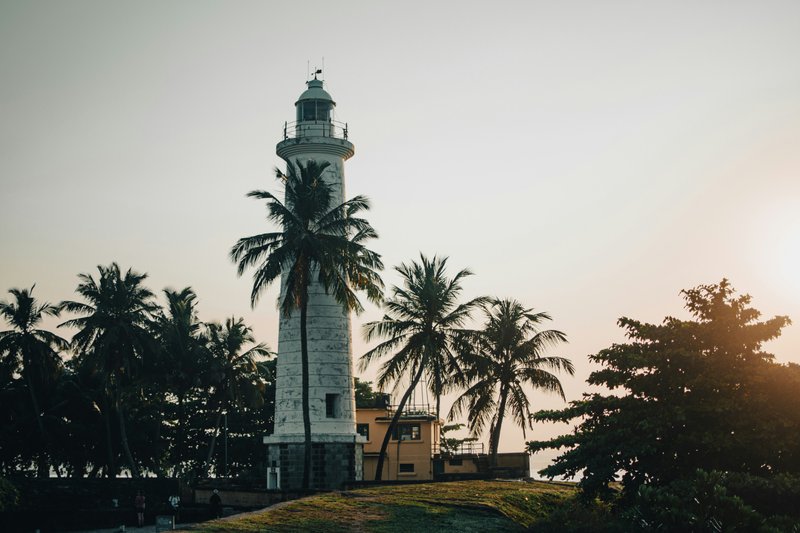
The walled city rises from a rocky peninsula on Sri Lanka's southwestern coast, its Dutch-colonial ramparts encircling a living museum of coral-stone warehouses, Anglican churches, and shophouses converted into intimate hotels. Within the Fort, pedestrian lanes like Pedlar Street and Leyn Baan Street wind past antique dealers, jewellers specialising in Ceylon sapphires, and galleries showcasing contemporary Sri Lankan art. Beyond the walls, Unawatuna Bay curves three kilometres east, its palm-fringed shore home to seaside properties of varying scale.
Dining here reflects the port's layered history. Rice and curry remains the anchor, served on banana leaves with a rotating cast of sambols, mallum greens, and slow-cooked curries spiked with goraka and pandan. Seafood dominates — ambul thiyal, the sour fish preserve, originated nearby. The Fort's converted merchants' houses now shelter wine-focused restaurants and rooftop bars overlooking the Indian Ocean, while Galle's cricket stadium, wedged improbably between rampart walls, lends a surreal backdrop to sundowners. Tuk-tuks idle at the Main Gate, ready to ferry guests to cinnamon estates or stilt fishermen's perches at Koggala.