Sharing a tower with Fairmont Makati yet fiercely intimate, this 32-suite property doubles as a gallery—1,600 works by Filipino artists line the corridors, with butlers trained to lead private tours. Dark wood floors and marble bathrooms anchor suites served by round-the-clock personal attendants. A private blue-tiled pool, the signature gold-flecked Makati Luxury Sling, and Willow Stream Spa treatments reward both dealmakers and leisure seekers.
Where to Stay
Arquitectonica's sleek tower rises thirty floors above Makati's financial district, its interiors by Bent Severin International threading Filipino cultural motifs through 280 spacious rooms with floor-to-ceiling windows framing the city skyline. A palm-fringed pool and Fairmont Spa anchor the wellness offering, while a shared-access arrangement with adjacent Raffles Makati unlocks the atmospheric Writers Bar and art-filled Long Bar—a compelling proposition for travelers seeking both polish and character.
Twin towers rise above Makati's busiest intersection, their four-story lobby crowned by an iconic sunburst sculpture and bathed in light from soaring ceilings. Art deco-inspired rooms deliver contemporary apartment-style living with sweeping city views, while restaurants Spices and Old Manila draw traveling foodies. A pool surrounded by tropical gardens and spa rooms paneled in bamboo offer escape for business travelers and families alike.
Rising above Bonifacio Global City's tree-lined streets, this LEED Gold-certified tower anchors Manila's most walkable district. The 86,111-square-foot Kerry Sports club delivers an NBA-grade basketball court, tennis facilities, and a spa offering traditional Filipino hilot massage. Six restaurants span Cantonese cuisine to South American fare, while floor-to-ceiling windows frame the metro skyline from 576 contemporary rooms.
Paul Steelman's architectural vision — honed across Las Vegas and Macau — shapes this 793-room waterfront tower complex, where a Swarovski chandelier sets the tone from arrival. Floor-to-ceiling windows frame Manila Bay panoramas, while the 14,000-square-foot spa offers ten treatment rooms alongside Jacuzzi and sauna facilities. Executive chef Michael Dinges oversees nineteen dining venues, cementing the resort's appeal for travelers seeking gaming glamour paired with genuine hospitality polish.
Shaped like a yacht moored on Manila Bay, this striking waterfront tower commands unobstructed sunset views through floor-to-ceiling windows. Some 700 artworks transform corridors into gallery walks, while China Blue—helmed by former MasterChef China judge Jereme Leung—delivers reimagined Cantonese cuisine. The spa's six treatment rooms include private steam and sauna facilities, making this a compelling base for design-conscious travelers exploring the Philippine capital.
The largest of three hotels within Manila's sprawling City of Dreams complex, this 362-room property pairs proximity to Ninoy Aquino International with surprisingly refined interiors—warm striped woods, chocolate tones, and earthy textures throughout. Club-level guests access a seventh-floor lounge in Tower II for VIP check-in and all-day refreshments, while the surrounding fifteen-acre entertainment district delivers casino floors, dining, and diversions steps from the lobby.
Perched twenty-four stories above Ortigas, the Philippines' first sky hotel positions its lobby amid panoramic city views, while contemporary works by artist Jinggoy Buensuceso line all twenty-three levels. The twenty-second floor draws wellness seekers to an indoor infinity pool framed by floor-to-ceiling glass. Continental Club guests retreat to a top-floor lounge with private library and bar, suited to travelers who prefer their luxury elevated—literally.
Architect Michael Fiebrich's gold-accented interiors set the tone at this 254-room property within the City of Dreams complex. Two towers house lavish suites with custom wallpaper and Filipino design touches, while Nüwa Spa delivers a free-form outdoor pool, Jacuzzi, and full treatment menu. Families appreciate DreamPlay, the world's first DreamWorks interactive space; couples and gamblers find equal draw in the adjacent casino's 380 tables.
Marble halls adorned with jewels and precious stones set the tone at this Entertainment City resort, where the Pearl and Coral Wings connect via a golden skybridge. The Retreat Spa pampers with a bespoke men's barbershop serving whiskey, while Cove Manila—Southeast Asia's largest entertainment venue—transforms from daytime pool club to nighttime spectacle beneath its glass dome. Families find refuge in eight themed play zones, including an augmented-reality wizard's den.
Where to Eat
Chef Josh Boutwood's dual British-Filipino heritage shapes every course at this two-Michelin-starred Makati address, where Spanish influences weave through seasonal tasting menus that might pivot from refined street food interpretations to cinematic themes. Counter seats facing the open kitchen place diners at the creative epicenter, watching intricate plates emerge with layered, assertive flavors that reward adventurous palates seeking Manila's most ambitious table.
Eighty kilometers south of Manila, Spanish chef Rodrigo Andres Osorio runs a one-Michelin-star kitchen on nine hectares of Cavite countryside, the modern architecture drawing its minimalist lines from nearby Taal Volcano. His house-aged A5 Wagyu ham and traditional cochinillo arrive with ingredients sourced directly from Spain, delivering rustic Iberian precision in a setting purpose-built for unhurried, celebratory meals far from urban clamor.
Named for the Malay word meaning appetite, Celera occupies a sleek, black-toned space where two chef-owners orchestrate a Michelin-starred exploration of contemporary Asian cooking. Their kitchen draws on Japanese, Chinese, and Singaporean traditions, building layers of umami through dashi, fermentation, and subtle smoke. The moody, open-kitchen setting and artful plating make this a destination for adventurous palates seeking depth over spectacle.
A Michelin-starred table in Bonifacio Global City, Gallery by Chele channels Filipino terroir through tasting menus built exclusively around indigenous ingredients and partnerships with local farmers and fishermen. The format—six or ten courses, with vegetarian options—forgoes à la carte entirely, allowing the kitchen to minimize waste while guiding diners through a structured exploration of Philippine produce. The Green Star distinction recognizes this commitment to environmental responsibility.
Hapag—Tagalog for 'family table'—earns its Michelin star through a bold reinterpretation of Filipino cooking. A young kitchen team mines regional traditions and heirloom techniques, then applies contemporary finesse to indigenous ingredients. The result blurs lines between ancestral comfort and avant-garde precision, offering a tasting menu that rewards diners seeking the Philippines' most progressive expression of its own culinary heritage.
Chef Isip's Michelin-starred kitchen in Makati channels French technique through a distinctly Filipino lens, drawing on Latin American and Southeast Asian influences to craft refined, expressive plates. Local ingredients meet wood-fired cooking in a space adorned with straw lamps and shell-lined walls. The breezy terrace suits tasting menu devotees; counter seats deliver front-row theater at the open kitchen.
Ten seats occupy what was once the chef's childhood bedroom in suburban Parañaque, where Tiffany-style lamps cast warm light over woven wall coverings. The solo chef works from a garden kitchen, sending out intensely personal plates drawn from Filipino regional traditions—lamb dumplings swimming in pork broth, blue marlin enriched with fish head stock, turon layered with aged banana and jackfruit. One Michelin star confirms the caliber.
Behind an unassuming Makati alley entrance, a one-starred kitchen pursues an intensely local vision: every ingredient sourced within Philippine borders, fermented and preserved in-house. The chef's deft calibration of soy, vinegar, and fish sauce coaxes depth from native produce without masking it. For the full immersion, kamayan service—a communal spread on banana leaf, eaten by hand—connects diners to Filipino tradition through texture and ritual.
A restored Spanish Colonial estate in Tagaytay's highlands provides the backdrop for Antonio's, where Western cuisine draws from both French and Italian traditions. The kitchen delivers beef Wellington alongside dry-aged Angus ribeye and delicate crab capellini, while dessert brings theatrical tableside crêpe Suzette. Beyond the dining room, a verdant terrace offers a civilized setting for aperitifs amid the garden grounds.
A Manila institution for nearly four decades, Carmelo's helped introduce Angus beef to Filipino fine dining and now showcases premium Australian Wagyu and Japanese Saga cuts. Chef Cristina Santiago continues her father's exacting standards, presenting ribeye and tenderloin grilled with restraint and carved tableside. White tablecloths, golden drapes, and a private dining room create an atmosphere suited to celebratory dinners and business occasions alike.
What to Do
Ancient Chinese medicine principles guide the treatments at this sanctuary within City of Dreams Manila, where therapies aim to restore equilibrium through natural remedies. The signature spa suites—complete with private Jacuzzi, bath facilities, and a dedicated relaxation area stocked with healthy snacks—allow guests to extend their escape for hours. Vitality pools, an outdoor pool with rentable cabanas, and a fitness center offering complimentary personal training round out the wellness offering.
Manila's grandest wellness destination occupies a travel-themed sanctuary where guests drift into the Wave Dream room—a darkened chamber with reclining chairs positioned beneath undulating water projections. The thermal circuit includes wet steam, dry sauna, and a jetted hot pool, while treatments draw from organic lines including Ila and Voya. An adults-only pool adjoins the detox bar, and the Sole Retreat offers swift foot massages between gaming sessions.
Frequently Asked Questions
Which Manila neighborhoods are best for upscale hotels?
+
Makati remains the established choice, with properties clustered around Ayala Center offering direct mall access and proximity to the business district's restaurants. BGC appeals to travelers who prefer a more walkable, contemporary environment with newer hotel stock. Some visitors opt for the bay-facing properties in Pasay for casino access and sunset views, though these sit farther from the city's dining concentration.
What is the best time of year to visit Manila?
+
The dry season from December through May offers the most reliable weather, with January and February typically the coolest and least humid months. The Sinulog and Ati-Atihan festivals in January bring color to nearby regions. Rainy season runs June through November — afternoon downpours are common but rarely last more than an hour or two, and hotel rates drop noticeably.
Is Intramuros worth visiting for more than a quick tour?
+
The walled city rewards a slower pace. Beyond the obligatory San Agustin Church visit, the district holds craft-focused cafés, small galleries, and evening events in restored plazas. A bamboo bicycle tour offers a quieter alternative to the motorized kalesa carriages. Fort Santiago's gardens provide genuine respite from Manila's density, and sunset from the Baluarte de San Diego watchtower rivals any rooftop bar view in the city.
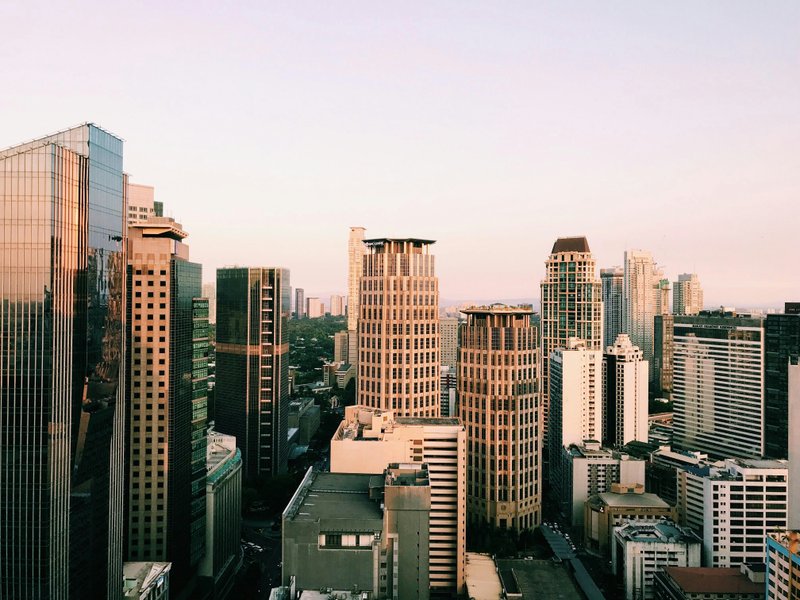
Manila sprawls across Manila Bay's eastern shore, a metropolis where Spanish colonial churches stand within walking distance of glass-wrapped towers. The historic district of Intramuros preserves sixteenth-century walls and cobblestone streets, while Makati's Ayala Triangle hums with international commerce and after-work cocktail crowds. Bonifacio Global City — locals call it BGC — offers a newer, more manicured counterpoint: wide pedestrian lanes, public art installations, and some of the country's most ambitious restaurant openings.
The hotel scene splits between established business-district properties along Ayala Avenue and newer lifestyle-focused addresses in BGC's High Street area. For dining, Poblacion has emerged as the city's most concentrated stretch of independent restaurants and rooftop bars, its narrow streets alive past midnight. Chinese culinary traditions run deep in Binondo, the world's oldest Chinatown, where multi-generational dim sum houses serve alongside contemporary Cantonese kitchens. Filipino cuisine itself has entered a creative renaissance — chefs are reinterpreting regional dishes with sharper technique while keeping the bold, vinegar-forward flavors intact.