Jean-Michel Gathy's Arabic Zen masterpiece channels Omani architecture through European minimalist lines—archways frame reflecting pools while 151 rooms maintain serene negative space. The thousand-foot private beach gazes toward the Gulf of Oman and Muscat's mountain ridges. Adults claim the Middle East's longest pool; families retreat to Serai. Oman's largest spa offers Ayurvedic rituals beneath glass walls, and The Beach Restaurant applies French technique to local seafood.
Where to Stay
Built as a residence for Sultan Qaboos, this Ritz-Carlton property retains its palatial credentials—the ninth floor remains reserved for Omani royalty. A 124-foot domed atrium anchored by crystal chandeliers sets the tone for Arabesque-meets-art-deco grandeur throughout. Lagoon Access rooms offer swim-up terraces, while the 33,000-square-foot hillside spa features six hammam rooms. Nearly 200 acres of gardens and a private beach complete the setting between the Al Hajar Mountains and the Sea of Oman.
Mandarin Oriental's Omani debut occupies a coveted stretch of Shatti Al-Qurum coastline, where Xavier Cartron's interiors—carved wooden doors, desert rose marble, a cascading crystal chandelier—channel local craft traditions. The 30-meter infinity pool mirrors Gulf waters, while a mosaic-lined hammam offers damask rose rituals. Silk Road menus span the restaurant collection, and the concierge arranges expeditions to Nizwa Fort and Jabal Akhdar's rose terraces.
Claiming an entire golden cove thirty minutes from Muscat, this Jumeirah property channels an ethos of adventurous wellbeing—kayaking expeditions, mountain treks, and open-water swimming complement the sheltered bay's calm waters. Families find genuine appeal: interconnecting rooms, two children's pools, and a complimentary kids' club equipped with PlayStation 5s and beach cinema screenings. A polished retreat for active travelers seeking coastal seclusion.
Sinuous white architecture evokes a yacht moored on the Gulf of Oman, where 1,200 feet of private beach meet contemporary interiors threaded with nautical motifs. Nine restaurants—Roberto's Italian, Hakkasan's Cantonese, Novikov's Mediterranean—anchor the culinary offering, while Oman's first Guerlain Spa dispenses hammam rituals and bespoke aromatherapy. Golfers find the Greg Norman–designed Al Mouj course minutes away, framed by dunes and the Hajjar range.
Al Husn, the adults-only crown of this three-hotel resort, commands views of the Gulf of Oman against the Hajar Mountains with some of Oman's most spacious rooms. Contemporary-Arabian interiors balance clean lines with intricately carved latticed woodwork, while butler service attends to every suite. Guests retreat to a private beach, infinity pool, and exclusive restaurants, with the Chi spa, dive center, and marina steps away.
Sprawling along the Gulf of Oman shoreline, Kempinski Hotel Muscat compensates for its modest beach with twin outdoor pools and an eclectic indoor world featuring a cigar lounge and bowling alley. The dining program earns particular distinction, while families benefit from a dedicated children's pool, kids' club, and interconnecting rooms—practical touches that make extended stays comfortable for multigenerational groups exploring the Omani capital.
A ten-metre steel frankincense tree by sculptor Pongsatat Uaiklang announces the W Muscat's bold aesthetic—Omani heritage filtered through contemporary design. Positioned between mountains and shoreline, the property draws a younger luxury crowd with its party-ready azure pool, panoramic rooftop bar, and a steakhouse that ranks among the city's finest. Family-friendly adjoining rooms and a full-service spa round out the offering.
What to Do
Eight treatment rooms bathed in natural light open onto private balconies overlooking the Gulf of Oman, where sea breezes become part of the healing ritual. Eastern philosophy guides therapies alongside Omani traditions, while Biologique Recherche and Aromatherapy Associates facials address modern skin concerns. The hammam, lined with vibrant mosaics and white marble, channels Arabian heritage; afterward, a 30-meter infinity pool awaits above the white sand shore.
Frequently Asked Questions
Which Muscat neighborhood offers the best beach access?
+
Shatti al-Qurum and the adjacent Al Qurum beach stretch provide the most accessible waterfront, with several properties offering direct sand access. For more secluded swimming, Barr al-Jissah's protected bays lie twenty minutes south of the city center, accessible via a coastal road that winds through the mountains.
What is the best time of year to visit Muscat?
+
October through April brings temperate conditions ideal for outdoor exploration, with daytime temperatures between 25-30°C. The brief khareef season (June-September) transforms the Dhofar region in the south, though Muscat itself remains hot. Winter months occasionally see light rainfall that greens the mountain wadis.
How far are the mountain and desert retreats from Muscat?
+
Jebel Akhdar's highland properties sit roughly two hours from Muscat via the Nizwa road, requiring a 4x4 for the final ascent. The Wahiba Sands desert camps lie approximately three hours southeast. Many visitors combine a few nights in the capital with excursions to both landscapes.
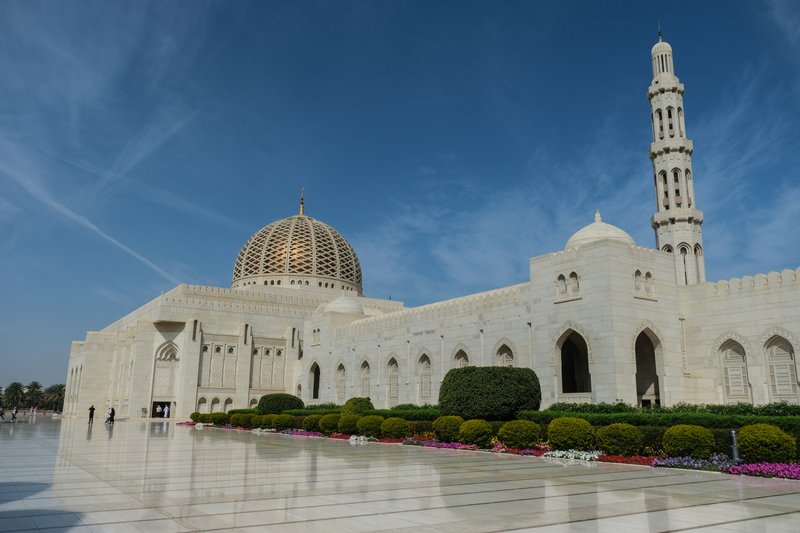
Muscat unfolds along a dramatic coastline where the Hajar Mountains plunge toward the Gulf of Oman. The capital sprawls across distinct neighborhoods, each with its own character: Old Muscat around the Sultan's Al Alam Palace, the diplomatic quarter of Shatti al-Qurum with its beachfront properties, and Mutrah with its centuries-old souq perfumed by frankincense. Hotels here range from international brands along the Qurum waterfront to secluded cliff-top retreats in Barr al-Jissah, where private coves offer access to waters frequented by sea turtles and dolphins.
Beyond the capital, Oman's accommodation landscape extends to the copper-toned dunes of Wahiba Sands, the cool altitude of Jebel Akhdar's terraced orchards, and the fjord-like inlets of Musandam. The building aesthetic throughout favors traditional Omani architecture — arched doorways, carved wooden screens, and whitewashed walls — while interiors often incorporate regional materials: date palm wood, local marble, and handwoven textiles from Nizwa. Service follows Omani hospitality customs, where guests are welcomed with kahwa coffee and dates, and staff maintain a discretion shaped by the sultanate's measured approach to tourism development.