


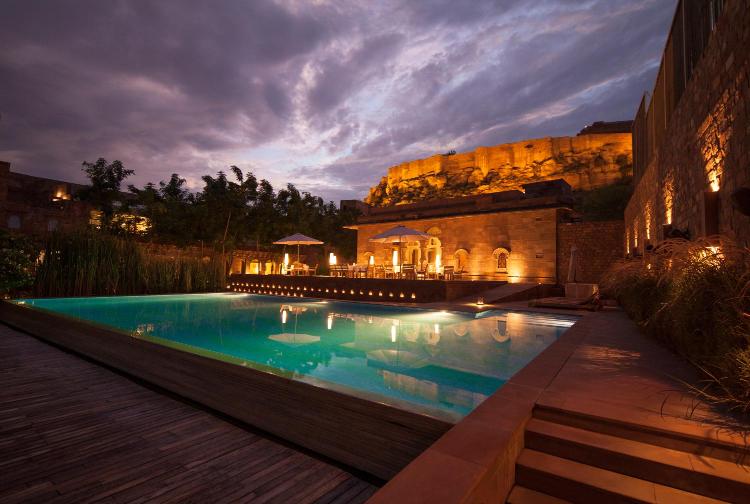
An 18th-century haveli transformed into a 39-room boutique hotel, RAAS occupies the old walled city beneath the towering silhouette of Mehrangarh Fort. Contemporary interiors respect traditional architecture while cabana-lined pools offer respite from Rajasthan's heat. Most rooms frame fort views, and the rooftop restaurant delivers romantic dinners against the illuminated citadel. Pet-friendly, with spa and steam facilities for unwinding after exploring Jodhpur's medieval lanes on foot.
Jodhpur Travel Guide: Best Hotels, Restaurants & Experiences 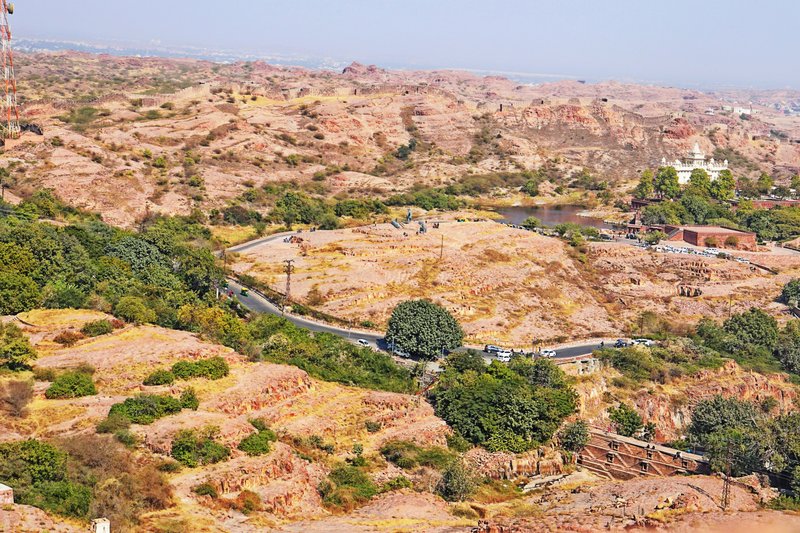
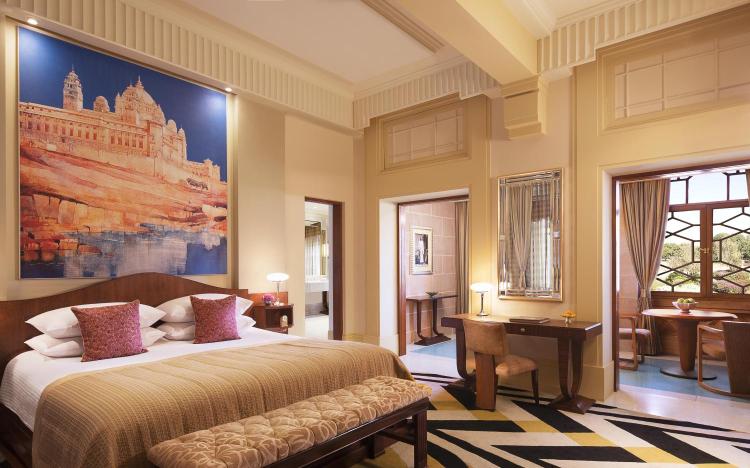
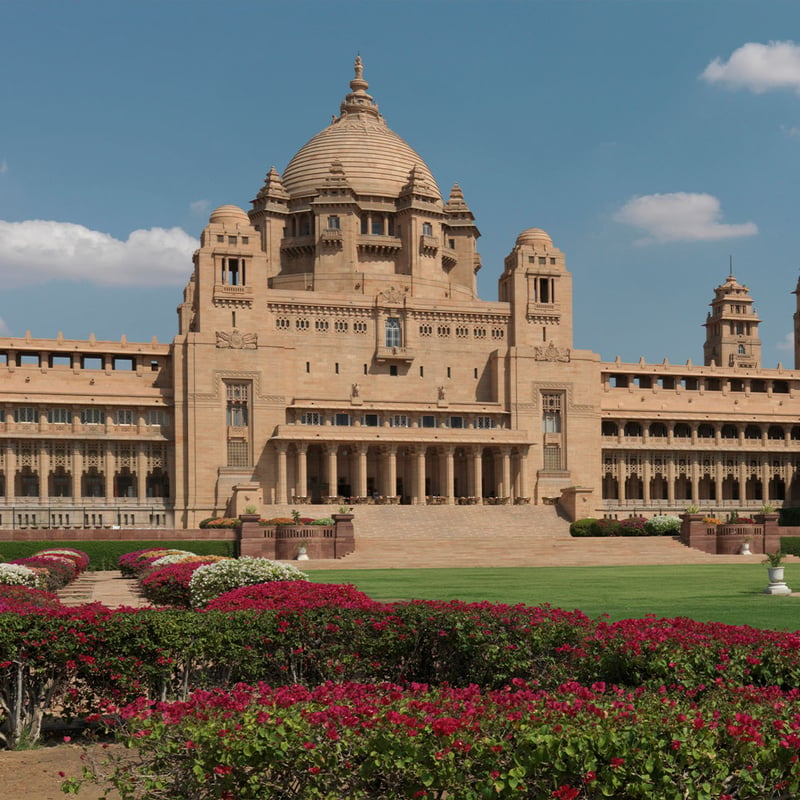
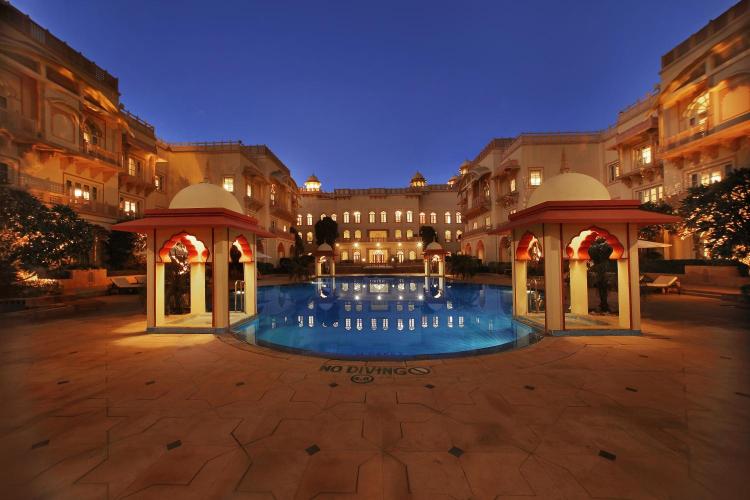

The Maharaja of Jodhpur still calls this Indo-Saracenic Art Deco palace home, lending authentic royal pedigree to every stay. Once the world's largest private residence, the property now ranks among the city's essential landmarks. Taj's meticulous management delivers flawless service, while the Kids@Taj programme offers young guests their own check-in rituals and tailored activities—an elegant choice for heritage-seeking families.

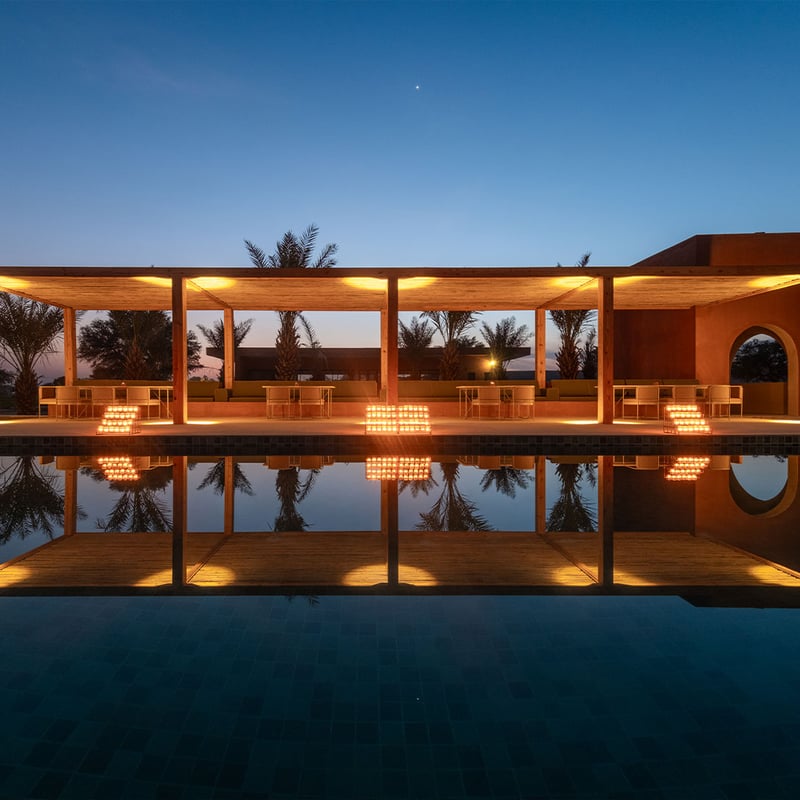
A working farm turned ten-cottage retreat, Mharo Khet grows much of what appears on its tables — including a nine-course dinner served communally beneath guava trees. Each cottage blends hand-crafted Rajasthani details with contemporary comforts, fitted with twin decks positioned to catch both sunrise and sunset. Cooking classes, cultural performances, and walking tours round out an immersive agrarian escape suited to travelers seeking substance over spectacle.

The Maharaja of Jodhpur still resides in one wing of this 1940s Art Deco landmark, while Taj manages sixty-four guest rooms in another—a rare arrangement lending genuine aristocratic texture. The spa complex features a Turkish bath, jacuzzi, and steam rooms; both indoor and outdoor pools occupy the palace gardens. Evening drinks on the rooftop terrace, surveying the Blue City below, complete a stay suited to romantics and architecture enthusiasts alike.

A leafy courtyard grants respite from Jodhpur's frenetic streets at this Taj Vivanta property, where generously proportioned rooms score highly for comfort and a vast swimming pool anchors the leisure offering. Evening entertainment adds local color, and attentive staff maintain the group's reputation for hospitality. The central location suits travelers seeking accessible luxury without the premium of heritage palace hotels.
Frequently Asked Questions
What is the best area to stay in Jodhpur for fort views?
+
The Navchokiya and Gulab Sagar neighborhoods at the base of Mehrangarh offer the closest perspectives on the fort. Properties here often feature rooftop terraces oriented toward the citadel, with the blue-washed old city cascading between your vantage point and the ramparts above.
When is the ideal season to visit Jodhpur?
+
October through March brings temperate days and cool evenings, ideal for exploring the fort and old city on foot. The Rajasthan International Folk Festival in October transforms Mehrangarh into an open-air concert venue. Summer temperatures regularly exceed 40°C, making outdoor sightseeing uncomfortable.
What traditional dishes should visitors try in Jodhpur?
+
Laal maas, a fiery mutton curry built on mathania chilies grown nearby, defines Jodhpur's kitchen. Ker sangri—desert beans and berries cooked with spices—showcases Marwari ingenuity with arid-land ingredients. The city's street food runs to mirchi vada and mawa kachori, best sampled near the clock tower market.
Nearby Destinations
Explore India



Jodhpur
The Blue City rises from the Thar Desert like a mirage made permanent. Mehrangarh Fort crowns a 125-meter sandstone cliff, its ramparts casting long shadows over the indigo-washed houses of the old city below. This distinctive blue—originally a Brahmin caste marker, now a citywide aesthetic—creates one of India's most photographed urban landscapes. The walled city's maze of lanes opens onto stepwells, Jain temples, and havelis with carved sandstone facades so intricate they resemble lacework.
Beyond the fort, the hotel landscape reflects Jodhpur's aristocratic heritage. Former hunting lodges and nawab residences have found second lives as intimate properties where carved jharokha windows frame desert sunsets. The clock tower bazaar anchors commercial life, its spice markets and textile stalls operating much as they have for centuries. Dining here leans toward robust Marwari cuisine—mirchi vada, pyaaz kachori, safed maas—the kind of ancestral recipes that landed families brought from the desert and refined in palace kitchens.