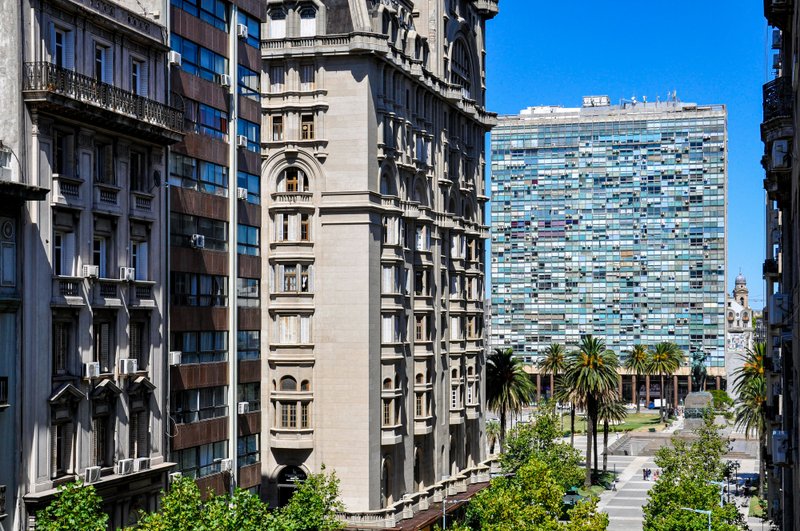
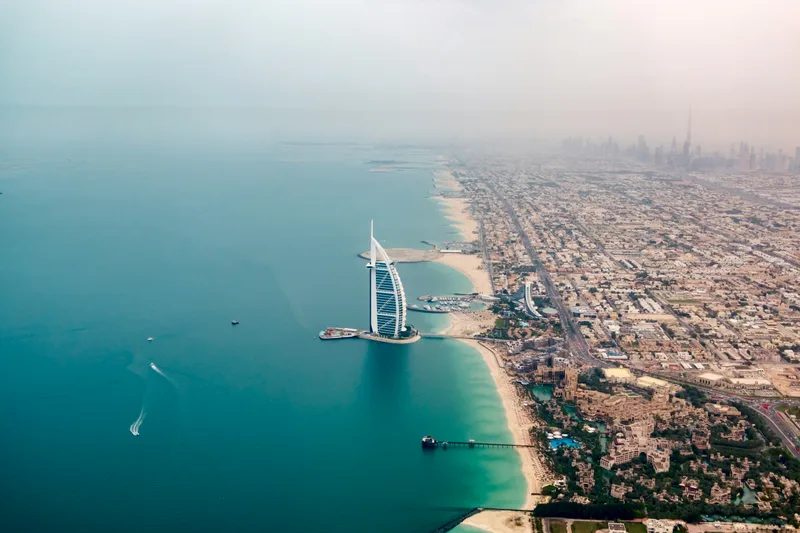
Eighty rooms rise above Pocitos in a striking modern tower, each furnished with custom pieces that nod to both antique craftsmanship and midcentury design, every one opening onto a private balcony. The heated rooftop pool frames the city skyline, while Polo Bamba and its adjacent Skybar—led by chefs Ale Morales and Florencia Courreges—anchor the culinary program. Pet-friendly policies and proximity to Pocitos beach suit travelers seeking polished urban leisure.
A restored colonial townhouse in Ciudad Vieja, this fifteen-room boutique dedicates each space to a celebrated Uruguayan figure—tango musicians, poets, painters—with floor-to-ceiling French doors and whimsical monochrome wallpaper throughout. The rooftop terrace rises above the treetops, its wood-paneled Jacuzzi and chaise lounges offering respite, while the Library bar pours Tannat in surroundings evoking the city's grand old mansions.
Positioned directly on the Rio de la Plata shoreline in Pocitos, this contemporary lifestyle hotel delivers unobstructed water views from many of its 178 rooms. La Rambla's miles-long promenade unfolds just beyond the entrance, while inside, the beautifully tiled indoor pool and Plantado restaurant—its open kitchen anchored by a striking olive tree—provide refined respite. Pet-friendly policies welcome four-legged companions.
Belle Époque grandeur meets Parisian sophistication at this restored 1920s landmark on Montevideo's Rambla promenade. The ornate historicist architecture houses 93 rooms alongside dual swimming pools, a full-service SoSpa with sauna, and the expansive Restaurante 21. Pet-friendly policies and beach proximity make it equally suited to couples seeking coastal elegance and families wanting resort-style amenities.
Blonde wood and earth tones define the 44 spacious rooms at this contemporary address in the upscale Punta Carretas neighborhood, each minibar thoughtfully stocked with Uruguayan wines. The philosophy here favors flexibility—complimentary breakfast delivered to the room, pets welcome, an outdoor pool for cooling off after coastal walks. A polished base for travelers pausing in Montevideo before the beaches eastward.
Frequently Asked Questions
Which Montevideo neighborhood offers the best base for exploring the city?
+
Ciudad Vieja places you within walking distance of Mercado del Puerto, Teatro Solís, and the main museums, though Pocitos suits travelers preferring beach access and residential calm. The two areas connect via the Rambla, a coastal walk of roughly 45 minutes.
What is the best time of year to visit Montevideo?
+
October through March brings warm weather ideal for the Rambla and beaches, though February's Carnival transforms the city entirely. Winter months (June–August) offer cooler temperatures and fewer visitors, with cultural programming continuing year-round at venues like Teatro Solís and the various museums of Ciudad Vieja.
How does Montevideo compare to Buenos Aires for a South American trip?
+
The two cities sit three hours apart by ferry across the Río de la Plata. Montevideo operates at a slower pace, with roughly a tenth of Buenos Aires' population. Many travelers combine both — using Montevideo's compactness and coastal setting as counterpoint to Buenos Aires' metropolitan intensity.
Uruguay's capital stretches along the Río de la Plata, its 22-kilometer Rambla forming one of South America's great urban waterfronts. Ciudad Vieja holds the architectural weight — Art Deco towers, neoclassical banks, and colonial structures now housing contemporary galleries. Pocitos draws a different crowd, its beachfront apartments and tree-lined streets creating a residential rhythm distinct from the historic center's density.
The hotel landscape reflects this geography. Properties in Ciudad Vieja occupy restored early-twentieth-century buildings, their original details preserved beneath modern interventions. Along the Rambla, newer constructions take advantage of river views stretching toward Buenos Aires on clear days. Carrasco, the garden suburb to the east, maintains its early-1900s character — grand summer houses converted to intimate accommodations, the neighborhood's casino and beach anchoring its identity as the city's most established retreat.