Thirty-four stand-alone suites, each with private pool and interiors by Milanese designers Carlo Belgir and Marina Nova, channel the elegance of 1960s Riviera villas across this Cap Cana enclave. The Caletón Beach Club delivers sugar-white sand and beach butlers, while the wellness spa features twelve treatment rooms and a dedicated anti-gravity yoga studio. Jack Nicklaus's Punta Espada course traces the coastline past cliffs and waterfalls—ideal for golfers and families seeking polished Caribbean seclusion.
Where to Stay
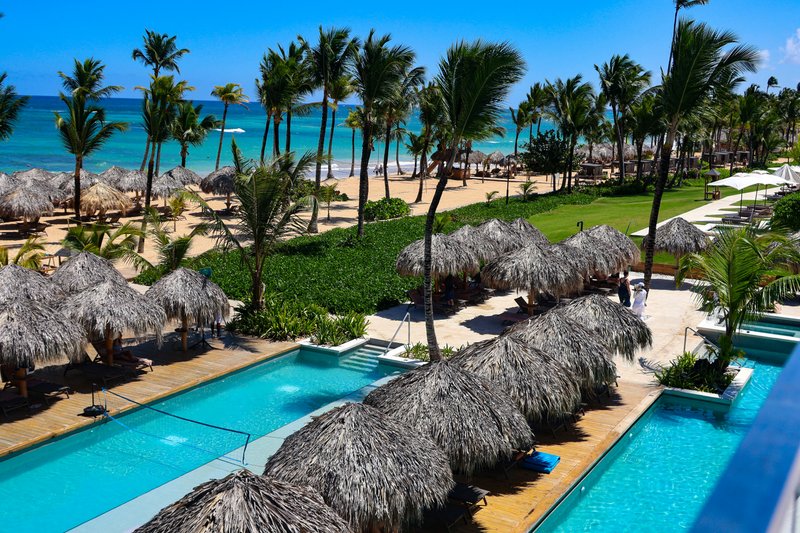
Within the gated Cap Cana enclave, this 200-room resort commands 800 feet of private white-sand beach alongside the Jack Nicklaus–designed Punta Espada course, where every hole surveys the Atlantic. Four pools include a rooftop terrace with tiki bar; the palm-shaded spa specializes in sound therapy and oceanside treatments. Nine restaurants span beachfront ceviche to refined Dominican tasting menus—ideal for golf-focused families seeking polished Caribbean refinement.
Oscar de la Renta designed these 13 villas in a refined minimal-luxe aesthetic, each suite equipped with home theaters and lavish bathrooms overlooking the Caribbean or championship golf greens. Three miles of near-empty private beach stretch before the residences, while a personal villa manager remains on call throughout the day. The Six Senses Spa employs fresh local coconut oil, and an ecological reserve with turquoise lagoons offers scuba and catamaran excursions to guests seeking active Caribbean luxury.
On the unhurried shores of Bayahibe, far from Punta Cana's bustle, this adults-only retreat occupies a pristine stretch of Dominicus Beach where warm Caribbean waters lap white sand. The 117 rooms embrace tropical minimalism—crisp linens, warm woods, some with swim-up pool access—while duplex suites claim private pools. Evenings divide between BLoved's farm-to-table cuisine with ocean panoramas and Tao-Cat's beachside Asian-island fusion. Saona Island lies a short boat ride away.
Reached only by boat, this private island off Samaná trades Punta Cana's bustle for Victorian-inspired architecture draped in tropical greenery. The Yubarta wellness center, built around a cenote and koi pond, hosts sound baths and shamanic healing beneath thatched palapas. Suites feature palm-motif wallpaper and pink-tiled bathrooms; some include plunge pools. For dinner, Senda's progressive tasting menu showcases Dominican ingredients like beetroot raviolo with local goat cheese.
Perched above Santo Domingo's Blue Mall, this 150-room property draws guests to Vertygo 101, where a glass deck suspends cocktail hour 101 feet over Avenida Winston Churchill. The infinity pool gleams turquoise against the skyline, while Winston Grill & Patio delivers fire-kissed dishes and a Sunday brunch starring Iberico ham. Suite guests retreat to the 20th-floor Executive Lounge for three daily culinary services.
Rubber ducks dotting the pools signal this adults-only resort's playful irreverence, a counterpoint to its polished luxury. The Feel Harmony Spa draws guests through a hydrotherapy circuit beneath skylights, while outside, five communal pools and eight swim-up options lead to Uvero Alto's golden sand. Fifteen restaurants—Italian, French, Mexican, Asian, barbecue—ensure palates stay as engaged as the body.
Swim-up suites with four-poster beds and jetted tubs line a private stretch of Bavaro Beach at this adults-only retreat, where butler service and palapa-shaded loungers set the tone. Guests access over forty restaurants and bars across the Grand Palladium complex, retreat to Zentropia Spa's ice room and clay therapy circuits, and secure complimentary seats at Chic Cabaret's Vegas-style dinner spectacle.
French designer Nathalie Pain shaped this 64-room boutique retreat on the Dominican Republic's northern coast, where wall-to-wall windows frame the Atlantic and Egyptian cotton linens dress beds beneath ocean-inspired artwork. Three pools cascade toward the shore, while complimentary paddleboards and kayaks await the active. At Aguají, Taino-influenced cuisine—grilled fish glazed with guava—arrives by candlelight, and ESPA treatments at the spa draw on South of France traditions.
W Hotels ventures into all-inclusive territory with this adults-only retreat on Uvero Alto's golden shoreline. Spanish firm Zanobia Arquitectura crafted the open-air lobby with climbing ivy and dragonfly wing-inspired fixtures, while 340 rooms offer private plunge pools or swim-up access through floor-to-ceiling glass. Guests drift between a rooftop sushi bar, beachside Caribbean grill, and the AWAY Spa's pink mosaic pool.
Where to Eat
Chef Inés Páez Nin — known as Chef Tita — channels Taíno and Indigenous culinary heritage through a refined tasting menu at this Sosúa Bay destination. Native ingredients like batata, mapuey, and yautía receive meticulous treatment, their earthy flavors transformed through contemporary technique. The chef herself often appears tableside, sharing stories behind each course, while sunset gilds the floor-to-ceiling windows and mamajuana-laced cocktails arrive with smoky, unexpected depth.
Fire commands the kitchen at Nina, where Peruvian chef Diego Muñoz grills meats over open embers and chars vegetables to smoky intensity within The St. Regis Cap Cana. The name derives from the Quechua word for flame, a philosophy extending from briny oysters and coconut-laced red snapper to fire-touched desserts. Wood-and-stone interiors with teal walls and bold artwork evoke a sophisticated jungle lodge, while the Uma Wine Cellar offers private dining with over 100 Latin American vintages.
Through floor-to-ceiling windows, the Caribbean sun descends while diners settle into Scena's plush lounge seating for an evening of reimagined Dominican cuisine. The open kitchen reveals chefs crafting slow-roasted pork with tropical salsa and crispy plantain fritters, each plate reflecting both local tradition and contemporary technique. Rum-forward cocktails infused with tropical fruits complete the polished yet barefoot-elegant atmosphere.
What to Do
Caribbean breezes drift through the open-air lounge of this 4,000-square-foot sanctuary, where a hydrotherapy circuit—steam room, cold plunge, vitality pool—prepares the body before treatments begin. Ten rooms showcase Dominican botanical traditions through massages, wraps, and facials, while sunrise yoga on the terrace and a 1,500-square-foot gym extend the wellness ritual beyond the treatment table.
Caribbean breezes drift through open-air corridors leading to this intimate sanctuary on Costa Norte, where glass-walled steam rooms and saunas prepare the body before treatments begin. Therapists trained in Nepalese and Thai traditions apply Ayurvedic pressure points and stretching techniques within soundproofed rooms suffused with botanical scents. The layout encourages unhurried movement between hydrotherapy pools and aromatic lounges, each transition as fluid as the tide.
A grotto-like sanctuary emerges between jungle canopy and Caribbean shoreline, its softly lit stone entrance opening onto interiors where coral walls sculpted to echo water formations set the tone. Treatments draw on Dominican tradition—amber oil, volcanic stones, porcelain flower oil—while shaded outdoor daybeds and a champagne-stocked Celebration Bar encourage lingering. The design by Chapi Chapo favors teak, ocean textures, and unhurried indulgence.
Spanning 18,000 square feet within the La Romana countryside, this spa features twelve treatment rooms with private outdoor rain showers and a comprehensive hydrothermal circuit—sauna, steam bath, vitality pool, cold plunge, thermal loungers, and Kneipp walk. Gharieni's MLX i3Dome delivers touchless detox through far infrared and plasma therapy, while the Organic Garden-to-Table-Glow ritual employs local honey, moringa oil, and hibiscus extract.
Spanning 13,500 square feet within the Eden Roc Cap Cana estate, Solaya Spa draws on Dominican healing traditions and native fragrances for its treatment menu. Professional therapists work exclusively with organic cosmetic products, while the thermal circuit—hammam, Swedish sauna, and outdoor pool—extends the restorative experience beyond the treatment room into Cap Cana's coastal light.
Frequently Asked Questions
What is the difference between Bávaro and Cap Cana?
+
Bávaro forms the main tourist corridor with the widest beach access and greatest concentration of all-inclusive properties, while Cap Cana is a gated community to the south offering more seclusion, a full-service marina, championship golf, and residential-style accommodations that appeal to travelers seeking privacy over activity.
When is the best time to visit for calm seas and sunshine?
+
February through April delivers the most consistent conditions — minimal rainfall, comfortable humidity, and water temperatures around 26°C. Hurricane season runs June through November, though Punta Cana sits outside the main storm track and rarely experiences direct hits. December and January bring peak crowds and higher rates.
Is it worth leaving the resort to explore the area?
+
El Cortecito village provides an authentic beach-town contrast to resort life, with local vendors, casual restaurants, and Dominican street food. Excursions to Saona Island, the Indigenous Eyes Ecological Reserve, and the Hoyo Azul cenote offer genuine natural attractions. The historic colonial zone of Santo Domingo lies four hours west for those seeking cultural depth.
The easternmost tip of the Dominican Republic unfolds along thirty kilometers of coconut palm coastline where the Caribbean meets the Atlantic. Bávaro Beach anchors the main resort corridor, its powdery white sand giving way to a reef-protected lagoon ideal for swimming year-round. Further south, Cap Cana operates as a gated enclave with its own marina, Jack Nicklaus-designed golf courses, and residential estates that attract a more private-minded clientele. The area developed rapidly from the 1970s onward, transforming former sugarcane and coconut plantations into one of the Caribbean's most concentrated hospitality zones.
Dining gravitates toward resort properties, though the village of El Cortecito offers beachfront seafood shacks serving fresh catch with tostones and cold Presidente beer. Local flavors run to sancocho stews, mofongo, and longaniza sausage — Dominican staples that appear on menus alongside international fare. The region's wellness culture has matured considerably, with properties increasingly emphasizing hydrotherapy circuits, indigenous Taíno-inspired treatments, and fitness programming that takes advantage of the reliable trade winds. Most travelers arrive through Punta Cana International Airport, the country's busiest, making this coastal stretch remarkably accessible despite its end-of-the-road geography.