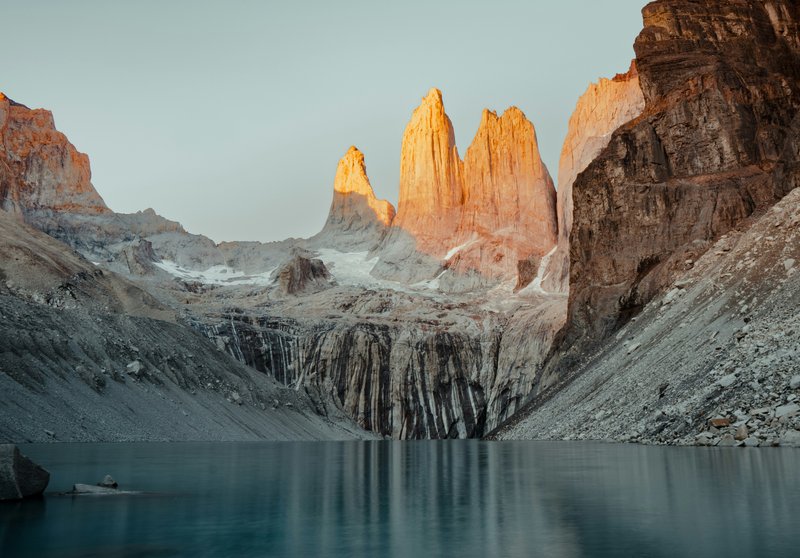
Curved like a geological fissure against the Patagonian steppe, this UFO-shaped timber structure practically disappears beneath the granite spires of Torres del Paine. All forty rooms frame Lago Sarmiento and the Paine Massif through floor-to-ceiling glass, while interiors of raw wood, sheepskin-draped nooks, and open hearths offer refuge after gaucho-led rides or mountain treks. The Uma spa, open bar, and three daily meals complete an all-inclusive wilderness immersion.
Twelve villas of blond wood and local stone scatter across a private wildlife reserve bordering Torres del Paine, each assigned its own guide and 4x4 for bespoke expeditions tracking condors, guanacos, and elusive pumas. Hot tubs and wood-burning stoves warm interiors framed by glacier views, while the kitchen draws on Patagonian terroir for dinners paired with Chilean wines. A wilderness lodge for couples and small groups seeking total immersion.
Perched mere yards from Salto Chico waterfall, this modernist lodge frames the jagged Paine massif and Los Cuernos peaks through every window. Rustic wood paneling and woven textiles soften the angular architecture, while all-inclusive rates cover daily expeditions—from gentle lakeside strolls to grueling mountain treks—plus an indoor pool, sauna, and jacuzzi for recovery. Built for adventurers who prefer their wilderness with a feather bed waiting.
Individual wood cabins line the banks of the Baker River near Puerto Bertrand, each oriented toward the glacial waters that define Chilean Patagonia's most dramatic corridor. This adults-only eco-lodge maintains an intimate scale—just a handful of accommodations—allowing the kitchen to deliver genuinely accomplished cuisine rarely found this deep in wilderness territory. The environmental commitment runs through every operational detail without compromising comfort.
Deep in Parque Patagonia, where few travelers venture, this intimate lodge serves as base camp for one of Chile's most pristine wilderness areas. Compact rooms dressed in refined regional materials give way to a dining program ranked among the region's finest. Hikers, fly fishers, and wildlife enthusiasts find their ideal headquarters here, with family-friendly configurations including interconnecting rooms for multi-generational expeditions.
Frequently Asked Questions
When is the best season to visit Torres del Paine?
+
The southern hemisphere summer from November to March offers the longest daylight hours and mildest temperatures, with December and January seeing peak conditions for trekking. Shoulder seasons bring fewer visitors and dramatic autumn colours in April, while winter stays appeal to those seeking solitude and potential snow-covered landscapes.
How do lodges handle the remote location and logistics?
+
Most properties coordinate transfers from Punta Arenas or Puerto Natales airports, journeys of three to four hours through the Patagonian steppe. All-inclusive programmes typically cover meals, guided excursions, and equipment, eliminating the need for guests to arrange independent logistics within this roadless wilderness.
What distinguishes estancia stays from park lodges?
+
Estancias occupy working ranches on private land bordering the park, offering horseback riding across open pampas and insight into gaucho culture alongside park excursions. Lodges within or immediately adjacent to the park prioritise hiking access and proximity to iconic formations like the Torres themselves and the Cuernos massif.
Nearby Destinations
Explore ChileAt the southern edge of the Andes, where granite spires pierce the sky and glaciers carve through ancient valleys, Chile's most dramatic national park demands a different kind of accommodation. Properties here operate as base camps for wilderness immersion — multi-day stays that bundle guided treks, horseback expeditions, and wildlife encounters into comprehensive programmes. The landscape itself dictates the rhythm: wind-sculpted terrain, unpredictable weather patterns, and distances measured in hours rather than kilometres.
Most lodges cluster along the park's eastern boundary near Lago Sarmiento and Laguna Azul, while others occupy converted estancias on the pampas beyond park limits. The dining philosophy across properties leans heavily on Patagonian lamb slow-roasted over open flames, regional wines from Chile's cooler-climate valleys, and hearty dishes designed to fuel days spent at altitude. After expeditions, guests gather in lodges built from native lenga wood, sharing route notes beside roaring fires as the southern lights occasionally streak across unpolluted skies.