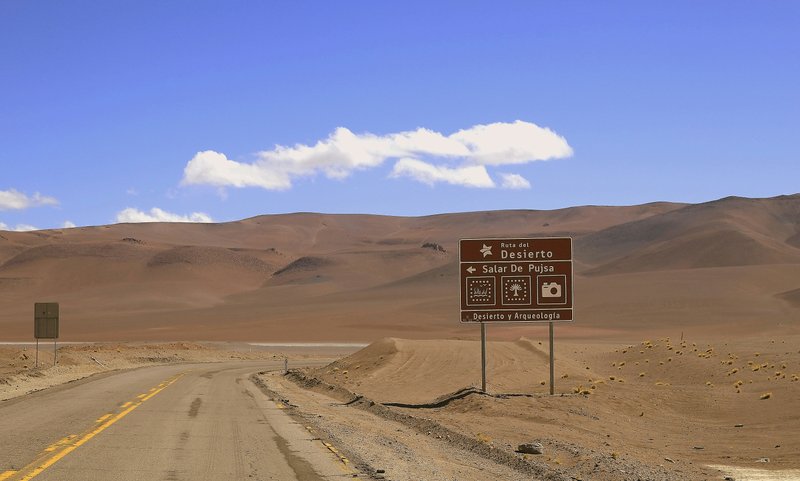
Eight adobe cottages built from clay, sand, and river cane rise from the Atacama like ancient dwellings, each with private courtyards and marble-clad bathrooms. The all-inclusive program assigns every guest a dedicated guide and 4x4 for tailored expeditions—sunrise at El Tatio's geysers, astronomer-led stargazing under some of Earth's clearest skies, or outdoor lunches beside remote lagoons. Adventure seekers wanting intimacy over scale.
Terracotta walls rise from the Catarpe Valley floor, an adobe lodge built to disappear into the red Salt Mountains. The Puri Spa draws on geothermal waters for treatments ranked among Latin America's finest, while Chef Daniel Molina's restaurant Caur serves indigenous-inspired dishes featuring herbs cultivated on the property. Private terraces face the Cordillera, where some of Earth's clearest night skies unfold above resident llamas grazing through Andean gardens.
Germán del Sol's adobe-walled architecture spreads across 17 hectares of high desert at 8,000 feet, where immense bay windows frame volcanic formations and salt flats. Outdoor pools and jacuzzis overlook the stark Atacama landscape, while a private observatory equipped with a Meade 16-inch telescope offers astronomer-led sessions beneath some of Earth's clearest skies. Guided expeditions reach the El Tatio geysers at nearly 14,000 feet; six interconnecting rooms welcome families.
Against the Martian terrain of the Atacama Desert, this 32-room retreat rises in local stone, adobe, and rough-hewn wood—modern minimalism softened by tactile warmth. The all-inclusive format covers everything from multi-course meals and open bar to guided volcano climbs and birdwatching expeditions. Indoor and outdoor pools, sauna, jacuzzi, and steam rooms complete an adults-focused escape for travelers over ten.
Habitas brings its eco-conscious ethos to the Atacama with 51 rooms built using traditional regional construction methods, their sparse interiors dressed in locally crafted textiles. Between desert expeditions—hiking, cycling, stargazing under skies of exceptional clarity—guests retreat to the spa and sauna or the outdoor pool. Restaurant Almas cooks over wood fire, drawing on indigenous herbs grown in the hotel's own desert garden.
Frequently Asked Questions
What is the best time of year to visit San Pedro de Atacama?
+
The driest months run from April to November, offering minimal cloud cover and optimal stargazing conditions. Temperatures range from warm days to near-freezing nights. December through March brings occasional afternoon thunderstorms and the Atacameño 'invierno boliviano,' though mornings remain clear. High season peaks in July and August during Chilean winter holidays.
How do travellers adjust to the altitude in San Pedro de Atacama?
+
At 2,400 metres, most visitors adapt within 24-48 hours. Hotels typically recommend a rest day before excursions to higher elevations like El Tatio (4,300m) or the altiplanic lagoons (4,200m). Coca tea remains a local remedy, widely offered at properties. Many lodges include oxygen supplies and limit first-day activities.
Which areas of San Pedro de Atacama offer the best hotel locations?
+
Properties fall into two categories: in-town adobe hotels near the plaza on streets like Tocopilla and Toconao, convenient for dining and evening strolls; and remote lodges several kilometres out in Ayllu de Quitor or toward the Pukará ruins, where darkness is absolute and desert immersion complete. Neither requires a vehicle if transfers are arranged.
Nearby Destinations
Explore ChileThis oasis town in Chile's Atacama Desert sits at 2,400 metres, its adobe streets radiating from a central plaza shaded by pepper trees. The Licancabur volcano dominates the eastern horizon, while the salt flats of Salar de Atacama stretch to the south. Most hotels occupy converted adobe compounds or purpose-built lodges on the outskirts, positioned to minimize light pollution for astronomical observation. The indigenous Atacameño heritage shapes local architecture and hospitality—expect thick earthen walls, natural materials, and menus featuring quinoa, llama, and ancestral preparations.
Calle Caracoles serves as the main drag, lined with tour operators, equipment outfitters, and restaurants catering to altitude-acclimated visitors. The town functions as base camp for expeditions to the Valle de la Luna, El Tatio geysers, and high-altitude lagoons near the Bolivian border. Properties range from intimate guesthouses within walking distance of the plaza to all-inclusive desert lodges offering guided excursions, thermal pools, and observation decks equipped with telescopes. The dry climate—some of the clearest skies on Earth—attracts astronomers alongside travellers seeking landscapes of almost lunar starkness.